
Essential delivery logistics tips for faster UK shipments
Updated: May 14
TL;DR:
Effective UK delivery requires balancing speed, cost, and environmental challenges across diverse environments.
Selecting appropriate services and packaging based on shipment urgency and value reduces risks and costs.
Continuous operational review and driver insights are crucial for improving first attempt success rates.
Last-minute shipments put real pressure on UK businesses. A missed deadline can damage client relationships, trigger contractual penalties, and eat into already tight margins. Optimising your delivery logistics is not simply a matter of moving goods faster. It requires balancing speed, cost control, and reliability across a complex UK operating environment. This article shares practical, evidence-based tips to help business owners and logistics managers take firmer control of their urgent and same-day delivery operations.
Table of Contents
Key Takeaways
Point | Details |
Match logistics to location | Adjust your routing, stop design, and grouping approach based on whether your deliveries are urban, suburban, or rural. |
Right service for urgency | Always pair fragile or time-critical shipments with premium services and stronger packaging for protection and proof. |
Watch cost and failed deliveries | Monitor same-day surcharges and actively reduce failed delivery attempts to protect your margins. |
Continuous improvement | Regularly review delivery data and feedback to refine your logistics for speed and reliability. |
Assess routing and environment challenges
Every delivery decision starts with where you are and where the goods need to go. The UK presents a wide range of operating environments, and each one carries distinct logistics challenges that directly affect routing, timing, and cost.
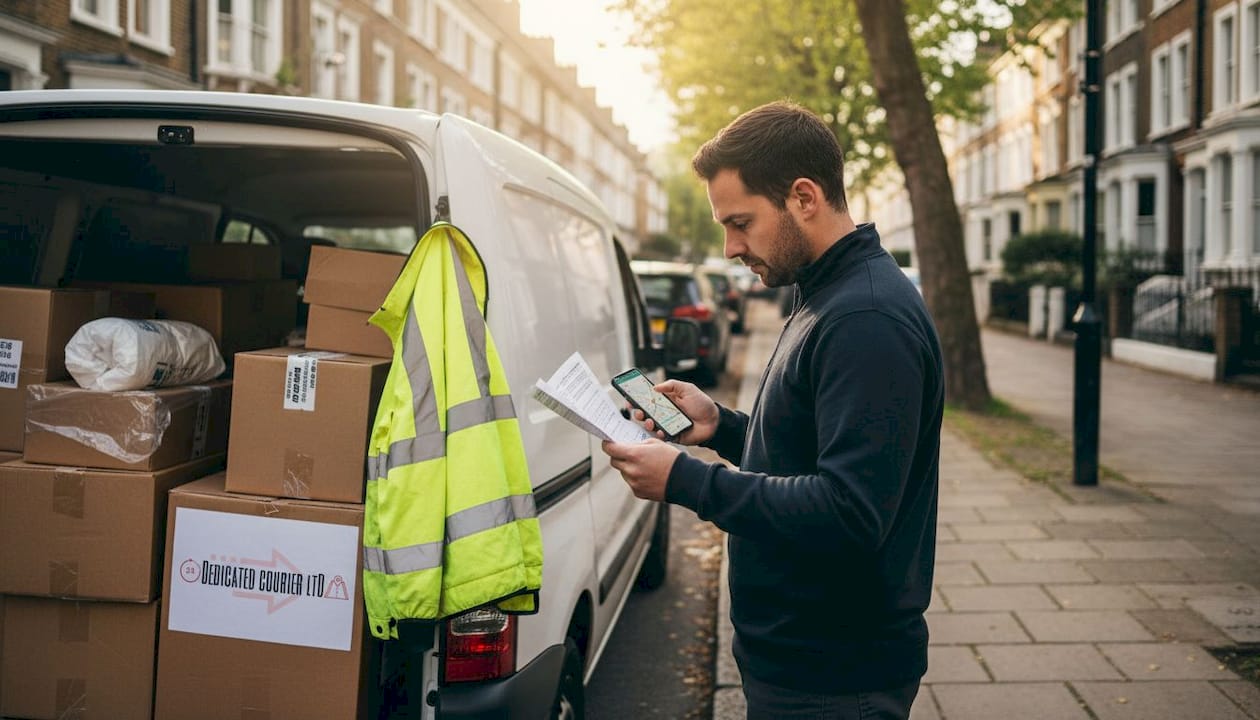
City centre deliveries face the densest conditions. Congestion charges, low-emission zones, loading bans, and restricted parking windows all narrow the viable delivery window considerably. A vehicle circling for a parking space or caught in a queue at a congestion zone checkpoint can turn a 20-minute drop into a 90-minute ordeal. Suburban areas offer more flexibility but are not free from variable traffic patterns, particularly during school runs and peak commuter hours. Rural deliveries involve long travel distances between stops, which makes backtracking expensive and inefficient.
To optimise UK courier logistics effectively, you need accurate data feeding your route plans. Historical traffic data and past run times give realistic estimates rather than best-case scenarios. Combine this with live data feeds and structured driver feedback gathered after each run. Drivers are often the first to notice a new loading restriction or a road that becomes impassable after heavy rain.
Key environmental factors to plan around:
Low-emission and clean air zones affecting diesel vehicles
Time-restricted loading bays in town centres
Limited turning space for larger vehicles in rural lanes
Seasonal road closures or flooding on rural routes
Variable congestion on suburban arterial roads
As last-mile planning research confirms, UK route design must adapt to different environments and constraints, including emission zones, parking availability, and driver shortages. This is not a one-time planning exercise. Routes need regular review as local conditions change.
Gathering driver feedback after every run is one of the most underused tools in logistics. A driver who knows a loading bay is shut on Thursdays is worth more than any mapping algorithm that hasn’t been updated.
Pro Tip: In rural settings, use area grouping to cluster nearby stops together. This reduces backtracking significantly and can cut fuel costs and journey time on long rural rounds. Use your urgent UK shipments checklist before each run to confirm stop-level details in advance.
Choose the right service and packaging for urgency
Having addressed logistics challenges, it is critical to choose service options and packaging tailored to your specific shipment. Not all urgent deliveries carry the same risk profile, and matching service level to urgency is a key step most businesses underestimate.
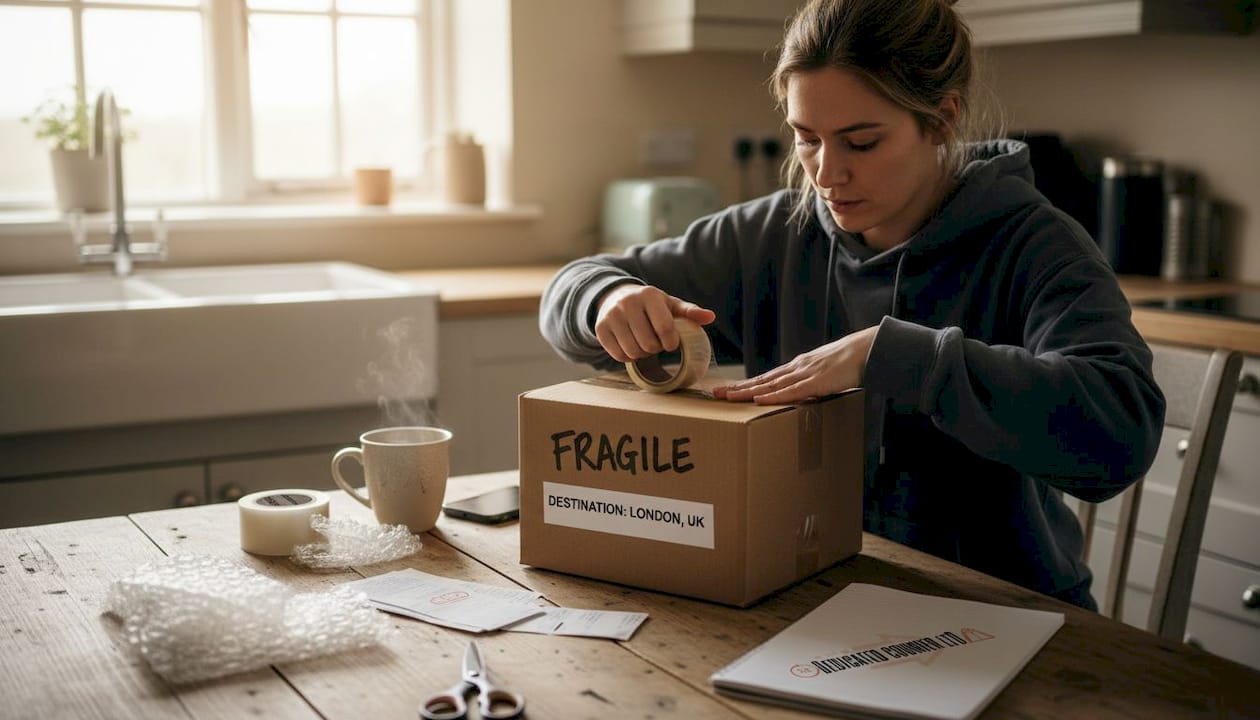
For time-sensitive, fragile, or perishable shipments, standard packaging and basic courier services are rarely adequate. As Royal Mail’s guidance on fragile items makes clear, packaging and service level, including tracked, recorded, and insured options, must match the risk and consequence of delay. A cracked medical component or damaged legal document can be far more costly than the original delivery fee.
For high-value goods in transit, consider:
Double-boxing or using specialist protective packaging for fragile items
Selecting a tracked or express service with proof of delivery
Adding goods-in-transit insurance for items above standard liability limits
Requiring signature on delivery for sensitive or regulated items
Confirming recipient availability before dispatch to avoid wasted trips
A clear acceptance criteria policy also protects your business. Defining upfront whether a parcel can be left with a neighbour, requires a specific named signature, or must be handed to a verified employee avoids disputes later. This is especially important for medical supplies, legal documents, and high-value electronics.
The packaging decision and the service selection should be made together, not separately. Getting one right and ignoring the other leaves your shipment vulnerable at every stage of transit.
Using a step-by-step delivery guide tailored to urgent business shipments helps ensure nothing is overlooked before collection. Preparing items correctly the first time also reduces delays at the handover point, which is a common but avoidable cause of missed delivery windows.
Watch costs and prevent failed delivery attempts
Once you have selected suitable services, the next step is balancing fast delivery costs and minimising total failed attempts. Same-day delivery is genuinely more expensive than standard options, and the cost gap is significant.
Same-day pricing typically runs three to six times higher than next-day rates, as industry data confirms same-day parcels cost substantially more due to premium service labels and heightened fulfilment risk. Margin-aware planning is therefore essential. Absorbing that premium without a clear business case will erode profitability quickly.
Failed first delivery attempts compound the cost problem severely. Failed deliveries cost the UK parcel sector over £1.6 billion and represent one of the most controllable cost levers available to logistics managers. Each failed attempt means a wasted journey, a rescheduled delivery, and a dissatisfied recipient.
Cost driver | Next-day delivery | Same-day delivery |
Base service cost | Standard | 3 to 6 times higher |
Failed attempt impact | Moderate | High, due to express re-run cost |
Fuel and time per trip | Lower | Higher, due to urgency routing |
Insurance premium | Optional | Strongly recommended |
Strategies to reduce failed delivery attempts:
Confirm recipient availability before the courier departs
Send a delivery notification with an estimated time window
Use real-time tracking shared with the recipient
Double-check delivery address accuracy at the booking stage
Establish an alternative contact number for on-the-day issues
Pro Tip: Use live tracking to contact recipients proactively if a delay occurs. Letting someone know their parcel is running 20 minutes late prevents a missed delivery and a wasted return journey. Learn more about cutting courier delays through smarter booking and communication practices.
Compare delivery solutions for different UK contexts
To put the above tactics into practice, compare leading solution types for your UK setting. Same-day network design is not one-size-fits-all: city logistics focus on kerb access and dwell time, while rural logistics prioritise consolidation and area grouping.
Geography | Key challenge | Best approach | Key advantage |
City centre | Congestion, loading restrictions | Small vehicles, timed slots | Speed with low dwell time |
Suburban | Variable traffic, spread stops | Flexible routing, live data | Fewer restrictions, adaptable |
Rural | Long distances, sparse stops | Area grouping, consolidation | Reduces empty miles |
City deliveries benefit most from vehicles sized appropriately for urban streets. A small van or cargo bike can access kerbside loading positions that a large vehicle simply cannot. Timed delivery slots, booked in advance, also reduce the risk of arriving at a loading bay that is already occupied.
Suburban routes offer the most routing flexibility. Traffic patterns are more predictable than city centres, and loading restrictions are fewer. However, variable peak periods mean a live data feed remains important. Locking in rigid timetables without flexibility builds in unnecessary failure risk.
Rural delivery is where consolidation matters most. Grouping stops by area and sequencing them geographically, rather than chronologically by order placement, can cut total mileage substantially. Review your parcel workflow for urgent shipments to ensure rural stops are batched efficiently. A courier service comparison can also help identify which providers have stronger rural coverage in your specific operating area.
Key considerations by delivery context:
City: prioritise small vehicle fleet, timed kerbside access
Suburban: use live traffic data, keep routes adaptable
Rural: group by geography, avoid reactive single-stop runs
The hard truth about urgent UK delivery: what most overlook
Armed with comparisons and options, here is a candid perspective from inside the industry. The common assumption is that better technology alone solves delivery inefficiency. In practice, the greatest gains come from obsessing over first attempt success rates, not from adding another layer of software.
Operational agility, reviewing and refining processes weekly rather than quarterly, consistently outperforms a set-and-forget policy. Local driver insight into access restrictions, unofficial parking tolerances, and customer behaviour patterns is consistently undervalued. No routing algorithm replaces a driver who knows that a particular industrial estate gate only opens after 8am. Your field-tested delivery checklist should be a living document, updated with that kind of operational intelligence. The cost and benefit sweet spot in urgent delivery is an ongoing process, not a one-time fix.
Streamline your delivery logistics today
Putting these logistics principles into practice requires a courier partner with the reach, flexibility, and reliability to handle urgent UK shipments across all settings.
[
DedicatedSameDayCourier.co.uk offers dedicated same-day collection and delivery across the UK, with exclusive vehicle use for every shipment to protect your goods and your deadlines. Whether you need couriers near you for a rapid local collection or a specific van courier fleet size for larger urgent loads, the service operates 24/7 with quotes available by phone, email, or online. For time-sensitive business logistics, this is a practical, reliable solution built around your operational needs.
Frequently asked questions
What is the biggest cost factor in same-day delivery logistics?
Same-day delivery costs can be three to six times higher than standard next-day delivery, mostly due to express service premiums and the elevated fulfilment risk associated with urgent shipments.
How can I reduce failed delivery attempts for urgent shipments?
Use real-time tracking, pre-delivery alerts, and double-check addresses to dramatically lower the risk and cost of failed delivery attempts. Failed deliveries cost UK businesses over £1.6 billion, making first-attempt success a critical operational priority.
What is the best service option for fragile or high-value items?
Select tracked or express delivery, strong protective packaging, and appropriate insurance for fragile or valuable items. Service and packaging level should always align with the risk profile of your shipment.
Does delivery strategy need to change for cities versus rural areas?
Yes, city deliveries need kerb access and quick stops, while rural routes require area grouping to offset long drive times. Same-day networks differ significantly between urban and rural settings, and a single fixed approach will underperform in both.
Recommended


Comments