
Maximise e-commerce success: reliable UK courier guide
Updated: May 14
TL;DR:
Failed deliveries cost UK businesses £1.6 billion annually in redelivery and customer service expenses.
Reliable couriers improve customer satisfaction, reduce returns, and protect brand reputation.
Choosing dedicated courier models with real-time tracking and clear SLAs enhances delivery success.
Failed deliveries are not a minor inconvenience. £1.6 billion annually is what UK businesses collectively lose to failed first-time deliveries each year. For e-commerce managers, that figure represents returns, customer complaints, redelivery costs, and lost repeat business. This guide covers how couriers directly support e-commerce growth, what separates reliable providers from risky ones, and how to build delivery partnerships that protect your reputation and bottom line.
Table of Contents
Key Takeaways
Point | Details |
Reliable couriers reduce costs | Partnering with trusted couriers minimises failed deliveries that drain revenue. |
Premium delivery drives satisfaction | Same-day and premium courier options help e-commerce businesses stand out and satisfy customers. |
Data-driven courier selection | Assess couriers based on service quality, performance during peaks, and integration ability. |
Courier choice impacts brand | A poor courier choice can damage reputation and limit repeat sales opportunities. |
How couriers drive the e-commerce engine
Couriers are not just a fulfilment detail. They are the final, visible stage of every customer transaction. When a parcel arrives on time and in good condition, customers associate that positive experience with your brand. When it does not, they blame you, not the courier.
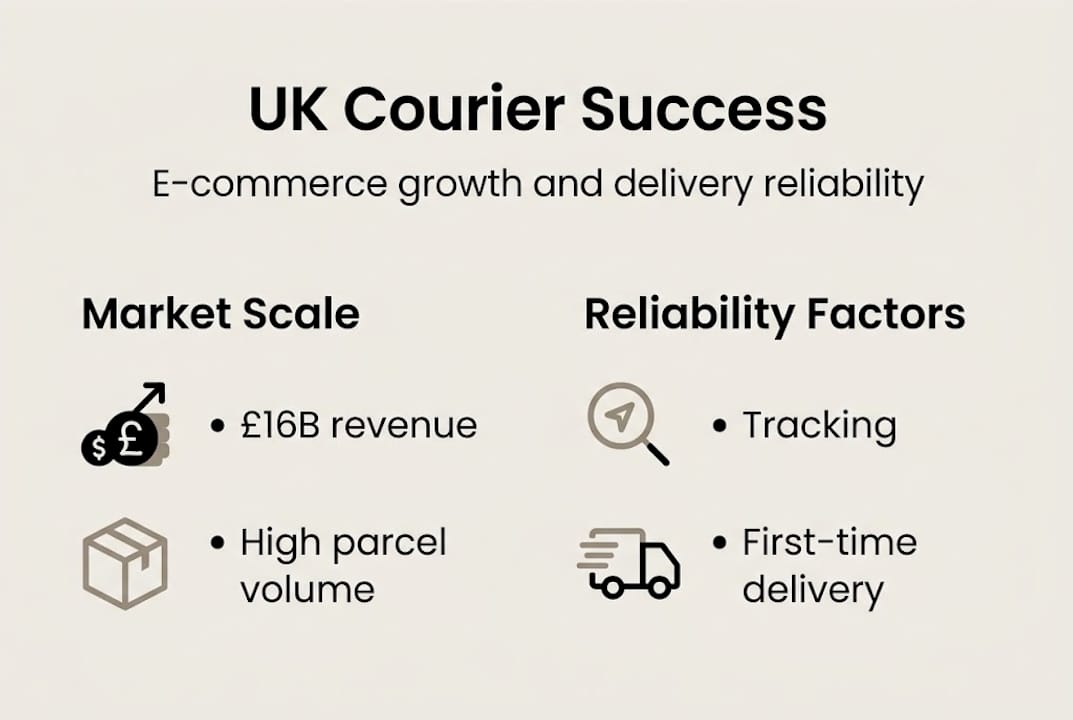
The scale of the UK courier sector reflects how central it has become to retail. Industry revenue is expected to reach £17.4 billion in 2025 to 2026, driven largely by e-commerce parcel volumes. That growth is not slowing. Online retail continues to expand, and with it, the pressure on delivery networks to perform consistently.
Customer expectations have shifted considerably. Buyers now expect tracking updates, flexible delivery windows, and fast despatch as standard. Understanding the retail delivery impact on customer loyalty is essential for any business that relies on repeat orders.
Delivery factor | Customer expectation | Business risk if unmet |
On-time delivery | Same or next day | Negative reviews, refunds |
Real-time tracking | Live updates | Increased support queries |
Safe handling | No damage | Returns and replacements |
Flexible options | Timed or same-day | Lost sales to competitors |
Common points of failure in the checkout-to-doorstep journey include:
Parcels left in unsuitable locations without consent
No communication when a delivery attempt fails
Delays caused by poor route planning or driver shortages
Inconsistent handling of fragile or high-value goods
Addressing these failures starts with understanding what drives them. Reviewing your approach to urgent delivery optimisation can help identify where your current setup is falling short.
What separates reliable couriers from risky providers
Not all couriers operate to the same standard. The difference between a dependable partner and a liability often comes down to how drivers are employed, how exceptions are handled, and how the business prioritises customer outcomes.
Satisfaction data from Ofcom makes the gap clear. Amazon and FedEx score 57% satisfaction, while Evri and Yodel sit between 31 and 38%. That is a significant spread, and it has real consequences for e-commerce businesses that rely on those networks.
Gig-economy courier models tend to prioritise volume and speed over consistency. Drivers working under these arrangements often have little accountability for individual delivery quality. Employer-based or dedicated courier models, by contrast, maintain clearer standards and better oversight.
The courier service model you choose shapes the entire customer experience. Urban areas face congestion and access issues. Rural routes bring their own challenges with distance and limited coverage. Understanding these variables helps you select a provider suited to your actual delivery geography.
Pro Tip: Before committing to a courier partner, request data on their first-attempt delivery success rate, average response time for failed deliveries, and how they handle exceptions. Any reputable provider should be able to supply these figures without hesitation.
Understanding why reliable couriers matter is the foundation for making better procurement decisions. Choosing between local versus national coverage is another factor worth examining based on your order geography.
The impact of same-day and premium delivery options
Same-day delivery has moved from a luxury to a competitive expectation in many product categories. The UK same-day market is valued at USD 1.49 billion in 2026, with road transport accounting for the dominant share. That growth reflects genuine demand from consumers who want goods faster than ever before.
For e-commerce businesses, offering same-day or premium timed delivery can be the deciding factor in a purchase. It is particularly relevant for urgent replacement items, perishables, gifts, and high-value orders where the customer cannot afford to wait.
The main challenges in delivering this service reliably include:
Road congestion in urban centres, which increases transit times unpredictably
Driver shortages, which reduce capacity during peak periods
Surge volumes around bank holidays and seasonal events
Coordinating same-day collections with warehouse or fulfilment timelines
Understanding the broader same-day delivery landscape in the UK helps set realistic expectations. The benefits of same-day delivery for businesses go beyond customer satisfaction and extend into reducing cart abandonment and improving conversion rates.
Pro Tip: You do not need to offer same-day delivery on every product. Start by identifying your top 20% of orders by value or urgency, and apply premium delivery options selectively. This controls cost while still meeting the expectations of your most important customers.
Strategies for choosing and partnering with couriers
Selecting a courier partner is not a one-time decision. It requires ongoing evaluation and clear performance expectations from both sides.
Here are the key steps to follow when building a reliable courier partnership:
Define your coverage requirements. Map where your orders are going and confirm the courier can service those postcodes reliably, including rural or remote areas.
Assess tracking and communication capabilities. Customers expect live updates. Ensure the provider offers real-time tracking and automated notifications.
Review their SLA terms. Service level agreements should specify delivery windows, exception handling, and compensation for failures. Do not accept vague commitments.
Test before committing at scale. Run a trial period with a subset of orders before fully transitioning. Measure on-time rates, damage rates, and customer feedback.
Plan for peak periods. Confirm the courier has capacity for your busiest weeks. Urban congestion raises failed deliveries by 15 to 20%, and driver shortages delay 12% of parcels, so peak planning is non-negotiable.
Pro Tip: Build a simple monthly scorecard tracking on-time delivery percentage, failed first-attempt rate, and customer complaints by courier. Sharing this data with your courier partner creates accountability and gives you leverage when renegotiating terms.
For practical guidance on optimising courier logistics and a step-by-step delivery setup, both resources provide actionable frameworks for UK e-commerce operations.
Why most businesses underestimate the importance of choosing the right courier
Most businesses treat courier selection as a cost exercise. They compare per-parcel rates, pick the cheapest option that meets basic requirements, and move on. This approach is understandable but consistently costly in the long run.
Every failed delivery is a customer service interaction waiting to happen. Repeated failures erode trust faster than almost any other operational issue. A customer who receives a damaged parcel or misses a delivery twice rarely gives a third chance. They leave, and they often say so publicly.
The hidden costs of poor courier performance, including repeat deliveries, refunds, and support time, frequently exceed any saving made on the original rate. Treating couriers as growth partners for reliability rather than interchangeable vendors changes how you evaluate and manage those relationships entirely.
Enhance your e-commerce delivery with a dedicated courier
The lessons in this guide point to one consistent conclusion: delivery quality is a direct reflection of your brand. Choosing a courier that operates on a dedicated model, where your goods travel on an exclusive vehicle without consolidation delays, removes many of the variables that cause failures.
[
At DedicatedSameDayCourier.co.uk, we offer same-day courier services across the UK, with a range of van courier options suited to different parcel sizes and urgency levels. Whether you need a single urgent collection or a reliable ongoing delivery partner, you can request a delivery quote online, by phone, or by email at any time.
Frequently asked questions
How do failed deliveries affect e-commerce businesses financially?
Every failed first-time delivery contributes to a combined industry loss of £1.6 billion yearly, covering redelivery costs, refunds, and customer service overhead that directly reduce profit margins.
Are same-day couriers worth the higher cost for UK e-commerce?
For urgent, high-value, or time-sensitive orders, same-day delivery justifies its cost. The UK same-day market at USD 1.49 billion in 2026 reflects strong, sustained consumer demand for faster fulfilment.
Which courier companies have the best customer satisfaction?
Amazon and FedEx lead with 57% satisfaction rates, while Evri and Yodel rank lowest at 31 to 38%, according to Ofcom’s 2025 parcel firm assessment.
What main challenges do UK couriers face with urgent deliveries?
Urban congestion, driver shortages, rural distances, adverse weather, and peak volume surges are the primary factors behind delayed or failed urgent deliveries across the UK network.
Recommended


Comments