
Understand courier pricing to optimise urgent UK deliveries
- Andrew Buttrick
- 8 hours ago
- 8 min read

TL;DR:
Courier pricing in the UK depends on specific variables such as parcel weight, size, speed, and distance, making quotes predictable once understood.
Comparing service tiers shows that standard delivery is affordable for non-urgent shipments, while same-day services come at a premium for urgent, time-sensitive goods.
For SMEs, building transparent relationships with reliable couriers and understanding true total costs prevent costly delivery failures and ensure smarter logistics decisions.
Courier pricing in the UK can feel inconsistent, leaving businesses unsure whether a quote is fair or inflated. For SMEs that rely on urgent document and parcel deliveries, that uncertainty adds risk to every booking. This guide breaks down exactly what drives courier prices in 2026, shows how to compare service tiers side by side, and explains when paying more actually saves money. Whether you are sending a single envelope across London or a box of parts from Manchester to Bristol, understanding the pricing logic helps you make faster, smarter decisions.
Table of Contents
Key Takeaways
Point | Details |
Price factors explained | Couriers price based on weight, speed, distance, and service level in the UK. |
Premium justifies cost | Extra charges for premium couriers buy reliability, tracking, and urgent delivery assurance. |
2026 trends matter | Fuel surcharges and inflation impact courier pricing for UK businesses this year. |
Total value beats lowest rate | Focusing on reliability and transparency helps avoid costly courier mistakes. |
What drives courier pricing in the UK?
Before comparing offers, it helps to understand what actually goes into a courier’s price. It is not arbitrary. Several well-defined variables determine what you will pay, and knowing them puts you in a much stronger position when reviewing quotes.
The main factors are parcel weight and size, delivery speed, service tier, and distance. A small parcel under 1kg sent via Evri’s standard ParcelShop service starts at £2.62, while a medium parcel between 5kg and 10kg can cost between £5.87 and £9.98 with the same provider. Next-day services from DPD typically range from £7 to £15, and same-day urban deliveries for small items run from £20 to £60. Royal Mail small parcel rates start at £3.25, and DPD starts at £4.79 for standard services.
Service type | Provider | Weight range | Typical price (2026) |
Standard (ParcelShop) | Evri | Under 1kg | £2.62 |
Standard | Evri | 2 to 5kg | £2.62 to £6.49 |
Standard | Evri | 5 to 10kg | £5.87 to £9.98 |
Small parcel | Royal Mail | Standard | £3.25+ |
Standard | DPD | Standard | £4.79+ |
Next-day | DPD | Small/medium | £7 to £15 |
Same-day | Various | Small urban | £20 to £60 |
Beyond base rates, there are additional charges that affect the final price. Fuel surcharges fluctuate with diesel costs. Insurance for goods in transit is sometimes included, sometimes an add-on. Tracking features, collection from premises rather than a drop-off point, and weekend or out-of-hours delivery all carry their own fees. These are the hidden variables that make two quotes look very different even when the parcel is identical.
For businesses using competitive courier pricing tools or comparing providers manually, the key is to request an itemised breakdown. A quote showing a single total figure tells you very little. You want to see the base rate, fuel surcharge, insurance, and any access or collection fees listed separately.
Pro Tip: Always ask each courier to itemise their quote. It is the fastest way to spot where one provider is padding their margin with surcharges another includes as standard.
The core takeaway here is that price is a function of very specific inputs. Once you know what those inputs are, comparing quotes becomes straightforward rather than guesswork.
Comparing standard, next-day, and same-day pricing
With an understanding of what shapes the cost, it is time to compare the main types of delivery speeds on offer. Speed is the single biggest price driver in courier services, and the differences between tiers are significant.
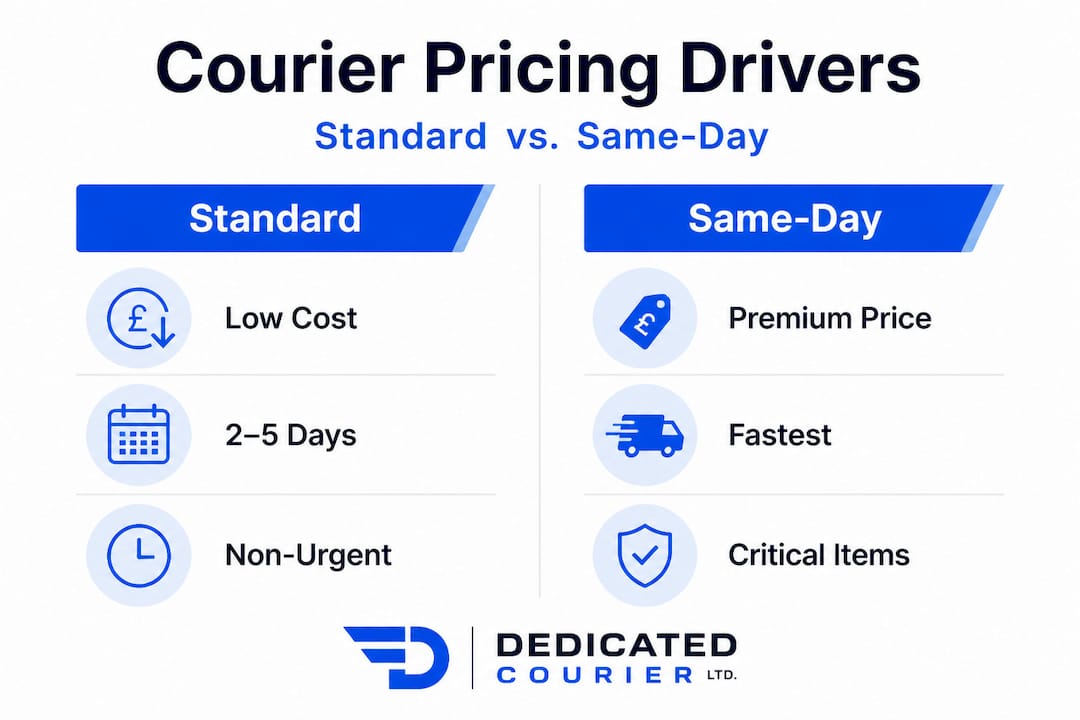
Standard or economy delivery is the most affordable option. It suits low-urgency shipments where a two to five day window is acceptable. Next-day delivery, ranging from £7 to £15 for small parcels via providers like DPD, is the middle ground. It works well for businesses that book in advance and need reliability without the premium of a dedicated vehicle.
Same-day delivery is a different category entirely. Same-day urban pricing for small items starts at around £20 and can reach £60 depending on distance, vehicle size, and time of day. The cost reflects the resource allocation involved: a driver is dispatched specifically for your collection, often within the hour.
Delivery type | Typical price range | Best suited for |
Standard | £2.62 to £9.98 | Non-urgent, planned shipments |
Next-day | £7 to £15 | Advance-booked business deliveries |
Same-day | £20 to £60+ | Urgent, time-critical consignments |
For businesses weighing up the value of same-day services against the courier vs postal service alternatives, three practical steps can guide the decision.
Define the actual deadline. If an item must arrive by 2pm today, same-day is the only viable option regardless of cost.
Calculate the cost of failure. A missed legal filing or a delayed part holding up production will usually cost far more than the premium on a same-day booking.
Check whether a next-day service with a guaranteed morning window satisfies the requirement at a lower price point.
The choice of service tier is not purely about cost. It is about matching the urgency of the shipment to the right level of service commitment.
Why do premium couriers charge more and is it worth it?
Alongside speed, the courier’s service tier also makes a big difference to both cost and outcome. Premium providers charge more, but the reasons are practical rather than arbitrary.
Economy providers like Evri and Royal Mail are built for volume and reach. Their tracking and reliability are functional but weaker compared to premium operators like DPD and DHL, which justify a 20 to 50 percent cost premium through faster resolution times, more precise tracking, and better guaranteed delivery windows. For a business sending a routine catalogue to a mailing list, economy is perfectly adequate. For a time-sensitive legal document or a high-value component, the difference in service quality matters enormously.
The practical business benefits of working with reliable couriers for urgent deliveries include the following.
Real-time tracking so you can monitor the delivery without chasing the courier.
Guaranteed delivery windows that allow you to plan around the arrival.
Dedicated drivers for same-day services, meaning your goods are never consolidated with other consignments.
Goods in transit insurance at meaningful cover levels included in the base price.
Priority customer support when something goes wrong, which is where economy providers often fall short.
“For urgent business shipments, the cost of a failed or delayed delivery almost always exceeds the premium of choosing a more reliable provider. The question should not be ‘can we afford to go premium?’ but ‘can we afford not to?’”
Pro Tip: For critical legal documents, medical supplies, or sensitive business materials, always choose a premium provider with full end-to-end tracking and confirmed delivery signatures. The small additional cost is negligible compared to the risk of a missed or unverified delivery.
The logic here is simple. A £5 saving on a courier booking is irrelevant if the parcel arrives a day late and costs a contract.
Current trends affecting courier prices in 2026
No pricing evaluation is complete without considering what is trending in the courier sector right now. Several forces are actively shaping what businesses pay in 2026.
Fuel price volatility remains the most significant factor. The ongoing fuel crisis has empowered carriers to raise surcharges with less notice than in previous years. Where fuel surcharges were once a predictable percentage on top of base rates, they are now subject to frequent adjustment, sometimes weekly. This makes budgeting for regular courier use more challenging.
Other current trends businesses should account for include the following.
Sustained inflation pushing up base rates across all service tiers compared to 2024 benchmarks.
Route optimisation technology reducing costs for providers on popular corridors, occasionally benefiting businesses with predictable delivery routes.
Regional pricing variations where urban same-day rates in London or Birmingham differ substantially from equivalent services in rural areas.
Surcharge transparency demands from larger clients pushing some couriers to publish clearer breakdowns in their quotes.
Businesses reviewing the guide to UK courier rates should check whether their existing courier agreements include a fuel surcharge cap or a rate review clause. Without these protections, your agreed rate from January may look quite different by October.
Watch out specifically for: fuel surcharges listed as a percentage rather than a fixed figure, insurance cover limits that appear generous but have high per-item caps, and collection fees that are added after the quote is generated.
The truth most SMEs miss about courier pricing
Having broken down the facts, here is the view that actually matters for SMEs making real decisions under time pressure.
Most small and medium businesses focus on headline rates. They compare the top-line figure from three couriers and book the cheapest. It is understandable but consistently counterproductive. The cheapest quote rarely includes the full picture, and the shortfall shows up at the worst possible moment: a missed collection window, a parcel stuck in a depot with no tracking update, or a claim process that drags on for weeks over a relatively small amount.
The businesses that handle urgent deliveries well do not obsess over saving £2 on a booking. They build relationships with couriers who offer transparent itemised pricing, reliable tracking, and consistent collection times. They also understand the total cost of a delivery failure, not just the invoice cost of the booking itself.
Avoiding common courier mistakes starts with shifting the question from “which courier is cheapest?” to “which courier gives us the best outcome at a price we can justify?” That is not a soft or vague distinction. It is a practical one backed by the data in this guide.
The cheapest option for a non-urgent catalogue delivery is perfectly sensible. The cheapest option for a same-day legal document with a court deadline is a risk that no business should take to save £10.
Unlock competitive courier solutions for your business
Understanding courier pricing is the first step. The second is working with a provider that actually delivers on what the quote promises.
[
At DedicatedSameDayCourier.co.uk, we offer fully itemised quotes with no hidden surcharges, covering urgent same-day collections and deliveries across the UK. Our sameday courier service runs 24/7, with dedicated vehicles ensuring your goods travel exclusively on a single vehicle from collection to delivery. If your shipment requires a specific vehicle type, our van courier options cover everything from small vans to large luton vehicles. For businesses ready to compare rates with full transparency, get a courier quote today and see exactly what you are paying for before you commit.
Frequently asked questions
How do I know if a courier’s price is fair?
Compare your quote against 2026 UK benchmarks for your parcel weight and delivery speed, and always request a full itemised breakdown before accepting.
Why do fuel surcharges keep fluctuating in courier quotes?
Couriers adjust fuel surcharges in line with diesel price changes, and the ongoing fuel crisis in 2026 has made these adjustments more frequent and less predictable than in previous years.
Is premium courier tracking worth the extra cost?
For urgent or high-value shipments, premium tracking reliability is generally worth the additional 20 to 50 percent cost, particularly when business reputation or contract compliance is at stake.
Can small businesses negotiate courier rates?
Yes, particularly for regular or volume bookings, but always verify what is included in the negotiated rate and check for surcharges that may be applied separately after agreement.
Recommended


Comments