
What is direct point delivery? A clear guide
TL;DR:
Direct point delivery transports goods directly from the origin to the destination without intermediate stops, ensuring faster and more reliable service for urgent items. It involves a dedicated vehicle, precise scheduling, and minimal handling, reducing damage and transit times. Businesses should utilize this model for time-sensitive, high-value, or sensitive shipments to avoid delays and guarantee security.
Direct point delivery is defined as the transport of goods from a single pickup location to a single destination without any intermediate stops, hubs, or sorting centres. The industry term for this model is point-to-point delivery, and the two phrases describe the same operational approach. For businesses and individuals moving time-critical items such as legal documents, medicines, or perishable goods, this method removes the delays built into conventional hub-based distribution. Dedicatedsamedaycourier operates precisely on this model, collecting goods and delivering them directly on dedicated vehicles across the UK.
What is direct point delivery and how does it work operationally?
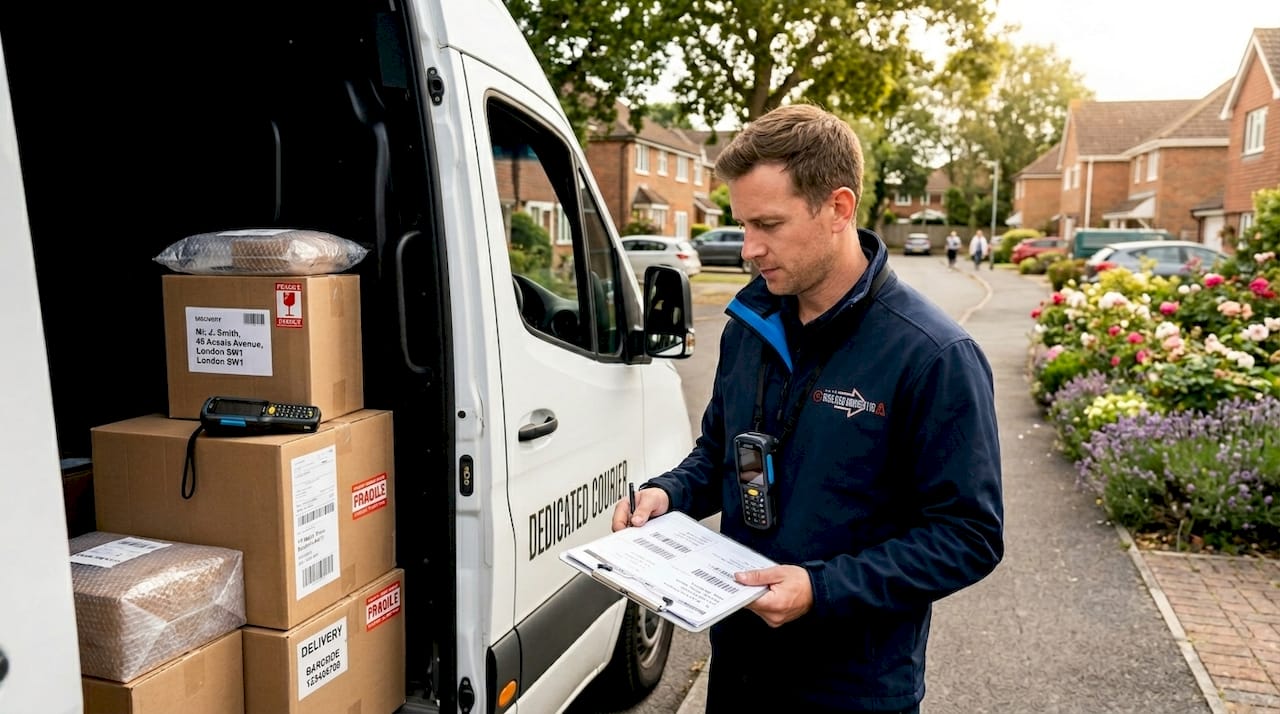
Direct point delivery involves a driver collecting a package from the origin address and transporting it immediately to the destination, with no stops at warehouses or sorting facilities in between. The operational workflow is straightforward by design. A dedicated vehicle is assigned to a single job, and the driver proceeds directly from collection to drop-off without consolidating loads or waiting for other parcels.
The end-to-end process follows these steps:
Booking and assignment. A customer places a request, and a driver or vehicle is allocated specifically to that job.
Collection. The driver arrives at the pickup address within an agreed window, often within the hour for same-day services.
Direct transit. The goods travel on a single, uninterrupted route to the destination. No sorting centres, no warehouses, no shared loads.
Delivery and confirmation. The driver delivers directly to the recipient, often with proof of delivery provided in real time.
This model is used by UK courier services offering same-day urgent deliveries, where precise scheduling and direct routing are non-negotiable. In federal procurement contexts, a similar principle applies: direct delivery allows suppliers to ship straight to ordering agencies, bypassing intermediaries entirely.
Pro Tip: When booking a direct point delivery for an urgent shipment, confirm the driver’s estimated collection time and ask for live tracking. Tight pickup windows are the single biggest variable in whether a time-critical delivery succeeds.

What are the key benefits of direct point delivery?
The advantages of point-to-point delivery are most apparent when speed, security, and reliability matter more than cost per unit. Fewer handling stages mean fewer opportunities for damage, loss, or misdirection. Each additional touchpoint in a logistics chain is a potential failure point, and direct delivery removes most of them.
The core benefits include:
Speed. A direct, non-stop route between origin and destination reduces transit time significantly compared to hub-routed deliveries that may take 24 to 72 hours.
Reduced damage risk. Goods handled only twice, at collection and at delivery, face far lower risk of breakage or loss than parcels passing through multiple sorting centres.
Reliability for sensitive items. Medicines, legal contracts, biological samples, and high-value electronics all benefit from the controlled, single-vehicle environment.
Same-day capability. Direct delivery is the operational backbone of same-day and on-demand delivery models, where hub-based routing is simply too slow.
Simpler error tracing. With only one driver and one vehicle involved, any issue is immediately identifiable and easier to resolve.
“Direct delivery reduces logistics costs but depends on precise coordination and performance.” — proLogistik Group
This quote captures the central trade-off accurately. The model is not without demands. It requires reliable drivers, accurate scheduling, and clear communication between sender and recipient. When those conditions are met, direct point delivery outperforms hub-based models on every metric that matters for urgent shipments.
How does direct point delivery compare to hub-based delivery?
Hub-based delivery, also called the hub-and-spoke model, routes parcels through central sorting facilities before onward distribution. This approach works well for high-volume, non-urgent shipments because it consolidates loads and reduces cost per parcel. The trade-off is time. Parcels may pass through two or three hubs before reaching their destination, adding hours or days to transit.
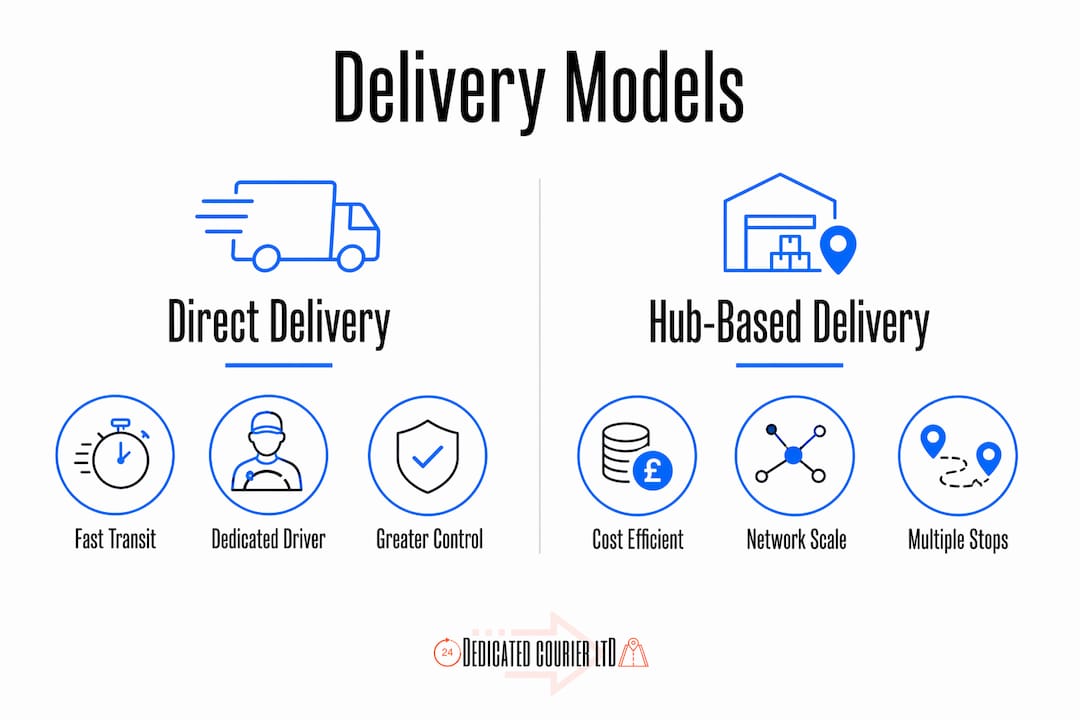
Choosing direct delivery trades network scale and cost efficiency for speed and control. That is not a flaw in the model. It is a deliberate design choice suited to specific shipment types.
Feature | Direct point delivery | Hub-based delivery |
Transit speed | Same-day to next-day | 1 to 3 days typically |
Handling stages | 2 (collection and delivery) | 4 to 6 or more |
Damage risk | Low | Higher |
Cost per shipment | Higher | Lower at volume |
Flexibility | Fixed route, dedicated vehicle | Network rerouting possible |
Best for | Urgent, sensitive, or high-value goods | Bulk, non-urgent parcels |
Tight scheduling raises risks if pickup and delivery windows are not perfectly aligned. Hub-based networks absorb scheduling variance because parcels wait at sorting centres. Direct delivery has no such buffer, which is why supplier and driver reliability are non-negotiable in this model.
Pro Tip: For regular, high-volume shipments with no time pressure, hub-based services will cost less. Reserve direct point delivery for jobs where a missed window has real consequences, such as court deadlines, medical supplies, or perishable stock.
Who should use direct point delivery and when?
Direct point delivery suits a specific set of users and circumstances. Understanding whether it fits your situation saves both time and money.
The model is the right choice for:
Medical and pharmaceutical businesses transporting temperature-sensitive medicines, blood samples, or surgical equipment that cannot be delayed or mishandled.
Legal and professional services firms sending signed contracts, court documents, or confidential files where chain of custody matters.
Retailers and e-commerce businesses offering same-day delivery as a premium service to customers in the same city or region.
Manufacturers and engineers requiring urgent parts delivery to prevent production downtime.
Individuals moving high-value or irreplaceable items, such as passports, artwork, or jewellery, where standard postal services carry too much risk.
Direct delivery requires high demand and supplier reliability since it lacks the buffering or consolidation that hub-based networks provide. Businesses that use it successfully tend to have predictable shipment patterns and established relationships with courier providers. For a practical overview of how UK businesses apply this model, the guide to point-to-point delivery covers the operational specifics in detail.
Key takeaways
Direct point delivery is the fastest and most reliable method for urgent shipments because it eliminates every intermediate stop between collection and destination.
Point | Details |
Core definition | Goods travel from pickup to destination without hubs, sorting centres, or shared loads. |
Speed advantage | Same-day delivery is only achievable through direct, non-stop routing. |
Reduced handling | Fewer touchpoints lower the risk of damage, loss, or misdirection. |
Cost trade-off | Direct delivery costs more per shipment but is worth it for time-critical or sensitive goods. |
Reliability requirement | Tight scheduling and dependable drivers are non-negotiable for the model to work. |
Why direct delivery deserves more strategic thought than most businesses give it
Most businesses treat direct point delivery as a last resort, something you book when everything else has failed or a deadline is looming. That is the wrong way to think about it. The businesses that get the most value from this model are the ones that plan for it in advance rather than scrambling for it at the last minute.
What I have observed consistently is that the cost objection, “it is more expensive than standard courier services,” disappears quickly when you calculate the actual cost of a missed deadline. A delayed legal document can adjourn a court hearing. A late medical supply can halt a clinical procedure. A missed same-day delivery can lose a retail customer permanently. The premium you pay for direct delivery is almost always smaller than the cost of the alternative.
The other thing worth noting is that synchronising inventory and supplier performance is critical in direct delivery because removing intermediaries increases the risk of delays if any single link in the chain underperforms. This is not a reason to avoid the model. It is a reason to choose your courier provider carefully and build a relationship with one that has a proven track record rather than booking on price alone.
For businesses of any size, the practical starting point is to identify your top five shipment types by urgency and value, then assess which of those genuinely require direct delivery. You will likely find that a small proportion of your shipments drive the majority of your delivery risk.
— andrew
How Dedicatedsamedaycourier delivers on direct point delivery
[
Dedicatedsamedaycourier provides dedicated same-day courier services built entirely on the direct point delivery model. Every booking uses an exclusive vehicle assigned to a single job, meaning your goods travel directly from collection to destination without sharing space or time with other consignments. The service operates 24 hours a day, seven days a week, covering urgent collections and deliveries across the UK. Whether you need to move documents, parcels, or pallets on the same day, Dedicatedsamedaycourier handles the scheduling, driver assignment, and real-time coordination. You can request a quote by phone, email, or online form for a tailored solution that fits your timeline. For businesses exploring point-to-point delivery options, Dedicatedsamedaycourier is a practical and reliable starting point.
FAQ
What does direct point delivery mean?
Direct point delivery means transporting goods from a single pickup address to a single destination without stopping at hubs, warehouses, or sorting centres. It is also referred to as point-to-point delivery in the logistics industry.
How does direct delivery work in practice?
A driver is assigned exclusively to one job, collects the goods from the sender, and travels directly to the recipient without any intermediate stops. The entire process can be completed within hours for same-day bookings.
What are the main benefits of direct point delivery?
The primary benefits are faster transit times, reduced risk of damage through fewer handling stages, and greater reliability for time-sensitive or sensitive items such as medicines and legal documents.
Is direct point delivery more expensive than standard courier services?
Direct delivery typically costs more per shipment than hub-based services because a vehicle and driver are dedicated exclusively to one job. The cost is justified for urgent, high-value, or sensitive shipments where delays carry significant consequences.
When should a business use direct point delivery?
Businesses should use direct point delivery when shipments are time-critical, sensitive, or high-value, such as same-day document transfers, medical supplies, or urgent parts deliveries where a missed window has real operational or financial consequences.
Recommended


Comments