
Express delivery explained: UK urgent shipping guide
Updated: May 15
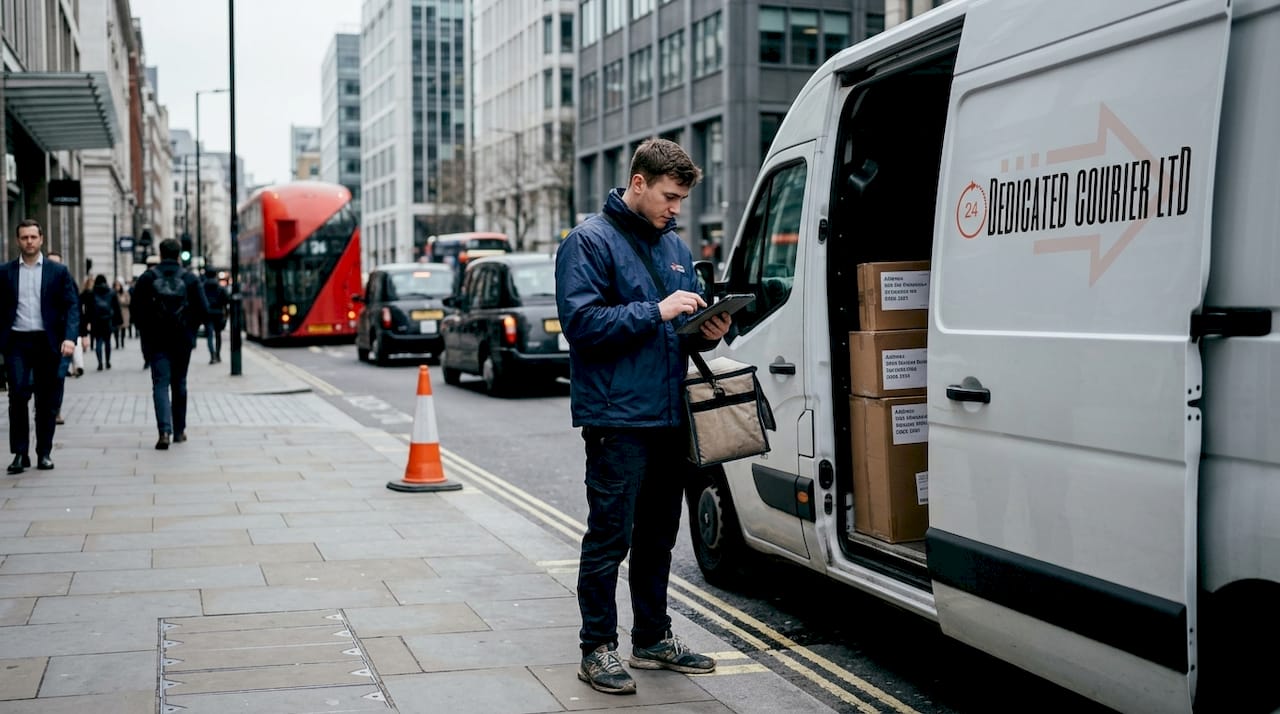
Express delivery has transformed from a luxury service into a £1.1 billion market in the UK, yet many businesses still underestimate its true costs and operational complexities. The express delivery segment is growing faster than standard courier services, driven by consumer expectations for instant gratification and same-day fulfilment. This guide cuts through the confusion surrounding urgent shipping, explaining how express delivery actually works, the hidden challenges behind rapid transit, and practical strategies for choosing the right service when time-sensitive parcels simply cannot wait.
Table of Contents
Key Takeaways
Point | Details |
Express price premium | Express delivery commands substantially higher prices than standard shipping due to dedicated resources, direct routing, and guaranteed time windows. |
Direct drive advantage | A direct drive, point to point service reduces handling and sorting delays by avoiding hub transfers. |
Contactless proof | Contactless proof of delivery with electronic signatures and GPS verification speeds handovers and reduces paperwork delays. |
Revenue uplift and strain | Businesses offering same day delivery gain higher revenue but face operational challenges and worker strain from intensified workloads. |
Choosing the right courier | Selecting a courier requires weighing cost, speed and reliability to ensure time sensitive parcels are worth the premium. |
What is express delivery and how does it work?
Express delivery refers to rapid parcel or document transportation, typically completed within the same day or within a few hours of collection. Unlike standard courier services that route parcels through central sorting depots, express delivery employs direct drive methods where a single driver collects your item and delivers it straight to the destination without detours. This point-to-point approach eliminates the sorting delays and multiple handling points that slow down conventional shipping.
The mechanics of express delivery prioritise speed at every stage. Couriers use contactless proof of delivery methods such as electronic signatures, time-stamped photographs, or GPS verification to confirm successful handover without paperwork delays. Dynamic pricing models adjust costs based on real-time factors including distance, parcel dimensions, weight, and urgency level. A document requiring delivery across London within two hours commands a different price than a parcel travelling from Manchester to Birmingham by end of day.
The UK express market demonstrates remarkable momentum. Data shows the express segment growing at 3.56% CAGR, outpacing non-express courier services significantly. This growth reflects changing business requirements and consumer expectations shaped by e-commerce platforms promising rapid fulfilment.
Businesses commonly use express delivery for:
Last-minute contract documents requiring signatures before deadlines
Replacement parts needed urgently to minimise production downtime
Medical supplies and pharmaceutical items with time-sensitive requirements
High-value goods requiring secure, traceable transportation
E-commerce orders where customers pay premium rates for same-day arrival
Individuals rely on express services for forgotten items, emergency deliveries to family members, or time-critical parcels that simply cannot wait for standard shipping. Understanding how courier services work helps you recognise when express delivery offers genuine value versus situations where next-day shipping suffices.
Pro Tip: Choosing a courier with direct delivery capability rather than hub-and-spoke networks reduces your wait times significantly and minimises the risk of parcels being misdirected during sorting.
Cost, benefits, and operational challenges of express delivery
Express delivery commands substantially higher prices than standard shipping due to dedicated resources, direct routing, and guaranteed time windows. In London, same-day costs range £6.90 to £35 per parcel, representing three to six times the cost of next-day delivery for comparable items. This premium reflects the operational intensity required to provide rapid fulfilment, including immediate driver allocation, optimised routing, and priority handling.

The financial equation extends beyond simple delivery fees. Failed deliveries cost approximately £11.60 per parcel when factoring in re-delivery attempts, customer service interactions, and potential refunds. Successful first-time delivery becomes economically critical, with industry benchmarks targeting 94% success rates to maintain profitability.
Businesses adopting express delivery options frequently experience tangible commercial benefits. Research indicates companies offering same-day delivery gain 26% more revenue compared to those providing only standard shipping. This revenue lift stems from multiple factors:
Reduced cart abandonment when customers see rapid delivery options
Higher average order values from shoppers willing to pay for speed
Improved customer loyalty and repeat purchase rates
Competitive differentiation in crowded marketplaces
However, these benefits come with significant operational challenges that strain businesses and workers alike. Warehouse operations face constant pressure to pick, pack, and dispatch orders within tight windows, often requiring overtime staffing and premium labour costs. The logistics infrastructure supporting express delivery operates under perpetual urgency, creating stress points throughout the supply chain.
Driver shortages compound these pressures, particularly in urban areas where demand peaks during evenings and weekends. Many express delivery drivers work through gig economy platforms, earning relatively low wages without employment protections or benefits. These workers face job insecurity, variable income, and safety risks from rushed schedules and traffic conditions.
“Express delivery transforms customer expectations but imposes hidden costs on workers and businesses that extend far beyond the delivery fee itself.”
The operational strain manifests in multiple ways. Businesses must maintain excess capacity to handle demand spikes, invest in technology for real-time tracking and route optimisation, and manage customer expectations when delays occur despite best efforts. Understanding same day delivery benefits requires acknowledging these trade-offs between speed, cost, and sustainability.
Small businesses particularly struggle with express delivery economics. Whilst large retailers negotiate volume discounts and absorb costs through scale, independent merchants often find margins squeezed when offering competitive rapid shipping options. The decision to provide express delivery becomes a strategic calculation balancing customer acquisition against profitability.
Innovations addressing express delivery challenges in the UK
The express delivery sector faces persistent obstacles that innovative technologies and operational approaches are beginning to solve. Urban traffic congestion ranks among the most significant challenges, with delivery vehicles spending substantial time navigating crowded city centres during peak hours. Driver shortages exacerbate these issues, creating capacity constraints precisely when demand surges.
Advanced routing software represents a major technological breakthrough in delivery efficiency. These systems analyse real-time traffic data, historical patterns, delivery density, and vehicle capacity to calculate optimal routes that minimise time and fuel consumption. The software dynamically adjusts routes as conditions change, redirecting drivers around accidents, road closures, or unexpected delays. This intelligent routing reduces average delivery times by 15 to 25% compared to manual planning methods.
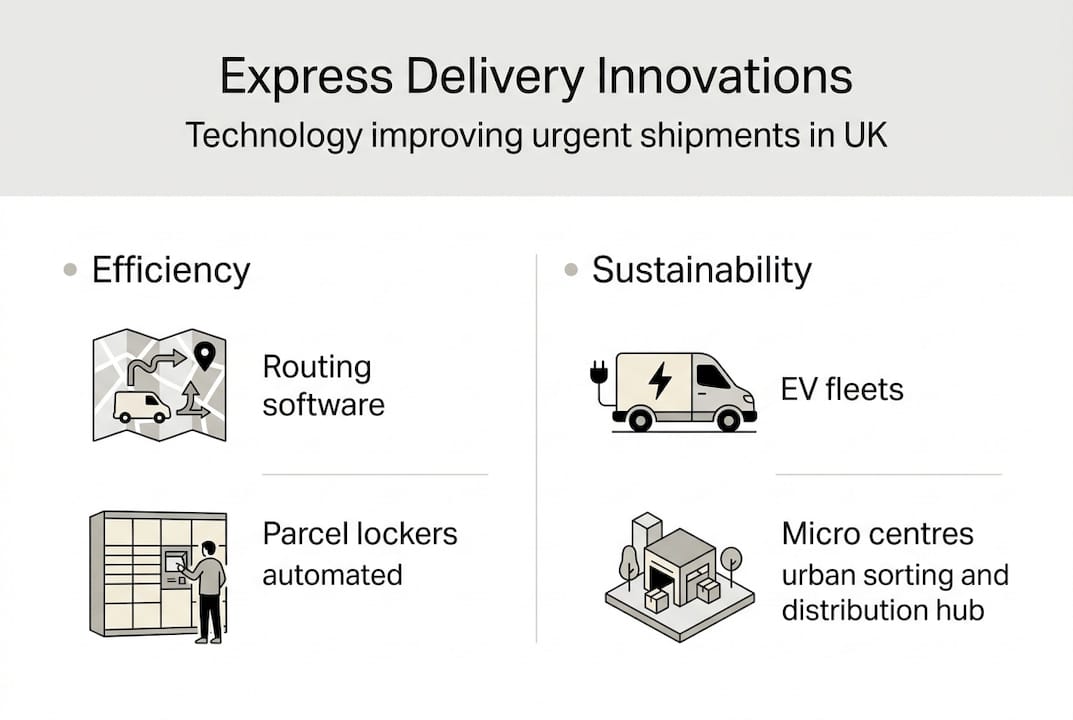
Parcel lockers offer an innovative solution to the persistent problem of failed deliveries when recipients are unavailable. These secure, automated storage units allow couriers to deposit parcels in designated compartments that customers access using unique codes. Currently, parcel lockers handle approximately 7% of UK parcel deliveries, a figure expected to grow as networks expand. Lockers particularly benefit urban areas with high residential density and transient populations.
Autonomous vehicles represent the frontier of last-mile delivery innovation. Whilst widespread deployment remains years away, pilot programmes across UK cities are testing self-driving delivery robots and drones for specific use cases. These technologies promise to address driver shortages whilst potentially reducing delivery costs through automation.
Delivery method | Speed | Cost | Environmental impact | Reliability |
Traditional depot sorting | Moderate | Low | High emissions | Variable |
Direct drive express | Very fast | High | Moderate emissions | High |
Parcel locker network | Fast | Moderate | Lower emissions | Very high |
Autonomous delivery | Fast | Potentially low | Lowest emissions | Developing |
Micro-fulfilment centres positioned strategically within urban areas enable faster dispatch by reducing the distance between inventory and customers. These compact warehouses stock high-demand items in city centres, allowing couriers to collect parcels and reach recipients within minutes rather than hours. The approach works particularly well for grocery delivery and frequently ordered consumer goods.
Environmental considerations increasingly influence delivery innovation. Electric vehicle fleets reduce emissions whilst often providing lower operating costs than diesel alternatives. Cargo bikes navigate congested city centres more efficiently than vans, offering zero-emission delivery for smaller parcels. These sustainable approaches align with corporate responsibility goals whilst addressing practical urban logistics challenges. Understanding net zero and same-day deliveries helps businesses anticipate regulatory changes affecting future operations.
Pro Tip: Using micro-fulfilment centres in cities can greatly reduce delivery times and congestion whilst improving your environmental performance and customer satisfaction simultaneously.
Consolidation technologies enable multiple retailers to share delivery resources, reducing the number of vehicles making separate trips to the same neighbourhoods. This collaborative approach improves efficiency whilst lowering costs for participating businesses. The model requires sophisticated coordination but delivers measurable benefits in dense urban markets.
How to choose and apply express delivery services for your urgent shipments
Selecting the right express delivery provider requires careful evaluation of your specific requirements against available service options. Start by clearly defining your urgent shipping needs, considering factors such as parcel dimensions, weight, destination distance, and required delivery timeframe. A small document requiring same-day delivery across London demands different capabilities than a pallet of goods travelling from Edinburgh to Bristol.
Pricing transparency becomes critical when comparing courier services. The same-day delivery market worth £1.1 billion in the UK operates with dynamic pricing models that adjust rates based on demand, time of day, and route complexity. Request detailed quotes that itemise all charges including base delivery fees, fuel surcharges, waiting time costs, and any additional handling fees for oversized or fragile items.
Direct courier services offer significant advantages over depot-based networks for truly urgent shipments. When you book a direct delivery service, a single driver collects your parcel and proceeds straight to the destination without intermediate stops or sorting facilities. This approach eliminates the delays and potential errors associated with multiple handling points.
Key evaluation criteria when selecting express delivery providers:
First-attempt delivery success rates, ideally above 90%
Proof of delivery methods including photographic evidence and electronic signatures
Real-time tracking capabilities allowing you to monitor progress
Insurance coverage limits and claims procedures for valuable items
Customer service responsiveness and problem resolution processes
Geographic coverage matching your delivery requirements
Proper parcel preparation significantly impacts delivery success rates. Secure packaging prevents damage during transit, whilst clear address labels reduce the risk of misdelivery. Include recipient contact details to enable driver communication if access issues arise. For high-value items, consider requiring signature confirmation rather than leaving parcels unattended.
Follow these steps to arrange express delivery effectively:
Assess your urgency level and determine the latest acceptable delivery time
Measure and weigh your parcel accurately to obtain precise quotes
Compare multiple courier services focusing on reliability rather than price alone
Verify the provider offers appropriate insurance for your item’s value
Book the service with sufficient lead time for collection scheduling
Prepare your parcel securely with clear labelling and contact information
Communicate any special requirements such as access codes or delivery instructions
Monitor tracking information and remain available for delivery updates
Confirm successful delivery and retain proof of delivery documentation
Understanding essential same-day delivery tips helps you avoid common pitfalls that cause delays or failed deliveries. Simple actions like confirming recipient availability, providing accurate addresses, and choosing appropriate time windows dramatically improve outcomes.
Using professional courier services provides peace of mind for critical deliveries where delays carry significant consequences. Whether sending contract documents before a deadline, delivering replacement parts to minimise downtime, or fulfilling customer orders with premium shipping expectations, reliable express delivery protects your interests and reputation.
Pro Tip: Always obtain a delivery service quote before committing to express shipping, as prices vary substantially based on specific circumstances and booking in advance often secures better rates than last-minute requests.
Explore dedicated same-day courier services in the UK
When urgent deliveries cannot wait, professional dedicated courier services provide the reliability and speed your business or personal needs demand. Specialised providers offer nationwide coverage across the UK, combining rapid collection times with direct delivery routes that eliminate unnecessary delays. These services operate around the clock, ensuring your time-sensitive parcels reach their destinations regardless of when urgency strikes.
A comprehensive dedicated courier service nationwide provides flexible solutions for diverse shipping requirements. From small documents and parcels to larger items requiring van transport, professional couriers match vehicle size to your specific needs. This flexibility ensures you pay for appropriate capacity rather than oversized transport.

The convenience of modern courier booking streamlines urgent shipping. Online platforms allow you to obtain instant quotes, schedule collections, and track deliveries in real-time without lengthy phone calls or paperwork. Whether you need a same-day courier service for immediate dispatch or want to plan ahead for scheduled urgent deliveries, digital booking provides transparency and control throughout the process.
Businesses and individuals benefit from straightforward pricing and reliable service guarantees. Professional couriers understand that urgent deliveries often involve critical situations where failure is not an option. Visit the website to explore comprehensive courier options, request a courier delivery quote tailored to your requirements, and experience the confidence that comes from partnering with specialists in rapid, secure transportation.
Frequently asked questions
What is express delivery?
Express delivery means fast shipping that typically delivers parcels or documents on the same day or within a few hours of collection. It costs more than standard shipping because it uses direct routes and dedicated drivers to ensure urgent items arrive quickly. Direct delivery routes avoid depot sorting facilities to speed up transit time significantly. Businesses use express delivery to improve customer satisfaction, increase sales conversion rates, and maintain competitive advantages in fast-paced markets.
How much does express delivery cost in the UK?
Typical same-day delivery costs range £6.90 to £35 depending on distance, parcel size, and urgency level. This represents three to six times the cost of next-day delivery for comparable items. Pricing is dynamic and affected by factors including time of day, route demand, traffic conditions, and any special handling requirements. Always request detailed quotes that itemise all charges to avoid unexpected fees.
What are the main challenges of express delivery?
Challenges include urban congestion, driver shortages, low gig worker pay, and operational strain on businesses and workers. Traffic congestion in city centres delays deliveries despite optimal routing, whilst insufficient driver availability creates capacity constraints during peak demand periods. Gig economy workers often earn low wages without employment protections, facing job insecurity and safety risks from rushed schedules. Failed deliveries add costs and complexity, emphasising the importance of successful first-attempt delivery.
How can businesses benefit from express delivery?
Businesses gain up to 26% more revenue and improved conversion rates when offering express delivery options to customers. Higher sales result from reduced cart abandonment, increased average order values, and improved customer loyalty. Express delivery provides competitive advantage through rapid fulfilment that meets modern consumer expectations. However, businesses must balance these benefits against operational costs, workforce strain, and the infrastructure investments required to maintain reliable rapid shipping capabilities.
Recommended


Comments