
How to optimise delivery timing: fast wins for logistics teams
Updated: Aug 30
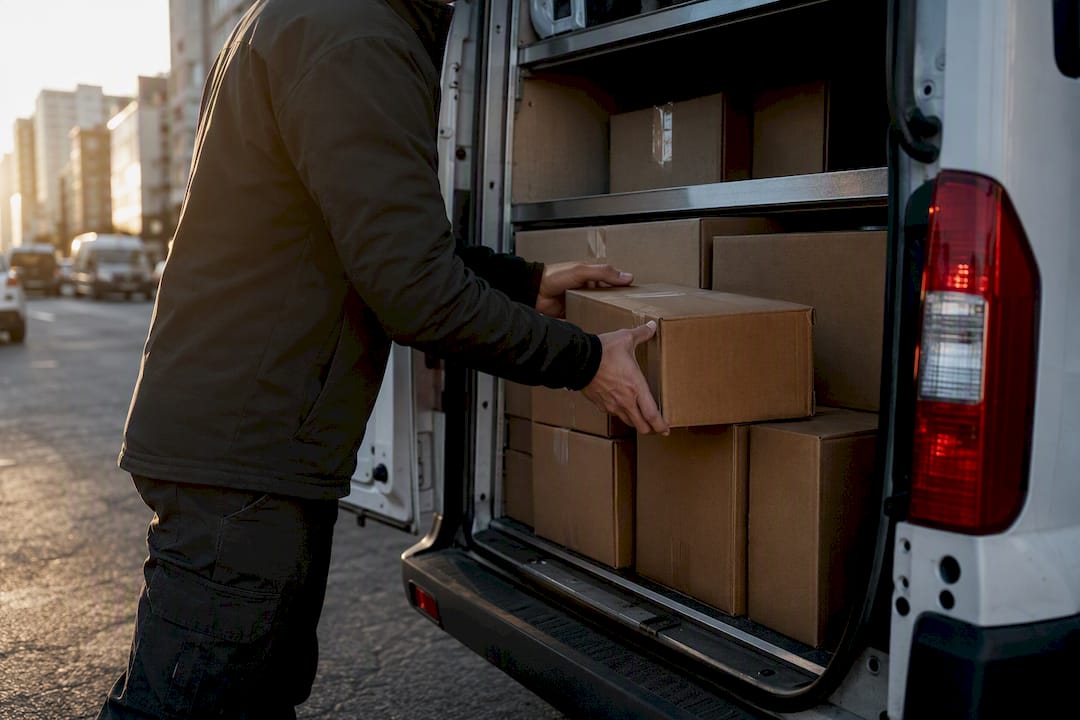
Cut delivery timing by fixing three levers first: traffic-aware routing instead of static distance maps, packing and loading in strict delivery sequence, and proactive ETA notifications that stop customers ringing in before a driver has even left the depot. Each one is fixable within a shift, not a quarter.
Three quick wins to pilot today:
Switch on live traffic feeds in your routing tool. If your route engine only uses historical averages or straight-line distance, today’s congestion never gets factored in.
Reload the van in reverse delivery order. Ask one driver to test it on their next run and time the difference at each stop.
Send an “on the way” text with a live tracking link 20 to 30 minutes before arrival. This alone cuts the “where’s my order” calls that eat into dispatcher time.
Pro Tip: Run all three changes on one route or one driver first. Rolling every fix out fleet-wide before you’ve measured a baseline makes it impossible to tell which change actually moved the needle.
Key Takeaways
Optimising delivery timing works when traffic-aware routing, reverse-load sequencing, and proactive customer notifications are piloted together and measured against a clear baseline before any fleet-wide rollout.
Point | Details |
Fix routing first | Traffic-aware routing cuts expected delay by roughly 23 to 26% versus distance-only models. |
Load in reverse sequence | Packing in reverse delivery order reduces search time at every stop across the route. |
Communicate before problems start | GPS-linked tracking and ETA texts cut WISMO calls and failed delivery attempts. |
Pilot before scaling | Test two or three tactics on one route cluster with a control group before rolling out fleet-wide. |
Outsource genuine urgent flows | Dedicatedsamedaycourier suits low-density, single-shipment, or time-critical jobs that don’t fit an optimised multi-stop route. |
Table of Contents
What delivery timing actually covers
Delivery lead time is the full stretch from order capture to proof of delivery, not just the driving portion. Most operators only watch drive time, which is why they miss where the minutes actually leak.
Every reduction here has a direct line to cost per drop, first-attempt success, and how many complaints your team fields. A courier network that shaves ten minutes off average stop time can add two or three extra drops per route without touching headcount.
Timeline component | What it measures | Typical owner |
Order capture to pick | Time from booking to item picked | Warehouse/ops |
Pick to load | Time to consolidate and load the vehicle | Warehouse/dispatch |
Drive time | Depot to first stop, then stop to stop | Driver/routing tool |
Time per stop | Parking, search, handover, signature | Driver |
Proof of delivery lag | Time from handover to system update | Driver/app |
Order capture to pick
Pick to load
Drive time
Time per stop
Proof of delivery lag
Common causes of slow or unreliable delivery timing
Most delays trace back to a handful of repeat offenders, and they rarely announce themselves clearly in a weekly report.
Poor route sequencing — stops ordered by postcode or job number rather than actual road geography, adding dead miles nobody notices until fuel costs spike.
Static travel-time assumptions — a route engine that treats a 9am Tuesday drive the same as a 3pm Friday one.
Fragmented tech stack — orders sitting in a webshop or WMS for 20 minutes before they even reach the TMS.
Loading inefficiencies — drivers searching the van for parcel three of twelve because loading order ignored delivery order.
Failed delivery attempts — no notification sent, customer not home, driver doubles back.
Supplier and inbound delays — stock arriving late at the depot, pushing the entire day’s schedule back before a single van leaves.
Watch for symptoms rather than waiting for a full audit: rising fuel-per-drop costs usually point to sequencing, a spike in “where is it” calls points to communication gaps, and drivers consistently running over on specific rounds points to travel-time assumptions that don’t match reality.
Pro Tip: Before commissioning a full logistics audit, pull one week of delivery timestamps and sort by which stop in the sequence took longest. A pattern (always stop four, always the industrial estate) tells you more in ten minutes than a formal review tells you in a month.
Practical strategies to shorten delivery timing
Demand traffic-aware routing, not distance-only routing
A route engine that optimises purely for distance will happily send a driver through a school-run bottleneck to save half a mile. Traffic-aware optimisation that factors in time-of-day congestion patterns consistently outperforms static, distance-based routing in urban settings, and the same source notes that proper sequencing typically cuts driven miles by 15 to 30 percent. The practical fix isn’t a new platform necessarily. It’s checking whether your existing tool is actually pulling live feeds or quietly defaulting to averages.

Fix packing and loading discipline
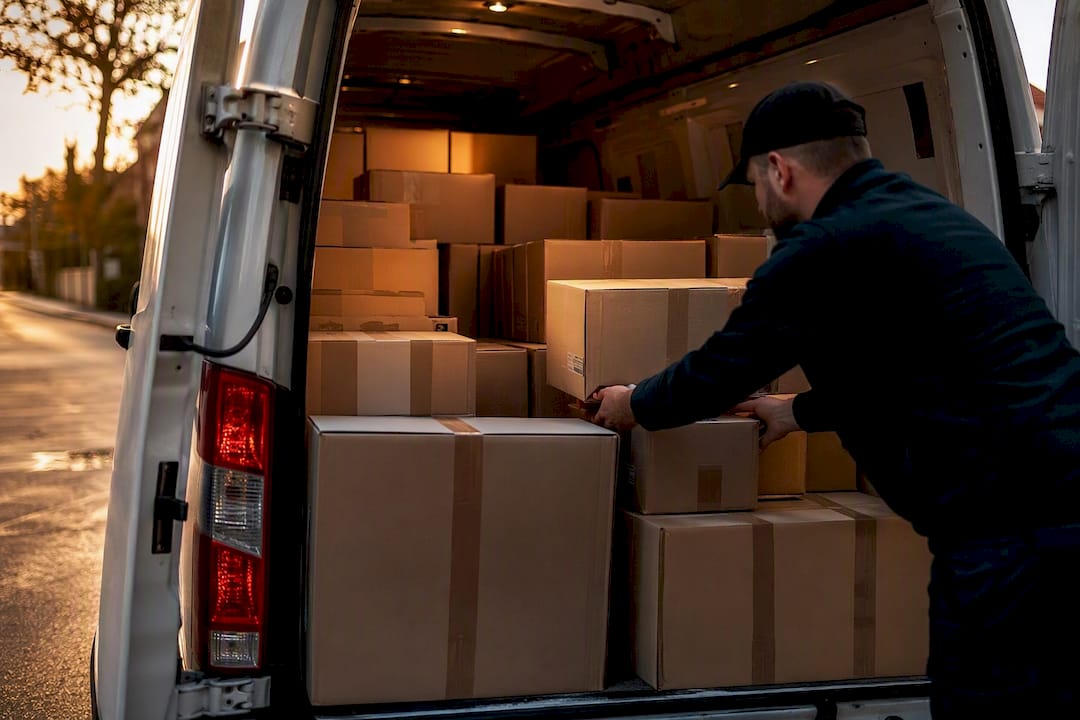
Load the van in reverse delivery order so the first stop’s parcel comes out last, and the last stop’s parcel sits nearest the door. This single change reduces search time at each stop and compounds across a full route. Use the finalised route list as the actual packing checklist rather than loading by however parcels arrive at the dock.
Remove manual handoffs between systems
Every manual re-entry between your shop, warehouse system, and transport system adds delay and error risk. Near-real-time order import between WMS and TMS, combined with predictive traffic demand and dynamic scheduling, lets orders flow into the routing engine the moment they’re picked rather than in a batch an hour later.
Tighten customer communication and exception handling
Proactive, GPS-linked tracking with accurate ETA notifications measurably reduces WISMO enquiries and failed delivery attempts, which protects your on-time rate without adding a single mile to any route. The same principle holds in adjacent sectors: hospitality operators report similar gains from accurate tracking in food delivery, where a missed ETA has the same knock-on effect on customer trust.
On-time delivery gains from adaptive routing: integrated approaches combining traffic-aware search with real-time dispatch pushed on-time delivery rates from around 68.1% to 92.8% in tested urban scenarios, alongside a 24.3% cut in operational cost, according to a recent urban delivery optimisation study.
Use operational levers where density allows
Micro-fulfilment points closer to demand clusters, dynamic delivery slots instead of one rigid daily cutoff, and a mixed fleet of van sizes for different job types all shorten the timeline further. Time windows help first-attempt success, but two to four hour windows tend to be the practical sweet spot for same-day work. Anything tighter starts eating route density fast.
Pro Tip: Don’t offer one-hour windows across a whole route just because customers ask for them. Reserve tight, binding windows for genuinely high-priority drops and keep the rest wide enough that the routing engine still has room to optimise.
More on the specific mechanics of delivery optimisation for logistics managers sits in a companion guide if you want the deeper routing detail.
Why travel-time predictors are worth the investment
Static routing tools assume every journey behaves like its average. Real roads don’t. A stochastic routing approach that builds in travel-time predictors, rather than treating congestion as background noise, reduced expected delivery delay by roughly 23 to 26 percent compared with models that ignore that uncertainty.
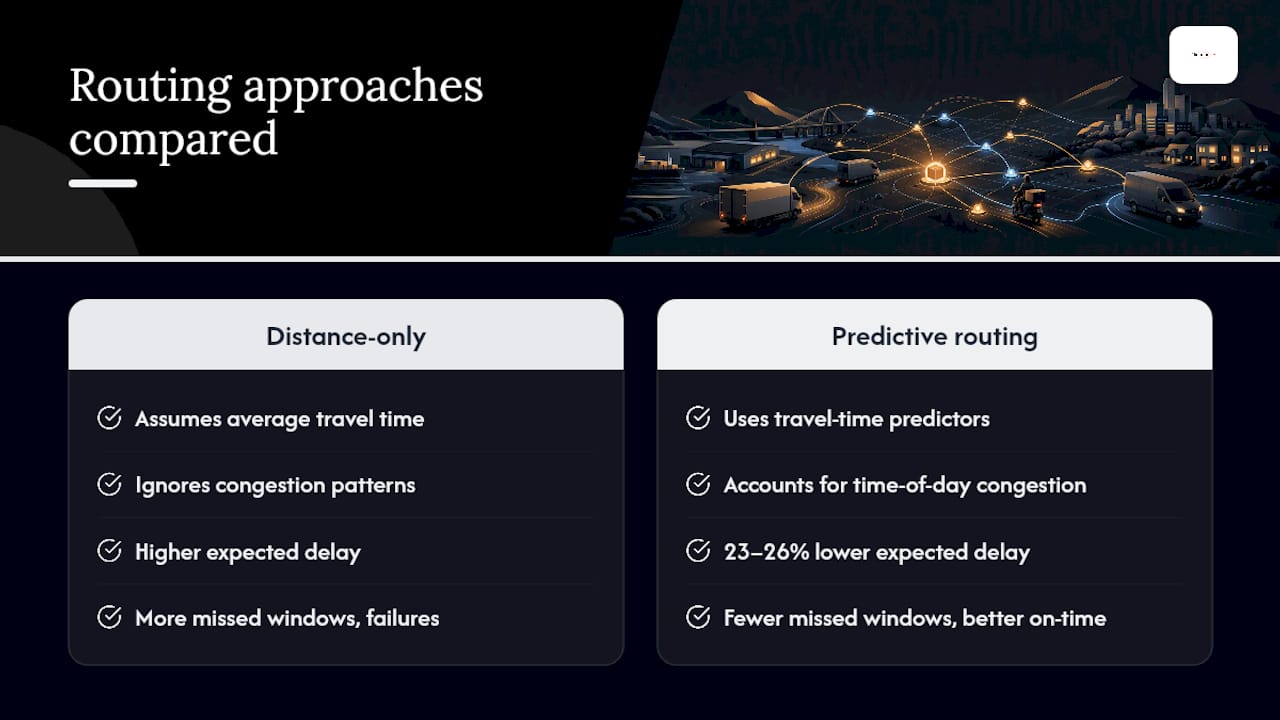
That gain shows up as fewer missed windows, fewer failed first attempts, and a materially better on-time rate, because the routing decision made at 8am already accounts for the fact that the 2pm leg of the route will hit school traffic. It’s the difference between a plan built for an empty road and one built for the road as it actually behaves that afternoon.
Statistic: models incorporating decision-dependent travel-time uncertainty cut expected delay by 23 to 26% against distance-only baselines, per the MSOM travel-time predictor study.
Pro Tip: Before buying into a predictive model, check whether you have at least a few months of timestamped delivery data by stop and time-of-day. Predictive tools are only as good as the history they’re trained on, and thin data produces confident-looking but wrong predictions.
KPIs that show whether delivery timing is improving
Track these and review them weekly with dispatch, monthly with senior operations.
KPI | Formula | Data source |
On-time delivery (OTD) | On-time drops ÷ total drops × 100 | TMS/delivery app |
First-attempt success rate | Successful first attempts ÷ total deliveries × 100 | Driver app/POD system |
Drive time per stop | Total drive time ÷ number of stops | Route engine logs |
Pick-to-load time | Load complete timestamp minus pick complete timestamp | WMS |
Total lead time | Proof of delivery timestamp minus order capture timestamp | Combined WMS/TMS |
Show frontline dispatch a live view of today’s OTD and any at-risk stops.
Show senior ops a weekly trend line of OTD, first-attempt success, and cost per drop side by side.
Review causes behind any dip in the same meeting, not a separate one two weeks later.
Running a pilot before you scale changes
Don’t roll every fix out fleet-wide at once. A short, controlled pilot tells you which lever actually moved your numbers.
Baseline first. Pull two to four weeks of OTD, first-attempt success, and average lead time for the route cluster you’ll test.
Pick one route cluster. Choose a cluster with typical density, not your easiest or hardest round.
Deploy two or three tactics together. Traffic-aware routing, reverse-load sequencing, and ETA notifications pair well because they address different parts of the timeline.
Run it for a fixed period. Two to six weeks gives enough data without leaving underperforming tactics live too long.
Compare against a control. Keep a similar-sized cluster running the old process for the same period.
Aim for at least 200 to 300 deliveries per arm if you want believable numbers in a small-to-medium operation.
Capture driver feedback on loading and sequencing changes; they spot friction dashboards miss.
Log every exception with a reason code, not just “delayed”, so root causes stay visible.
Pro Tip: Give drivers a short verbal briefing before the pilot starts, not just an app update. A driver who understands why the load order changed adapts faster than one who’s just told to follow a new sequence.
Statistic: the same integrated traffic-aware approach cited earlier lifted on-time delivery from 68.1% to 92.8% while cutting cost by 24.3% in tested urban scenarios, a scale of gain worth testing for before committing to a full rollout.
Small pilots that isolate two or three variables beat big-bang rollouts every time, because you can actually trace which change earned the result.
Point | Details |
Baseline before piloting | Capture two to four weeks of OTD and lead-time data before changing anything. |
Test on one cluster | Isolate two or three tactics on a single route cluster with a control group running the old process. |
Sample size matters | Aim for 200 to 300 deliveries per arm before trusting the result. |
Once a pilot clears its target, sequence the next investment rather than changing everything simultaneously. Roll out the winning tactics fleet-wide, then start the next pilot on the following lever while driver feedback and exception logs from the first round feed into how you brief the next one.
When outsourcing beats in-house optimisation
Not every delay is worth solving with new software. Sometimes the smarter move is handing the job to a specialist.
A single, time-critical shipment doesn’t justify restructuring your whole route plan.
Low-density or one-off destinations sit awkwardly on a multi-stop round built for density.
A tight SLA on a high-value or sensitive item (legal documents, medical samples, urgent parts) carries more risk than your standard fleet is set up to absorb.
A one-off surge, a broken-down vehicle, or a same-day emergency doesn’t warrant a permanent fix.
A dedicated courier arrangement should offer rapid collection, usually within 60 to 90 minutes, direct point-to-point transport with no co-loading, and 24/7 availability so an out-of-hours emergency isn’t a Monday problem.
A manufacturer with one urgent replacement part needed across the country by evening gains nothing from re-optimising an entire regional route. A dedicated vehicle collecting within the hour and driving direct solves it cleanly.
Pro Tip: Keep one pre-vetted dedicated courier account on file before you need it. Negotiating collection times and vehicle options during an actual emergency costs you time you don’t have.
Point | Details |
Low density beats optimisation | A single urgent stop rarely fits a multi-stop route worth re-engineering. |
Point-to-point avoids risk | No co-loading protects sensitive, high-value, or time-critical items. |
What separates teams that improve from those that stall
Three pitfalls come up repeatedly: trusting distance-only routing without checking for live traffic feeds, cutting delivery windows so tight the routing engine loses all flexibility, and ignoring driver feedback on load order because it wasn’t in the original plan.
Teams that actually lift on-time performance do three things differently: they pilot before scaling, they treat driver observations as data rather than complaints, and they review dispatch and warehouse metrics in the same meeting instead of separate silos.
Pro Tip: Put a warehouse lead and a dispatch lead in the same weekly review. Most timing failures happen at the handoff between the two teams, not inside either one.
Where a dedicated same‑day courier fits alongside your own fixes
Route optimisation and pilot programmes solve most recurring delay, but they don’t cover the one-off, low-density, or genuinely urgent job that falls outside your normal density and timing assumptions. That’s where a dedicated same‑day courier earns its place, not as a replacement for the work above, but as the release valve for jobs your own fleet was never built to handle efficiently.
[
A trusted dedicated provider gives you rapid collection, usually within 60 to 90 minutes of booking, a dedicated vehicle running your consignment point-to-point with no co-loading, and 24/7 capacity so evening or weekend emergencies don’t wait until Monday. Dedicatedsamedaycourier runs this model nationwide, with vehicle sizing matched to the job rather than a one-size van for every request. If you’ve got a single urgent shipment, a sensitive or high-value item, or a surge your own routes can’t absorb today, check available vehicle options or request a same-day quote and get a collection booked within the hour.
Frequently asked questions
What is the fastest way to improve delivery timing this week? Switch your route engine to live traffic feeds if it isn’t already, reload vans in reverse delivery order, and send ETA notifications 20 to 30 minutes before arrival. All three are process changes, not purchases.
How do I calculate on-time delivery rate? Divide the number of on-time deliveries by total deliveries and multiply by 100. Define “on-time” against your own committed window consistently, whether that’s a specific hour or a same-day cutoff.
Do delivery time windows actually help? Tight windows raise first-attempt success but shrink route density if overused. Two to four hour windows tend to strike the right balance for most same-day operations.
When should I outsource instead of optimising in-house? When you’re facing a single urgent, low-density, or high-value delivery that doesn’t justify restructuring a route, or when a surge exceeds your fleet’s normal capacity. A dedicated courier with rapid collection and point-to-point transport handles that gap without disrupting your core routes.
Sources
Recommended


Comments