
Why secure transportation matters for UK businesses
Updated: Aug 30

Secure transportation protects people, assets and data in transit by reducing exposure to theft, tampering, unauthorised access and delay. For UK businesses moving high-value goods, sensitive documents or time-critical consignments, it is an operational necessity rather than an optional upgrade. Providers worth considering will hold accreditations such as ISO 28000, carry personnel vetted to Security Industry Authority (SIA) standards, follow National Cyber Security Centre (NCSC) guidance on data-in-transit protection, and operate dedicated point-to-point services. Dedicatedsamedaycourier is one such UK provider.
Choose secure transport when:
High-value or irreplaceable goods are moving between sites, such as electronics, jewellery, legal originals or medical samples.
Sensitive data or documents are in transit, including personal data subject to UK GDPR, intellectual property or confidential legal files.
Time-critical consignments cannot tolerate delay, re-routing or co-loading with unknown third-party freight.
Key takeaways
Secure transportation is the most reliable way to protect time-critical, high-value or sensitive consignments in transit, combining physical controls, digital protection and documented chain of custody.
Point | Details |
Define your minimum controls | Require DBS checks, GPS telemetry, tamper-evident seals and signed chain-of-custody records from every provider. |
Match service type to threat | Dedicated point-to-point is the fastest and lowest-exposure option for most UK business consignments. |
Protect data as well as goods | Follow NCSC guidance: require TLS encryption, authenticated sessions and audited certifications from provider systems. |
Itemise costs before committing | Request separate line items for vehicle, monitoring, insurance and escort fees, plus collection and delivery SLAs. |
Dedicatedsamedaycourier | Offers dedicated point-to-point UK delivery with 60–90 minute collection, live telemetry and signed proof of delivery. |
Table of Contents
What is secure transportation and which service types exist?
Physical and operational controls you should expect from any provider
When does a shipment need secure transport rather than a standard courier?
How to vet a secure-transport provider: a practical checklist
How dedicated same-day operations put these controls into practice
Dedicatedsamedaycourier: direct, monitored, same-day UK delivery
What is secure transportation and which service types exist?
Secure transportation is the planned, threat-aware movement of goods, people or data along a controlled route, with a documented chain of custody at every handover point. The defining feature is that exposure to unauthorised access is minimised at each stage, not just at origin and destination.
Common service types differ in exposure level, speed and cost:
Service type | Exposure level | Typical speed | Relative cost |
Dedicated same-day point-to-point | Very low | Fastest | Higher |
Escorted or convoy service | Low | Moderate | High |
Armoured vehicle service | Very low | Moderate | Highest |
Bonded or on-board courier | Low | Variable | Moderate to high |
Dedicated same-day point-to-point keeps a single consignment on a single vehicle from collection to delivery, with no co-loading and no intermediate depot stops.
Escorted services add a second vehicle or personnel for higher-threat movements. Armoured vehicles are reserved for cash, precious metals or extreme-risk scenarios. Bonded couriers travel with the consignment as a named individual, which suits cross-border document movements where physical custody must be unbroken.
What risks does secure transportation actually reduce?
The role of secure transportation is most visible when something goes wrong. The concrete risks it mitigates include:
Theft in transit, including opportunistic vehicle break-ins and organised cargo crime targeting predictable routes.
Tampering, where goods are substituted, adulterated or interfered with between collection and delivery.
Unauthorised access, covering both physical interception and digital access to shipment data or tracking systems.
Data interception during transfers, particularly relevant when electronic manifests, tracking portals or API feeds carry personal or commercially sensitive information.
Supply-chain disruption, where a single delayed or lost consignment halts a production line or a clinical procedure.
The financial consequences of a failure divide into two categories. An insured loss is recoverable up to the declared limit of liability, but the supply interruption, reputational damage and regulatory exposure are not. A data breach during transit can trigger UK GDPR notification obligations and regulatory scrutiny, and a professional duty failure, such as a solicitor losing original court documents, carries its own liability.
The UN Technical Guide on protecting public transport systems makes the systemic point clearly: disruption at a single transport hub can cascade across connected networks, affecting organisations far beyond the immediate incident. That is why integrated prevention, preparedness, response and recovery planning matters, not just point-to-point security.
Physical and operational controls you should expect from any provider
Driver vetting is the starting point. Background checks to Disclosure and Barring Service (DBS) standard, or equivalent, are the baseline for anyone handling sensitive or high-value consignments. Where SIA licensing applies, such as for close-protection or cash-in-transit roles, it should be current and verifiable. Personnel training in route awareness, incident reporting and handover procedures is equally important.
Vehicle controls matter as much as personnel. A dedicated vehicle carries one client’s consignment only, with no co-loading. Tamper-evident seals on packaging provide a physical record of any interference. Where the threat profile demands it, armoured or reinforced vehicles add a further layer. Security best practices for UK couriers cover these controls in operational detail.
Operational controls tie the physical measures together. Route planning should include variation to avoid predictable patterns. Chain-of-custody records, with signed handovers at each transfer point, create an auditable trail. A control tower or monitoring function tracks progress in real time and escalates anomalies.
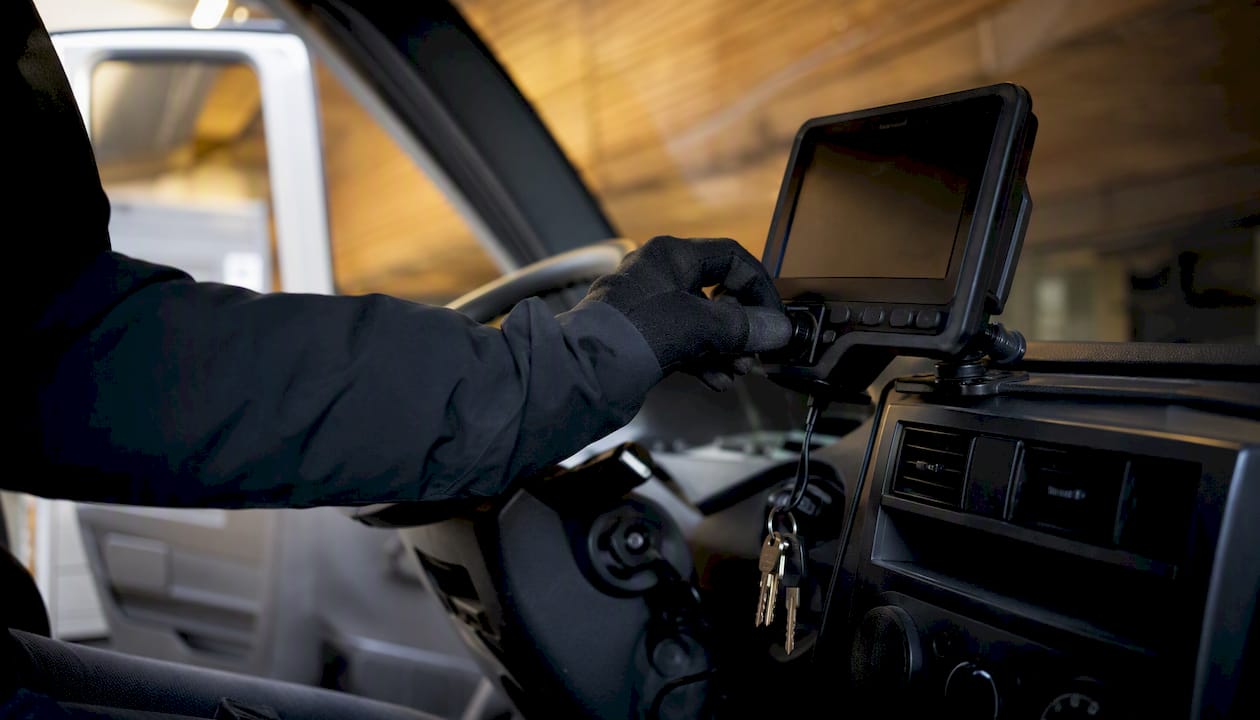
Telemetry expectations are straightforward: GPS with tamper alerts, live tracking accessible to the client, and CCTV where the vehicle specification supports it. A tamper alert in practice means an automated notification when a vehicle door is opened outside a designated stop, or when the GPS signal is interrupted, triggering an immediate call to the driver and, if unresolved, an escalation to the client.
Research published in the Journal of Transportation Security confirms that operational resilience depends on combining dynamic security protocols with efficiency, and that vetting drivers and using dedicated point-to-point vehicles reduces exposure more reliably than static barriers alone.
Pro Tip: Set minimum security specifications in writing before requesting quotes. Specify DBS check level, GPS telemetry, tamper-evident sealing and chain-of-custody documentation as non-negotiable. This prevents providers from quoting a lower-cost, lower-security service and allows accurate comparison.
How do you protect information in transit?
Physical security and digital security are not separate disciplines. Tracking portals, electronic manifests, API feeds and booking systems all carry data that needs protection in transit.
The NCSC’s guidance on data-in-transit protection sets the UK standard: protect data using encryption, network protections and authentication, and prefer providers that encrypt by default. The combined approach denies attackers the ability to intercept or modify data even if they gain access to the network path.
Practical measures to expect from providers and their systems:
TLS for web and API traffic: all tracking portals and booking interfaces should use HTTPS. TLS provides encryption, integrity and authentication and prevents SSL-stripping attacks when HSTS is also configured.
IPsec for WAN links: where providers connect depots or control towers over wide-area networks, IPsec tunnels protect data between sites.
Authenticated sessions: booking and tracking systems should require strong authentication, with session tokens that expire and cannot be reused.
TLS version: RFC 9325 recommends migration to TLS 1.3 for forward secrecy and stronger cipher selection. Ask providers which TLS version their customer-facing systems run.
NIST defines secure transport as a transport-layer approach that secures application communication over IP networks, with the SP 1800 series providing implementation guidance. That definition applies equally to a courier’s tracking portal as it does to a cloud platform.
When does a shipment need secure transport rather than a standard courier?
Run through five criteria before deciding:
Value threshold: does the declared value exceed your standard carrier’s limit of liability, or is the item irreplaceable regardless of monetary value?
Sensitivity of contents: does the consignment contain personal data, intellectual property, legal originals or commercially confidential material?
Regulatory obligations: do UK GDPR, sector-specific regulations or contractual obligations require documented chain of custody or specific handling standards?
Time criticality: would a missed delivery cause a production stoppage, a missed court deadline or a clinical failure?
Threat profile: is the route, recipient or origin associated with elevated cargo crime risk?
Two scenarios illustrate the checklist in practice. A firm of solicitors needs original signed contracts delivered to a court by 10:00 AM: the documents are irreplaceable, the deadline is absolute and a standard next-day service carries no chain-of-custody record. A hospital laboratory needs blood samples transported between sites within a two-hour window: the regulatory obligation and time criticality both point to a dedicated, monitored service.
Insurance and indemnity expectations should be confirmed before booking. Check the declared limit of liability, ask whether the provider’s goods-in-transit cover extends to your consignment type, and request written confirmation of the cover level.
How do security features affect cost and delivery time?
Cost drivers in secure transport are straightforward to itemise:
Vehicle type and specification, including armour or reinforcement where required.
Dedicated point-to-point operation versus consolidated or multi-drop routing.
Escort personnel or close-protection officers.
Bespoke route planning and transportation advances.
24/7 telemetry, monitoring and control-tower overhead.
Insurance and declared-value endorsements.
Security measures can increase dwell time at handover points because signed chain-of-custody records take longer than a standard scan-and-go. They can also reduce overall transit time by eliminating depot stops, co-loading delays and re-routing. A dedicated courier service that goes direct from collection to delivery removes the intermediate handling that causes most delays in consolidated networks.
Pro Tip: Ask every provider for an itemised quote that separates vehicle cost, monitoring, insurance and any escort fees. Also request the time-to-collect SLA generally falls within a short, standard timeframe for same-day dedicated services and the time-to-deliver SLA. Without those figures, cost comparisons are unreliable.
How to vet a secure-transport provider: a practical checklist
Before awarding a contract or booking a job, work through these questions:
Does the provider hold ISO 28000 (supply-chain security management) or ISO 9001 (quality management)?
Are drivers DBS-checked, and at what level? Is SIA licensing in place where the service type requires it?
Are vehicles dedicated to a single consignment, with no co-loading?
Is GPS telemetry with tamper alerts standard, and can you access live tracking?
Is there a documented chain-of-custody process with signed handovers and proof-of-delivery records?
What are the declared limits of liability, and does the goods-in-transit insurance cover your consignment type and declared value?
What are the collection and delivery SLAs, and how are breaches reported?
Does the provider offer audit rights and incident-response procedures in writing?
Contract clauses worth requesting:
Declared limits of liability with an option to increase against declared value.
Insurance endorsement confirming cover for your specific consignment type.
SLA for collection and delivery times with defined remedies for breach.
Audit and data-access rights, including access to GPS logs and chain-of-custody records.
Breach notification and remediation timelines.
Ask for sample redacted proof-of-delivery records and a monitoring screenshot to verify that telemetry is genuinely live rather than retrospective. Guidance on moving high-value items also recommends confirming insurance cover in writing before any consignment moves.
How dedicated same-day operations put these controls into practice
A typical Dedicatedsamedaycourier job follows a clear sequence. Collection happens within 60–90 minutes of booking. The consignment travels on a dedicated vehicle with no co-loading, direct to the delivery address. Live GPS telemetry runs throughout, with tamper alerts active. On arrival, the driver obtains a signed proof of delivery, completing the chain-of-custody record.
The operational model runs 24 hours a day, seven days a week, across a nationwide network. Clients can access secure delivery guidance and security best-practice resources directly on the site.
A procurement team can use this timeline as a template for a provider brief:
T+0: booking confirmed, driver allocated.
T+60–90 min: collection with tamper-evident sealing and chain-of-custody record opened.
Transit: live GPS monitoring, tamper alerts active, client tracking available.
Delivery: signed handover, proof of delivery issued, chain-of-custody record closed.
Dedicatedsamedaycourier: direct, monitored, same-day UK delivery
When a consignment cannot wait and cannot be co-loaded, Dedicatedsamedaycourier provides a direct alternative to standard courier networks. Every job uses a dedicated vehicle, point-to-point, with no intermediate depot handling.
[
The service covers the full UK, operates around the clock, and includes live GPS telemetry, tamper alerts and signed proof-of-delivery records on every job. Goods-in-transit insurance and declared-value options are available, and collection typically occurs within a short time after booking.
To request a bespoke quote with itemised SLAs and insurance confirmation, contact Dedicatedsamedaycourier by phone, email or the online quote form. For readers who want to review service options and vehicle types before booking, the courier vehicles page covers the full range.
Balancing security and speed: a procurement perspective
The instinct in procurement is to treat security and speed as opposing forces, and to assume that more security always means slower delivery. That is not quite right. The controls that slow a consignment down are almost always the ones added after the fact: a depot check that was not planned for, a handover that was not documented in advance, an insurance query raised at the point of collection. When security requirements are specified upfront, in writing, before a provider is selected, the operational impact is minimal and often negative in the best sense: a dedicated vehicle with a clear route and a pre-agreed handover process moves faster than a consolidated network with three depot stops.
The practical procurement tip is this: specify your protective minimums in the tender brief, not in the post-incident review. State the DBS check level, the telemetry standard, the chain-of-custody format and the collection SLA as requirements, not preferences. Then ask each provider for a single escalation point and a written incident-response procedure. That one document tells you more about a provider’s actual capability than any accreditation certificate.
Sources
Recommended


Comments