
How to ensure parcel security for urgent UK deliveries
- Andrew Buttrick
- 1 day ago
- 9 min read
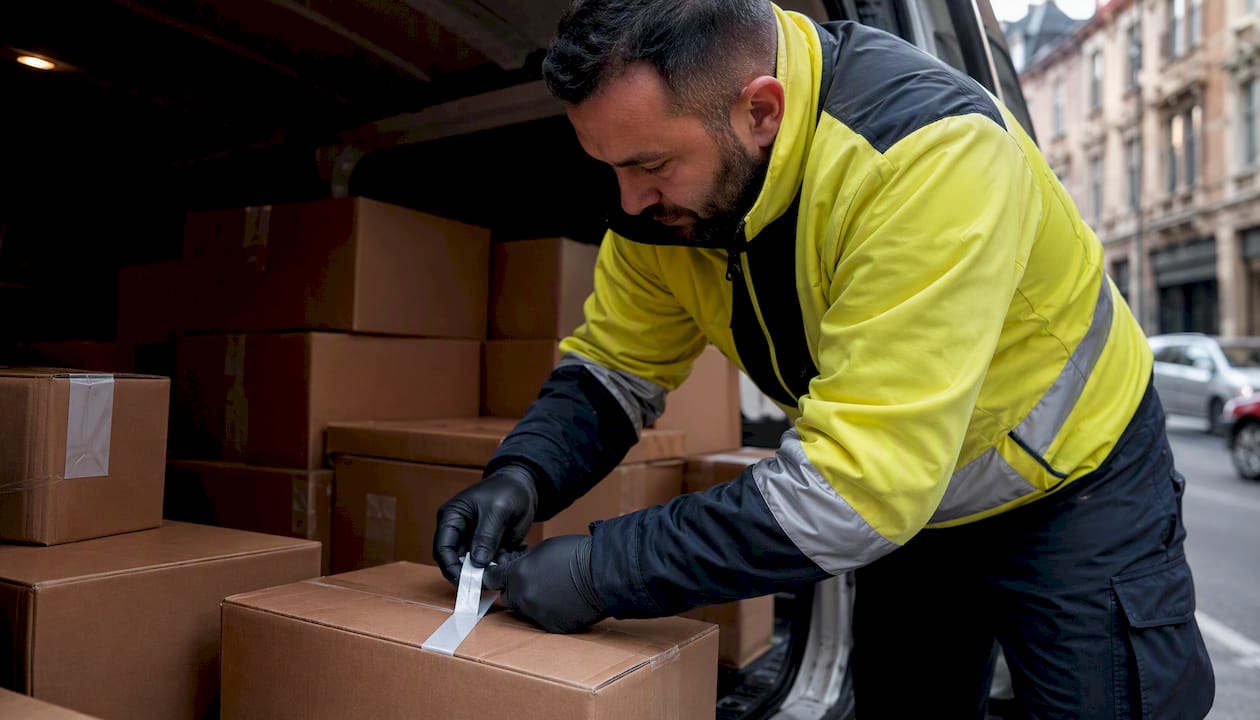
The most reliable way to ensure parcel security is to book a dedicated point-to-point courier with full chain-of-custody controls: a single vehicle, a vetted driver, continuous GPS tracking, and signed proof of delivery. No hub sorting, no co-loading, no unknown hands. For high-value or time-critical consignments, book a dedicated direct-drive service that provides real-time tracking and a documented handover at every stage.
Key takeaways
Secure parcel transport requires a dedicated direct-drive courier with vetted drivers, continuous GPS tracking, tamper-evident seals, and a full audit trail from collection to signed proof of delivery.
Point | Details |
Use dedicated direct drive | A single vehicle and driver with no co-loading eliminates the most common custody failures. |
Verify vetting and insurance | Confirm driver identity checks, references, and declared-value insurance cover before collection. |
Apply tamper-evident seals | Log seal serial numbers and photograph them at handover to create an unambiguous record. |
Require signed POD and photo evidence | A verbal confirmation or generic scan is not sufficient for high-value or regulated consignments. |
Dedicatedsamedaycourier | Provides 24/7 dedicated UK courier services with vetted drivers, GPS tracking, and signed POD on every job. |
Table of Contents
What parcel security means for professional consignments
Parcel security, in the context of this guide, means secure parcel transportation delivered through a dedicated, point-to-point courier with vetted personnel, a secured vehicle, continuous tracking, and proof of delivery at handover. It is not about consumer anti-theft tips, parcel lockers, or home delivery workarounds. Those are separate subjects for a different audience.
The chain-of-custody principle sits at the centre of professional parcel security: every transfer of possession is documented, timed, and attributed to a named individual. UK Home Office guidance formalises this expectation for regulated consignments. Dedicatedsamedaycourier operates within this framework, providing the documentation and operational controls that regulated and high-value shipments require.
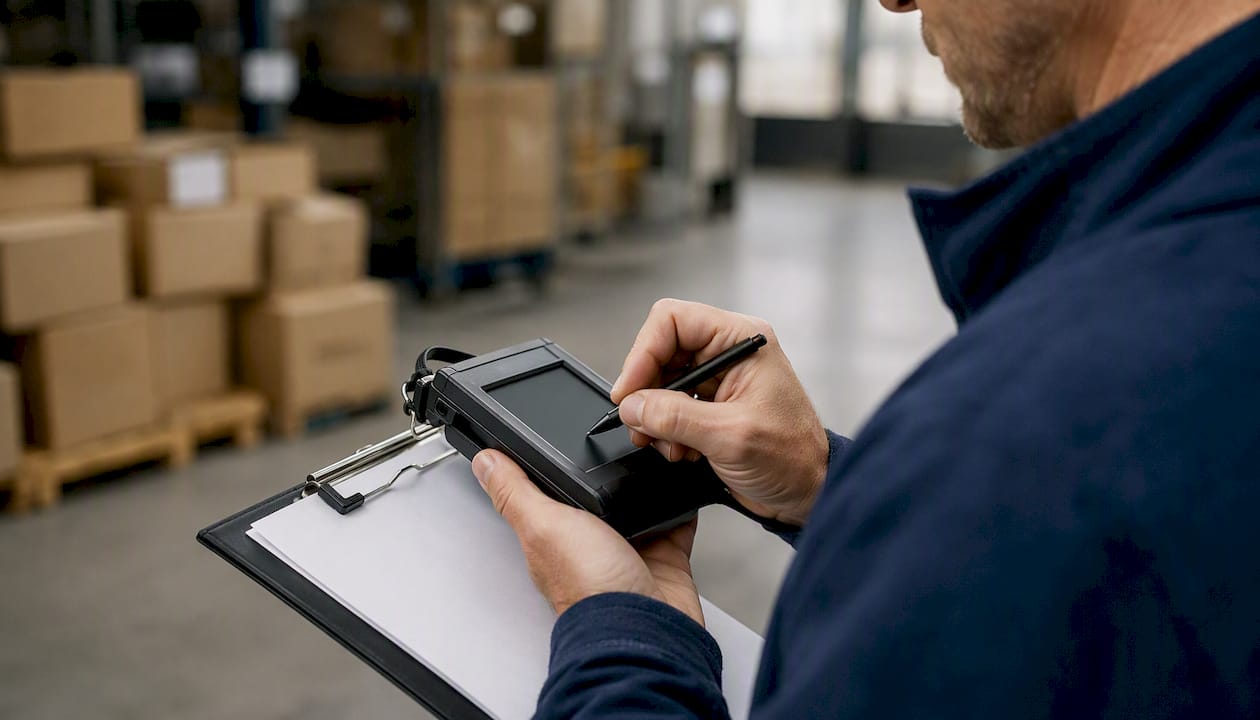
UK legal responsibility and compliance you need to know
Legal responsibility does not automatically transfer to the courier at collection. Home Office guidance on controlled drugs and drug precursors in transit states that suppliers retain responsibility for the safe custody of a consignment until the recipient acknowledges receipt. That principle applies broadly: if something goes wrong in transit, the sender may remain liable.
Key compliance checks before booking:
Full tracking and audit trail. The Home Office recommends only postal or courier services that offer a full tracking service from collection to delivery, and notes that a full audit trail is likely necessary for a service to be considered suitable for regulated goods.
Staff identity and referencing. The carrier must check driver identities and references. Ask for confirmation in writing.
Insurance and declared value. Verify the carrier holds adequate goods-in-transit and hire-and-reward insurance. Confirm the declared value limit and whether your consignment exceeds it.
No subcontracting without approval. The Home Office guidance specifically recommends checking that the carrier does not subcontract without your knowledge or consent.
Overnight storage arrangements. If the consignment cannot be delivered in a single run, confirm the approved storage facility in advance.
Police and Home Office notification. For particularly high-risk consignments, the guidance suggests notifying the police, requesting an escort, or running a second vehicle to follow the delivery.
For legal professionals handling time-sensitive documents, courier requirements for law firms follow similar chain-of-custody principles.
How to choose a secure dedicated courier
The single most important criterion is a guaranteed dedicated direct drive: one vehicle, one driver, your consignment only. Practitioner guidance recommends this model specifically to eliminate co-loading risks and preserve chain of custody throughout transit.
Security dimension | Standard tracked parcel network | Dedicated direct-drive courier |
Co-loading | Yes — multiple senders’ goods share space | No — your consignment travels alone |
Custody continuity | Multiple handlers at sorting hubs | Single driver, single vehicle throughout |
Vehicle security | Standard van, no specialist fitting | Bolted safes, alarms, immobilisers available |
Driver vetting | Basic employment checks | Identity checks, references, NPPV where required |
Tracking granularity | Scan events at hubs | Continuous GPS with real-time updates |
Questions to ask at booking:
What is the maximum declared value your insurance covers?
Can you provide signed digital proof of delivery and a timestamped photograph?
Will the driver carry ID and can I verify it at collection?
What vehicle security features are fitted (safe, alarm, immobiliser)?
What is your overnight storage policy if delivery cannot be completed same day?
Do you subcontract, and if so, under what conditions?
Red flags: vague proof-of-delivery options, hub routing mentioned anywhere in the route, inability to confirm driver identity, default subcontracting, and unclear insurance limits. A carrier that cannot answer these questions directly is not suitable for high-value or regulated goods. See the vetting checklist for urgent courier bookings for a fuller reference.
What you must do before collection
Preparation before the driver arrives is where most security failures begin. Follow this sequence:
Verify booking details. Confirm the vehicle type, driver name, collection time, and destination address in writing before the driver arrives.
Check driver identity. Ask for photo ID at the door. Record the name, vehicle registration, and time of collection.
Apply tamper-evident seals. Seal all openings with numbered tamper-evident tape or security bags. Log the serial numbers.
Declare the value and confirm insurance. Confirm the declared value matches your insurance cover before handover, not after.
Label and package securely. Use rigid outer packaging for fragile or high-value items. Double-box where appropriate.
Photograph the sealed consignment. Take dated photographs of the package, seals, and serial numbers before handover.
Confirm route and ETA. Agree the expected delivery window and the escalation contact if the driver goes off-route or misses the window.
Pro Tip: Photograph the driver’s ID alongside the sealed package at the moment of handover. This single step creates an unambiguous record that links a named individual to the consignment at a specific time — useful for any insurance or police report.
Avoid overnight or transhipment arrangements wherever possible. If they are unavoidable, confirm the approved storage facility name and address in writing before booking. The step-by-step courier process guide covers the full operational sequence from booking to POD.
In-transit security measures to verify
Expect continuous custody and tamper detection throughout the journey. GPS alone is a baseline, not a complete security guarantee. Industry guidance is clear that GPS must be combined with physical prevention measures and enhanced personnel vetting for high-stakes consignments.
Feature | What to require | Why it matters |
Vehicle locking | Adequate locking systems, anti-theft devices; no curtain-sided vehicles unless security-equivalent | Home Office vehicle standard for regulated goods |
Bolted safe or secured compartment | Fitted, not portable | Prevents opportunistic theft if vehicle is accessed |
Alarm and immobiliser | Factory or aftermarket, confirmed active | Deters and delays unauthorised vehicle access |
Attended vehicle policy | Driver must not leave vehicle unattended with goods inside | Eliminates the most common theft window |
GPS tracking | Continuous, real-time, accessible to sender | Enables immediate escalation on route deviation |
Electronic seal monitoring | Seal-break alert sent to sender and carrier | Detects tampering without physical inspection |
If you notice a route deviation, a long unexplained stop, or loss of GPS signal, contact the carrier’s operations line immediately. Do not wait for the scheduled delivery window to pass. For sensitive shipments, emerging technical measures such as RFID tagging and electronic locking systems are increasingly available and worth requesting at booking.
What counts as acceptable proof of delivery
Insist on signed proof of delivery plus photographic evidence. A verbal confirmation or a generic “delivered” scan is not sufficient for high-value or regulated consignments.
Acceptable POD options:
Signed digital POD with the recipient’s name, signature, and timestamp
Timestamped photograph of the handover, showing the sealed package and the recipient
Electronic seal confirmation showing the seal was intact at delivery
Recipient identity check — for high-value or regulated goods, ask the driver to verify the recipient’s ID and record it on the POD
Post-delivery: confirm receipt in writing with the recipient, update your insurance or claims records, and retain the full audit trail. Home Office guidance treats a full audit trail as a baseline expectation for regulated consignments, so retain all documentation for the period your compliance obligations require.
Step-by-step response when a shipment is delayed or missing
Act immediately. Delay in the first hour after an incident is detected reduces the chance of recovery and weakens any subsequent insurance or police claim.
Stop further movement. If the consignment is still in transit, instruct the carrier to halt and secure the vehicle.
Notify the carrier’s operations contact. Record the time and the name of the person you spoke to.
Pull GPS and tracking logs. Request a full log from the carrier, including last known location and any route deviations.
Photograph packaging and scene. If the consignment has been delivered in a damaged or tampered state, photograph everything before moving it.
Notify police. For theft or suspected tampering, report to the police and obtain a crime reference number. For regulated goods, notify the Home Office as required.
Start the insurer claim process. Contact your insurer with the crime reference number, tracking logs, seal serial numbers, and photographic evidence.
Retain all documentation. Keep driver statements, CCTV footage requests, seal records, and all correspondence. The management handling evidence policy specifies that CCTV evidence should be shared digitally where possible; otherwise a secure courier service should be used to transfer it in line with the policy framework.
Timelines and cost factors for secure same-day deliveries
Security choices directly affect both cost and lead time. A dedicated direct drive costs more than a shared parcel network, but it removes the risk factors that generate claims, delays, and regulatory breaches.
Typical service options:
Urgent same-day direct drive: collection within 60–90 minutes, direct to destination, no stops. Highest cost, lowest risk.
Next-day dedicated: pre-booked for the following morning, same vehicle and driver continuity. Lower cost than same-day, still no co-loading.
Escorted or two-vehicle option: for very high-risk consignments, a follow vehicle or security escort adds cost but provides the level of protection the Home Office recommends for certain regulated goods.
Main cost drivers: distance, vehicle size, escort or security staff requirements, declared value and insurance premium, overnight storage if required, and specialist handling such as ADR compliance or temperature control. For high-value or regulated consignments, request a bespoke quote rather than using a standard rate card.
Sample security checklist and contract clauses for your booking
Use these at booking and confirm them in writing by email immediately after any verbal agreement.
Booking checklist:
[ ] Dedicated vehicle confirmed — no co-loading clause agreed
[ ] Driver identity check confirmed at collection
[ ] Tamper-evident seals applied and serial numbers logged
[ ] Declared value confirmed and insurance cover verified
[ ] Signed digital POD and photographic evidence specified
[ ] Overnight storage facility named and approved (if applicable)
[ ] Subcontracting restriction confirmed in writing
Sample contract clauses:
Dedicated direct-drive guarantee: “The carrier agrees to transport the consignment on a dedicated vehicle with no co-loading of third-party goods for the duration of the journey.”
No subcontracting: “The carrier shall not subcontract this booking to a third party without the sender’s prior written approval.”
Declared value and insurance: “The carrier confirms goods-in-transit insurance cover of no less than £[amount] for this consignment, matching the declared value stated at booking.”
Incident reporting: “The carrier will notify the sender within 30 minutes of any route deviation, vehicle incident, or suspected tampering, and will provide full GPS and tracking logs on request.”
Approved overnight storage: “If delivery cannot be completed within the agreed window, the consignment will be held only at [named facility], and the sender will be notified immediately.”
For urgent bookings, confirm these clauses verbally at the time of booking and follow up with an email quoting each point. The email creates a written record that is admissible in any subsequent dispute or claim. The security best practices guide for UK couriers sets out the legal and practical responsibilities in more detail.
Why the paperwork matters as much as the vehicle
Most people focus on the physical side of parcel security: the locks, the seals, the GPS. Those matter. But the documentation is what determines whether you can recover costs, pursue a claim, or satisfy a regulator when something goes wrong.
A courier who cannot produce a timestamped GPS log, a signed POD, and a named driver record has not just failed operationally. They have left you with no evidence. That is the real risk with unvetted or hub-routed services: not just the higher chance of loss, but the absence of any paper trail when it happens.
The Home Office framework for regulated consignments makes this explicit. Full tracking and a full audit trail are not optional extras for controlled goods — they are the baseline expectation. Treating them as standard practice for all high-value consignments, regulated or not, is the single most protective step a sender can take.
Dedicatedsamedaycourier: dedicated secure transport, ready 24/7
When the consignment cannot afford to go wrong, the vehicle, the driver, and the documentation all need to be right from the first call.
[
Dedicatedsamedaycourier provides dedicated same-day and next-day courier services across the UK, 24 hours a day. Every booking is a direct-drive, single-vehicle job with no co-loading. Drivers are vetted, vehicles are secured, and every delivery comes with a full tracking record and signed proof of delivery. For high-value or regulated consignments, escorted options and specialist vehicle configurations are available on request. To get an accurate quote for your consignment, contact Dedicatedsamedaycourier directly by phone, email, or the online quote form. A dedicated vehicle can typically be dispatched within 60–90 minutes of booking.
Sources
Recommended


Comments