
How urgent couriers shape UK business deliveries

TL;DR:
Many UK business owners believe booking urgent couriers guarantees on-time deliveries, but failures still occur frequently. Speed does not always ensure dependability, as operational constraints like traffic and driver shortages impact success rates. Employing multi-carrier strategies and pre-vetting providers can improve reliability and reduce risks in urgent logistics.
Many UK business owners assume that booking an urgent courier guarantees a smooth, on-time delivery. The reality is more complicated. 14% of all deliveries across 574 million attempts in 2023 failed on the first attempt, meaning even urgent consignments are not immune to failure. This guide covers the real impact urgent couriers have on delivery speed, dependability, operational costs, and overall business performance, along with practical strategies to get the best results from the services available to you.
Table of Contents
Key Takeaways
Point | Details |
Speed isn’t everything | Urgent couriers help fast-track deliveries, but high failure rates mean speed alone is no guarantee. |
Reliability requires strategy | Multi-carrier and checklist approaches protect against delays and failed attempts. |
Industry faces real challenges | Driver shortages, stress, and cost hikes are affecting urgent courier performance in the UK. |
Best practices bring results | Choosing the right courier and process can dramatically improve urgent delivery outcomes. |
Why urgent deliveries matter for UK businesses
Time-sensitive deliveries are no longer a niche requirement. They are central to how many businesses operate day to day. Legal firms need court documents delivered before deadlines. Healthcare providers rely on urgent transport for medical supplies and samples. Retailers depend on fast fulfilment to meet customer expectations. In all these cases, a missed or delayed delivery can cause measurable damage, from lost contracts to regulatory penalties.
The UK courier market generated £13.2 billion in revenue in 2023 and is projected to reach £15.8 billion by 2028, representing a compound annual growth rate of 5.1%. This growth reflects how deeply urgent and same-day delivery has become embedded in commercial operations across the country.
Industries that rely most heavily on urgent couriers include:
Legal and professional services: Court filings, contracts, and sensitive documents with strict deadlines
Healthcare and pharmaceutical: Medical samples, prescription medicines, and critical equipment
Manufacturing and engineering: Replacement parts and components needed to keep production lines running
Retail and e-commerce: Last-minute stock replenishment and high-priority customer orders
Finance: Physical cheques, signed agreements, and compliance documentation
Understanding the benefits of reliable courier services is critical before committing budget to urgent logistics. A failed urgent delivery does not just cost the delivery fee. It often triggers a chain of operational disruptions that take time and resource to resolve.
“A single failed urgent delivery in a legal or healthcare context can result in consequences far greater than the cost of the service itself. Business leaders should treat urgent courier selection as a strategic decision, not an administrative one.”
How urgent couriers influence speed and dependability
Urgent couriers promise faster turnaround than standard services, and in many cases they deliver on that promise. However, speed alone does not guarantee dependability. 30% of same-day deliveries still arrive late, according to industry data, and first-attempt failure rates remain a persistent problem. Traffic congestion, poor route planning, recipient absence, and driver fatigue all contribute to delays even when urgency is specified.
Here is a comparison of key delivery performance indicators:
Performance metric | Standard courier | Urgent/same-day courier |
Average delivery time | 1 to 3 days | Same day or within hours |
First-attempt failure rate | Approx. 14% | Approx. 10 to 14% |
Late delivery rate | Approx. 8 to 12% | Up to 30% (same-day) |
Dedicated vehicle used | Rarely | Yes, for dedicated services |
Real-time tracking | Varies | Typically included |
The gap between expectation and reality is worth noting. Urgent couriers do improve speed significantly compared to standard options, but they are not free from the same operational constraints that affect the wider industry.
A reputable urgent courier typically follows these steps to improve dependability:
Immediate confirmation of booking and vehicle allocation within minutes of the request
Route optimisation using live traffic data to select the fastest available path
Direct point-to-point delivery without intermediate depots or sorting facilities
Real-time communication with the driver throughout the journey
Proof of delivery captured digitally and shared promptly with the client
Pro Tip: When assessing a courier’s actual reliability, look beyond their website claims. Ask for data on their on-time delivery percentage and first-attempt success rate. A trustworthy provider will share this information without hesitation.
For businesses that need help choosing reliable urgent couriers, evaluating these steps against what a provider actually offers in practice is a solid starting point. Dedicated vehicles, which transport only your goods with no shared loads, are one of the most effective ways of cutting delivery delays on time-critical consignments.
Key challenges and hidden risks of urgent courier services
Speed comes with trade-offs. Urgent courier services face a range of structural challenges that business leaders often underestimate until a delivery goes wrong.

Driver shortages are a significant and ongoing problem across the UK logistics sector. Driver shortages affected 65% of UK courier firms in recent years, directly delaying 12% of deliveries. When demand peaks, such as during product launches, seasonal surges, or operational emergencies, the pool of available drivers shrinks quickly. This can lead to longer wait times for collection, substituted vehicles, or outright cancellations.
Key risks to factor into your urgent courier strategy include:
Price volatility: Urgent services carry premium pricing, and costs can spike further during high-demand periods or when fuel surcharges apply
Inconsistent quality: Not all couriers in a network operate to the same standard, and subcontracted drivers may not share the same level of care or professionalism
Driver stress and safety: Time pressure on urgent deliveries can increase the risk of driver fatigue and errors, which has direct implications for goods in transit and road safety
Coverage gaps: Some urgent courier providers have strong networks in urban centres but limited capacity in rural or remote areas of the UK
Research published in peer-reviewed logistics studies identifies these risks clearly, noting that while urgent services provide genuine speed and reliability advantages, the industry faces high failure rates and driver welfare concerns that need addressing at a structural level.
“The pressure to deliver faster can paradoxically lead to worse outcomes. Businesses that understand this tension are better positioned to manage their urgent logistics effectively.”
Staying informed about courier industry trends in 2026 helps business owners anticipate capacity issues before they affect operations. Similarly, understanding courier reliability for urgent deliveries means knowing what questions to ask before a crisis occurs, not after.
Strategies for getting the most from urgent couriers
Knowing the risks is only useful if it leads to better decision-making. Here are practical approaches to ensure your urgent deliveries perform as expected.
Multi-carrier strategies are strongly recommended by logistics researchers over reliance on a single provider. Using more than one trusted courier reduces the risk of a single point of failure disrupting your operations entirely.
When comparing urgent courier providers, assess them against these core criteria:
Assessment criteria | What to look for |
Track record | Verified on-time rates, client reviews, case studies |
Nationwide reach | Coverage across urban and rural UK locations |
Service guarantees | Clear SLAs and compensation policies |
Technology | Live tracking, digital proof of delivery, booking systems |
Support availability | 24/7 contact, named account management |
Vehicle range | Options from motorcycles to large vans and lorries |
To vet and book an urgent courier effectively, follow these steps:
Define the delivery requirement clearly: size, weight, destination, and deadline
Request quotes from at least two to three providers and compare against the criteria above
Check insurance coverage, specifically goods in transit and hire & reward insurance
Confirm vehicle availability and driver allocation before finalising the booking
Obtain a tracking link and direct contact number for the driver or coordinator
Review the delivery outcome and log the result for future provider assessment
Pro Tip: Build a shortlist of two or three tested urgent courier providers before you have an emergency. Trying to vet a new supplier under time pressure leads to poor decisions. Pre-approved providers can be contacted immediately when urgency strikes.
Reviewing urgent courier best practices before making a booking and understanding the process for booking urgent couriers efficiently will save time and reduce stress. For ongoing operations, building courier reliability into your UK business processes is worth the upfront effort.
What most business owners overlook about urgent courier impact
Speed is what most businesses focus on when selecting urgent couriers. That is understandable. Deadlines are real and the consequences of missing them are tangible. But the businesses that manage urgent logistics most effectively are those that treat speed as one factor among several, not the only measure of success.
Relentless focus on speed can actually increase costs and introduce errors. Rushed bookings made without proper vetting lead to inconsistent service. Paying premium rates on every consignment, whether the urgency is genuine or habitual, erodes margins without delivering proportionate value.
Research into urgent courier dynamics consistently points to multi-carrier strategies, driver welfare considerations, and structural improvements as more effective long-term solutions than simply paying more for faster service. Smart business leaders use urgency as a tool for genuine emergencies, not as a default setting.
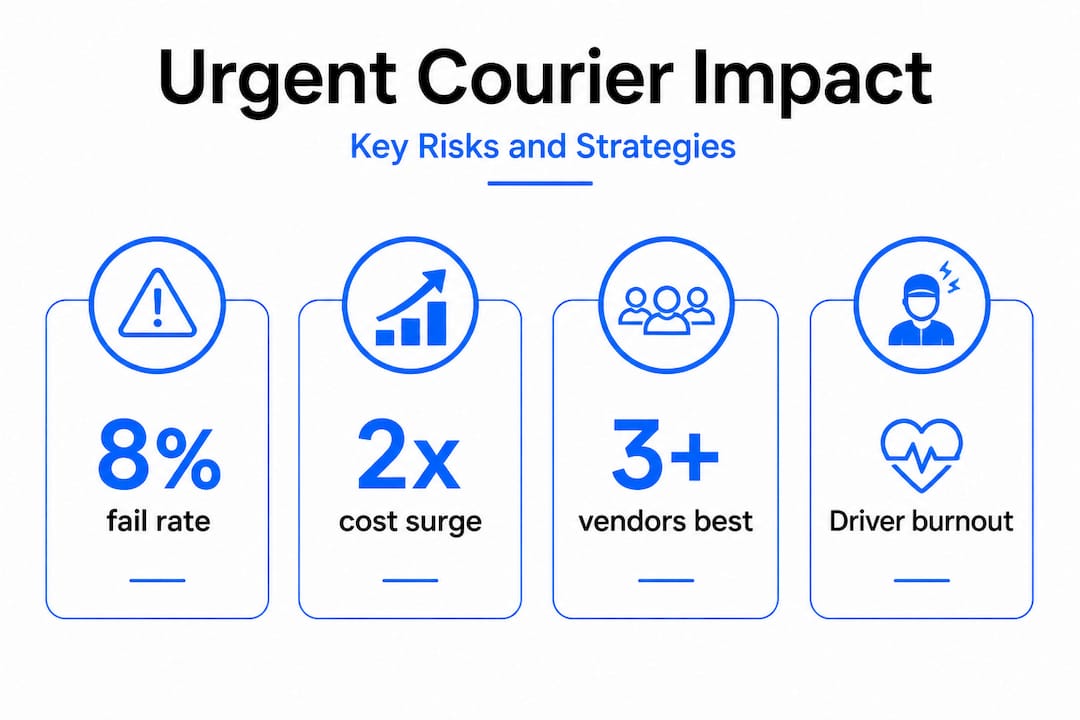
Investing in supply chain improvements often yields greater gains than repeatedly absorbing the premium cost of urgent delivery. Better stock management, more accurate demand forecasting, and stronger supplier relationships can reduce how often urgent couriers are needed in the first place. When they are needed, having a reliable, pre-vetted provider ready makes the difference between a problem solved and a problem compounded.
Looking for fast, dependable urgent courier solutions?
If your business regularly depends on urgent deliveries, working with a specialist provider rather than a general parcel service makes a measurable difference. Dedicated vehicles, nationwide coverage, and 24/7 availability are not marketing points. They are operational requirements for time-sensitive consignments.
[

DedicatedSameDayCourier.co.uk offers a sameday courier service built around dedicated, exclusive vehicle transport with no shared loads. Whether you need a small document delivered across a city or a pallet moved across the country, a range of van courier services is available to match your specific requirements. With a network of trusted couriers operating across the UK, you can find courier collection locations near you and get a quote within minutes, any time of day or night.
Frequently asked questions
How do urgent couriers improve business delivery speed?
Urgent couriers offer prioritised collection, direct point-to-point routes, and dedicated vehicles that eliminate depot sorting, getting time-sensitive parcels to their destination faster than standard options. However, even with these advantages, up to 30% of same-day deliveries can still arrive late due to traffic and operational pressures.
What are the main risks of relying on urgent couriers?
The main risks include late or failed deliveries, driver shortages, price volatility, and inconsistent service quality. Driver shortages affected 65% of UK courier firms and directly delayed 12% of deliveries, making provider vetting essential before an urgent consignment is booked.
Is using multiple couriers better than sticking to one?
A multi-carrier strategy reduces the risk of a single failure disrupting your operations and provides more flexibility for different vehicle requirements or locations. Industry research consistently recommends this approach over sole reliance on one provider.
How often do urgent courier deliveries fail in the UK?
Approximately 14% of all UK courier deliveries fail on the first attempt across 574 million annual delivery attempts, meaning a significant volume of urgent consignments require a second delivery attempt, adding cost and delay.
Recommended


Comments