
Importance of delivery security for UK businesses
Updated: Aug 30

TL;DR:
Delivery security protects shipments from theft, damage, and delays, improving customer trust and operational efficiency. Implementing Secure-by-Design frameworks and real-time tracking reduces vulnerabilities and strengthens accountability at every delivery stage. Last-mile risks are highest, so dedicated controls like GPS tracking and tamper seals are essential for secure logistics operations.
Delivery security is the practice of protecting shipments from theft, damage, and delays across every stage of the logistics process. For business owners and logistics managers, the importance of delivery security extends beyond protecting individual parcels. It directly affects customer trust, operational efficiency, and financial performance. Secure-by-design frameworks and real-time tracking have become standard tools for businesses that cannot afford the cost of a failed delivery.
How secure delivery frameworks reduce vulnerabilities and build trust
A Secure-by-Design delivery framework embeds security controls into every stage of the logistics process, rather than treating security as a final check. Adopting this approach reduces critical vulnerabilities by over 40% and shortens security-approval bottlenecks in sales processes by 25%. That means fewer delays, fewer disputes, and stronger confidence from enterprise buyers who require documented proof of security compliance before committing to a supplier.
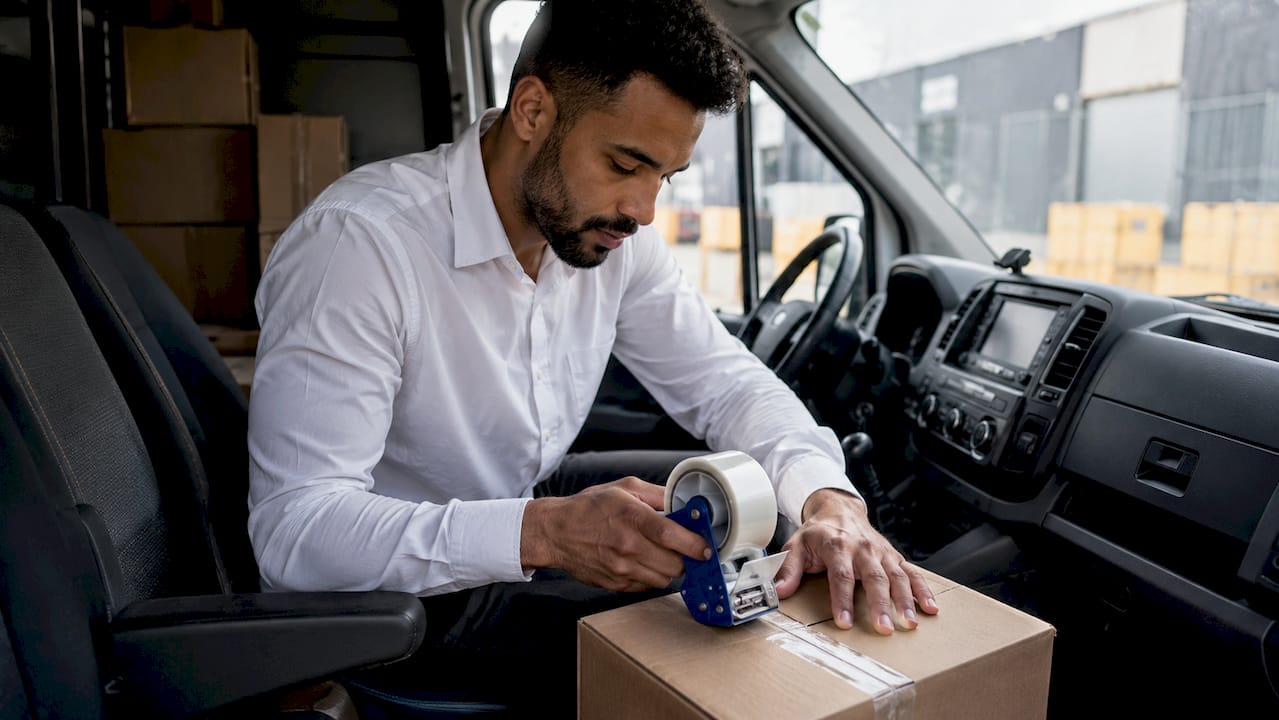
The practical implications for logistics managers are significant. Embedding security early in delivery planning removes the need for reactive fixes after incidents occur. It also creates a clear audit trail, which matters when goods in transit are high value or time-sensitive.
Key benefits of a Secure-by-Design delivery model include:
Reduced exposure to theft and tampering at handover points
Faster security approvals in B2B sales and procurement cycles
Stronger trust signals for clients handling regulated or sensitive goods
Fewer operational disruptions caused by security incidents mid-route
Clearer accountability between shippers, carriers, and recipients
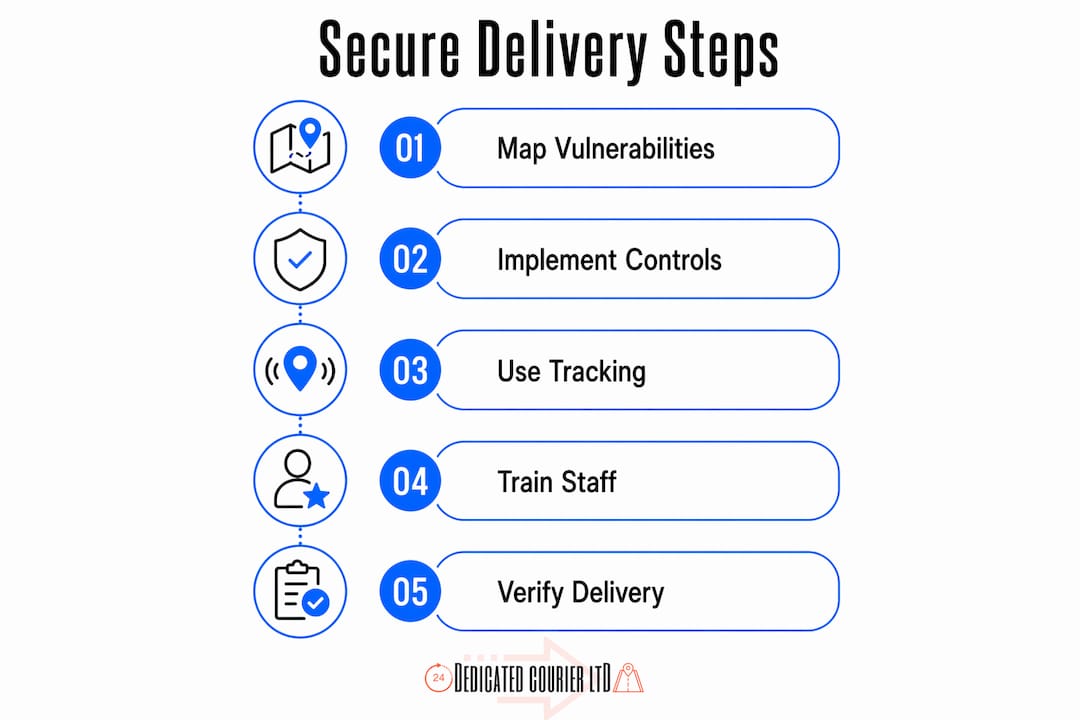
Pro Tip: Map every handover point in your delivery chain before selecting security measures. Vulnerabilities concentrate at transitions between carriers, depots, and final recipients.
What are the biggest delivery security risks for logistics operations?
The last mile is the most exposed point in any supply chain. Last-mile delivery lacks the high-level oversight present earlier in the chain, leaving shipments open to theft, interception, and tampering. High delivery volumes, time pressure, and inconsistent driver supervision compound the risk. For businesses shipping pharmaceuticals, electronics, or legal documents, a single compromised delivery can trigger significant financial and reputational damage.
The financial consequences are direct and measurable. Security risks including theft, fraud, and vandalism increase financial losses and cause delivery delays through rerouting, investigations, and replacement shipments. Each delay adds cost and erodes the confidence of the customer waiting at the other end.
The most common delivery security risks, ranked by operational impact, are:
Package theft during last-mile delivery. Unattended parcels at doorsteps or unmanned collection points are the most frequent target.
Tampering during transit. Goods in transit can be accessed at depot transfer points without adequate sealing or monitoring.
Driver and staff fraud. Internal theft remains an underreported risk, particularly in high-volume operations with limited oversight.
Route interception. Predictable delivery routes create opportunities for organised theft, especially for high-value consignments.
Documentation fraud. Falsified proof of delivery allows fraudulent claims and obscures genuine losses.
Robust security measures such as real-time parcel tracking and secure packaging significantly improve delivery timeliness and order fulfilment accuracy. The correlation is clear: businesses that invest in security preparedness perform better on core logistics metrics. A further challenge is that 63% of employers identify skills gaps as the primary barrier to organisational transformation, particularly in roles that intersect security, engineering, and logistics. That shortage makes it harder to maintain consistent security standards across delivery teams.
What best practices ensure secure shipping and delivery operations?
Secure delivery procedures work best when they combine physical controls, technology, and staff accountability. No single measure is sufficient on its own. The following practices form the foundation of a reliable security programme for logistics operations.
Real-time tracking and visibility give logistics managers live data on parcel location and condition. When a shipment deviates from its planned route, an alert triggers immediately rather than after the fact. This is the single most effective tool for reducing losses during transit.
Tamper-evident packaging and electronic seals provide physical proof of interference. Electronic seals add traceable evidence of tampering and strengthen accountability between shippers, carriers, and customers. For businesses shipping high-value or regulated goods, this is a non-negotiable standard. You can find detailed guidance on secure parcel transportation for UK businesses through Dedicatedsamedaycourier’s published resources.
Staff training and route planning reduce human error and predictability. Varying delivery routes for high-value consignments limits the opportunity for organised interception. Training drivers to verify recipient identity before handover closes a common gap in last-mile accountability. For businesses handling sensitive materials, reliable delivery practices also apply across specialist sectors such as laboratory supply, where chain-of-custody requirements are strict.
Pro Tip: Require photographic proof of delivery for all high-value shipments. A timestamped image with GPS coordinates creates an evidence record that protects both the business and the carrier.
Security measure | Primary benefit | Best suited for |
Real-time GPS tracking | Immediate incident detection | All shipment types |
Tamper-evident seals | Physical proof of interference | High-value or regulated goods |
Proof of delivery photos | Dispute resolution evidence | B2C and B2B deliveries |
Route variation | Reduces interception risk | Repeat high-value routes |
Staff identity verification | Prevents internal fraud | High-volume depot operations |
How is delivery security evolving as a strategic business asset?
Security is no longer a final checkpoint before dispatch. Security is shifting from a gatekeeper role to a delivery accelerator, embedding automated controls into daily processes and enabling faster, more reliable shipping. That shift changes how logistics managers should think about investment in security. It is not a cost to minimise. It is a capability that directly improves delivery performance.
Shared ownership of security across operations, product, and business teams is now the standard in high-performing logistics organisations. Security as a shared capability requires leadership alignment and continuous capability building, not just a dedicated security team working in isolation. Businesses that treat security as a cross-functional responsibility respond faster to incidents and recover with less disruption.
“Failures in access control, key management, and threat detection can significantly harm customer trust and result in operational and financial damage. Security embedded across the delivery chain is the only reliable defence.” — Security Magazine
The future of secure shipping lies in automation replacing manual security bottlenecks. Businesses that build this capability now will hold a clear advantage as delivery volumes grow and customer expectations for reliability increase.
Key takeaways
Delivery security is a direct driver of logistics performance, customer trust, and financial protection for any business that moves goods.
Point | Details |
Secure-by-Design reduces risk | Embedding security early cuts critical vulnerabilities by over 40% and speeds up approvals. |
Last mile is the highest risk | Theft, tampering, and fraud concentrate at the final delivery stage with the least oversight. |
Tracking and seals are essential | Real-time GPS tracking and tamper-evident seals are the most effective physical controls. |
Skills gaps threaten standards | 63% of employers cite skills shortages as the main barrier to consistent security practice. |
Security drives performance | Businesses with strong security measures achieve better delivery timeliness and order accuracy. |
Why I think most businesses underestimate last-mile security
Having worked closely with logistics operations across the UK, the pattern I see most often is businesses investing heavily in warehouse security and then leaving the last mile almost entirely unprotected. The assumption is that once a parcel leaves the depot, the risk is manageable. That assumption is wrong.
The last mile is where the volume is highest, the oversight is lowest, and the opportunity for theft or fraud is greatest. A business can have excellent secure delivery procedures in place for 95% of the journey and still suffer significant losses in the final kilometre. The financial damage is real, but the reputational damage with the customer is often worse.
What I have found works is treating last-mile security as a separate discipline with its own controls, training, and accountability structure. Proof of delivery photos, electronic seals, and route variation are not expensive. They are simply disciplined. The businesses that adopt them consistently see fewer disputes, fewer losses, and stronger client retention. Security is not a cost centre when you measure it against the cost of a failed delivery.
— andrew
Secure your shipments with Dedicatedsamedaycourier
Dedicatedsamedaycourier operates dedicated courier vehicles across the UK, meaning your goods travel on an exclusive vehicle with no shared loads and no depot transfers. That single-vehicle model removes the handover points where most theft and tampering occur.
[
Every booking includes real-time tracking and 24/7 operational support, so you have visibility at every stage of transit. Whether you need same-day courier services for urgent documents or a dedicated courier vehicle for high-value goods, Dedicatedsamedaycourier provides a secure, reliable solution with nationwide coverage. Contact Dedicatedsamedaycourier by phone, email, or online quote form to discuss your shipment requirements.
FAQ
What is delivery security and why does it matter?
Delivery security is the practice of protecting shipments from theft, tampering, and loss throughout the logistics process. It matters because security failures cause direct financial losses, delivery delays, and lasting damage to customer trust.
What are the main risks in last-mile delivery?
The last mile carries the highest risk of theft, tampering, and fraud due to high volume, time pressure, and limited oversight. Last-mile vulnerabilities are the primary cause of shipment losses in most logistics operations.
How does real-time tracking improve delivery security?
Real-time GPS tracking gives logistics managers live visibility of parcel location and triggers immediate alerts when a shipment deviates from its planned route. This reduces response time and limits financial exposure from theft or misdirection.
What is a Secure-by-Design delivery framework?
A Secure-by-Design framework embeds security controls into every stage of the delivery process rather than applying them as a final check. It reduces critical vulnerabilities by over 40% and shortens security-related delays in business procurement cycles.
How can businesses address skills gaps in delivery security?
Businesses should invest in structured training programmes for drivers and operations staff, covering identity verification, tamper-evident packaging, and incident reporting. Shared accountability across teams, rather than relying on a single security role, reduces the impact of individual skills gaps.
Recommended


Comments