
Master parcel delivery workflow for urgent UK shipments
Updated: May 15
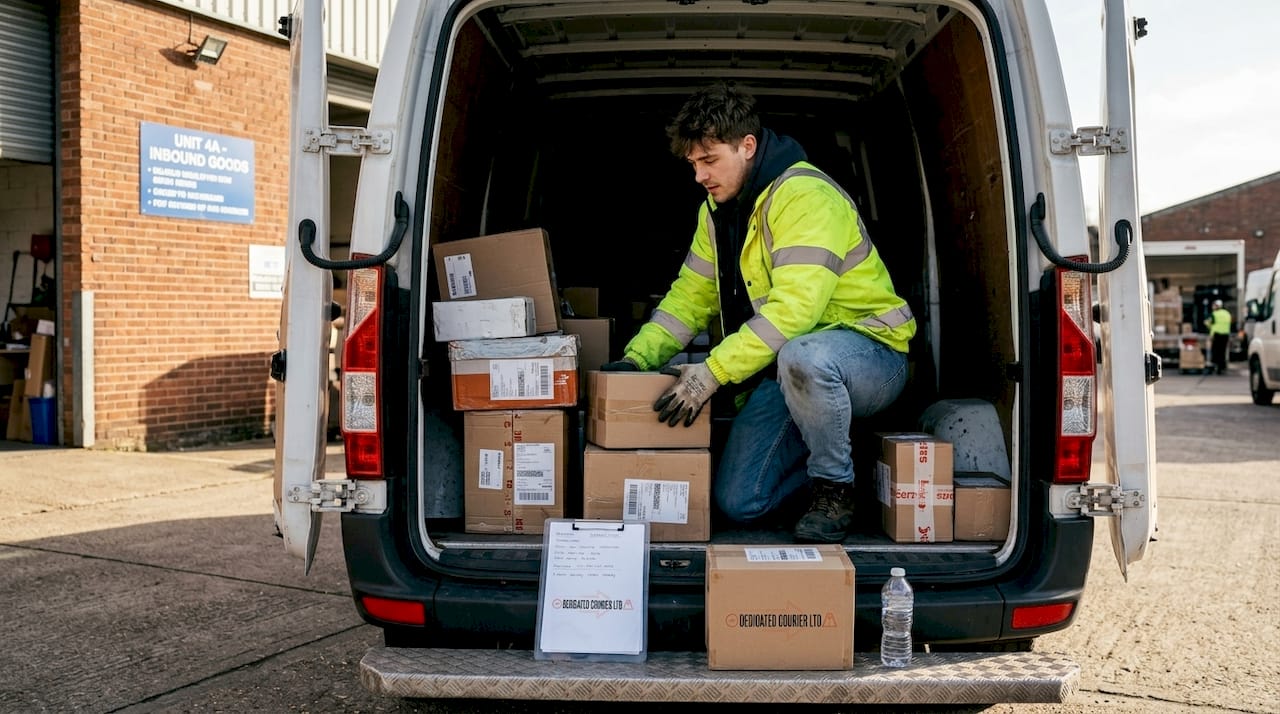
Small and medium-sized businesses across the UK face mounting pressure to meet same-day delivery commitments, yet many struggle with inefficient parcel workflows that lead to missed deadlines and disappointed customers. Mastering your parcel delivery workflow transforms urgent shipments from a logistical headache into a competitive advantage. This guide walks you through the complete process, from understanding vehicle requirements and planning preparations to executing deliveries and verifying success. You’ll discover practical strategies to optimise your urgent courier operations, reduce costs, and achieve consistently reliable same-day delivery performance for documents, parcels, and pallets across the UK.
Table of Contents
Key takeaways
Point | Details |
Vehicle matching matters | Different parcel sizes require specific vehicles, from bikes for documents to large vans for pallets up to 1100kg |
Preparation cuts costs | Batching orders and using business accounts can reduce delivery expenses by up to 15% whilst improving efficiency |
Technology solves challenges | AI routing and GPS tracking mitigate urban congestion, address errors, and fragile item handling risks |
Verification ensures quality | Monitoring on-time delivery rates above 95% and customer satisfaction scores drives continuous improvement |
Hybrid models balance needs | Combining urgent same-day services with standard deliveries optimises both speed and cost for SMEs |
Understanding parcel types and vehicle requirements
Successful urgent deliveries begin with matching the right vehicle to your parcel type. UK same-day courier services typically categorise shipments into three distinct groups: documents, parcels, and pallets. Each category demands specific vehicle capabilities and handling approaches to ensure timely, secure delivery.
Documents represent the lightest category, typically handled by motorcycles or small cars for maximum urban manoeuvrability. These vehicles excel at navigating congested city centres and can often reach collection points within 60 minutes. Standard parcels weighing up to 30kg require small vans with adequate cargo space and climate control for sensitive items. For larger shipments, pallets demand robust vehicles capable of handling weights up to 1100kg, equipped with tail lifts and proper securing equipment.
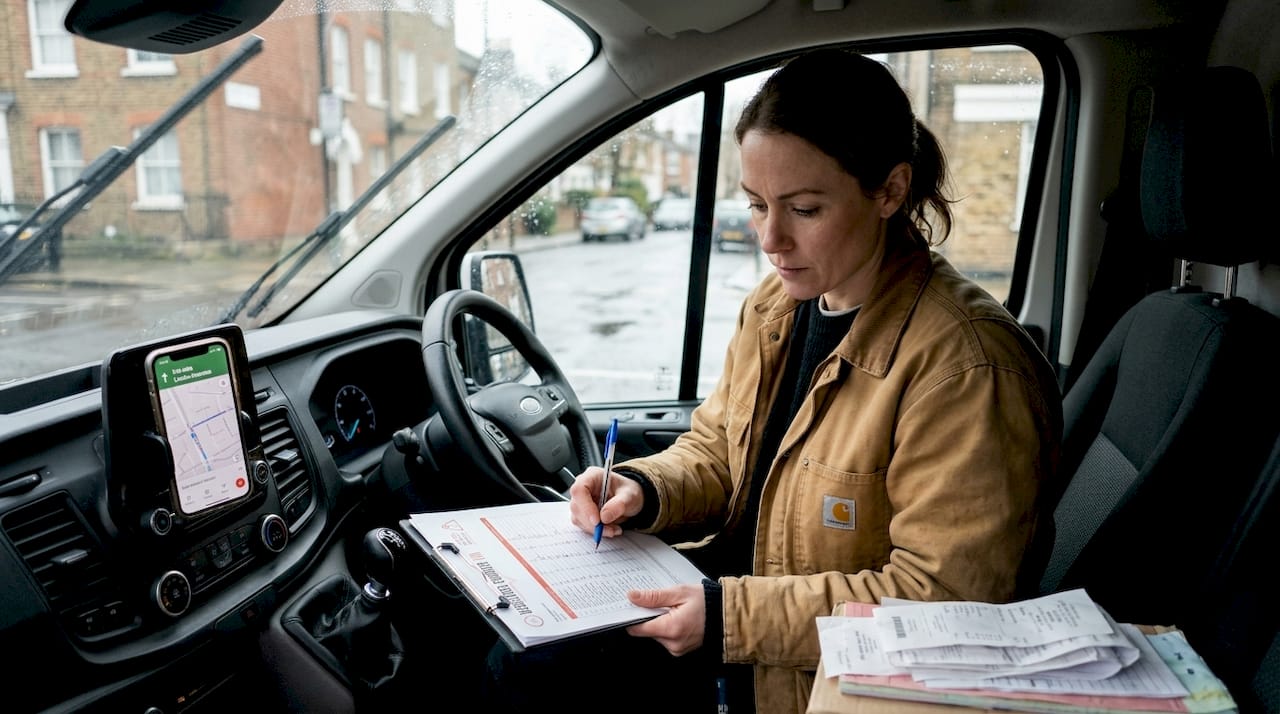
The dedicated driver model proves essential for urgent deliveries. Unlike consolidated services where multiple parcels share vehicles and routes, dedicated couriers assign one driver to handle your shipment from collection through delivery. This approach eliminates intermediate stops, reduces handling risks, and provides direct accountability. When you need a parcel across the UK within hours, the same day delivery workflow uk couriers use ensures your shipment receives undivided attention.
Vehicle Type | Weight Capacity | Typical Uses | Average Speed |
Motorcycle/Bike | Up to 5kg | Documents, small packages, city centre deliveries | 45-60 min collection |
Small Car | Up to 15kg | Document bundles, multiple small parcels | 60-90 min collection |
Small Van | Up to 30kg | Standard parcels, boxed items, fragile goods | 90-120 min collection |
Large Van | Up to 1100kg | Pallets, bulk shipments, heavy equipment | 2-3 hour collection |
Selecting the appropriate vehicle requires careful consideration of several factors:
Accurate weight and dimension measurements prevent vehicle mismatches and potential delivery failures
Fragile or temperature-sensitive items need specialised vehicles with climate control and suspension systems
Urban deliveries benefit from smaller, agile vehicles that navigate congestion and parking restrictions efficiently
Pallet shipments require vehicles with tail lifts and sufficient height clearance for loading bays
Out-of-hours deliveries may limit vehicle availability, requiring advance booking for specialised equipment
Pro Tip: Always provide exact parcel dimensions and weight when booking. Underestimating by even 5kg can result in vehicle reassignment, adding 60-90 minutes to your delivery timeline and incurring surcharges.
Planning and preparing your parcel delivery workflow
Effective preparation separates successful urgent deliveries from costly failures. Before initiating any same-day shipment, implement a systematic approach that addresses order batching, data accuracy, and performance tracking. These preparatory steps directly impact both delivery success rates and overall logistics costs.
Begin by establishing a structured order management process:
Batch similar deliveries heading to the same region or requiring identical vehicle types to negotiate volume discounts
Verify all parcel dimensions, weights, and contents against your initial estimates to prevent vehicle mismatches
Conduct thorough address validation using postcode verification tools to eliminate delivery failures from incorrect locations
Set up dedicated business accounts with preferred courier providers to access preferential rates and priority service
Implement KPI tracking systems to monitor on-time delivery rates, customer satisfaction scores, and incident frequencies
Scheduling bulk orders strategically yields substantial cost benefits. Best couriers uk services often provide discounts of approximately 15% for businesses that batch orders for scheduled collection windows rather than requesting immediate ad-hoc pickups. This approach works particularly well for non-critical shipments that can wait 2-4 hours for collection, allowing you to reserve premium same-day rates exclusively for genuinely urgent deliveries.
Accurate shipping information proves non-negotiable for efficient urgent deliveries. Incorrect dimensions trigger vehicle reassignments, whilst wrong addresses result in failed deliveries and expensive redelivery attempts. Invest time in creating standardised data entry templates that capture complete delivery requirements: precise addresses including building names and floor numbers, recipient contact details, any access restrictions, and special handling instructions.
Business accounts with courier providers deliver multiple advantages beyond reduced rates. Account holders typically receive priority collection slots, dedicated customer service contacts, and simplified invoicing that consolidates multiple deliveries into monthly statements. These accounts also enable you to establish credit terms, eliminating the need for payment at each booking and streamlining your accounts payable processes.
Maintaining robust KPI tracking allows you to identify workflow weaknesses and optimise future deliveries. Target an on-time delivery rate exceeding 95% for same-day services, tracking both successful first-attempt deliveries and overall completion rates. Monitor average delivery times by route and vehicle type to identify patterns, and analyse customer feedback to spot recurring issues with specific couriers or delivery zones.
Pro Tip: Implementing parcel delivery tips 2026 optimise urgent uk shipments technology such as AI-powered route optimisation and real-time tracking systems can reduce delivery costs by approximately 15% whilst simultaneously improving on-time performance through dynamic traffic avoidance and automated exception handling.
Executing the delivery: managing common challenges and technologies
Even meticulously planned parcel delivery workflows encounter operational challenges during execution. Understanding these obstacles and deploying appropriate mitigation strategies separates reliable courier operations from those plagued by delays and customer complaints. Urban congestion, address errors, and handling complications represent the most frequent issues disrupting urgent UK deliveries.
Typical operational challenges include:
Urban congestion and environmental zone charges in cities like London, Birmingham, and Manchester adding unexpected fees and delays
Rural delivery locations requiring extended travel times without guaranteed mobile signal coverage for real-time updates
Traffic incidents and roadworks causing unpredictable route disruptions that standard planning cannot anticipate
Incorrect or incomplete addresses forcing drivers to contact customers mid-route, consuming valuable delivery time
Fragile item damage from inadequate packaging or rough handling during loading and unloading
Extended waiting times at commercial premises lacking dedicated loading bays or available staff
Out-of-hours premium charges for deliveries outside standard business hours when urgent deadlines demand evening or weekend service
Pallet access complications in narrow streets or buildings without suitable unloading facilities
Challenges for pallet deliveries vary significantly between urban and rural environments, requiring different tactical approaches:
Environment | Primary Challenge | Typical Delay | Additional Costs |
Urban (London, Manchester) | Congestion, ULEZ/CAZ fees | 30-60 minutes | £12.50-£15 daily charge |
Suburban | Parking restrictions, access | 15-30 minutes | £50-£100 parking fines |
Rural | Distance, limited mobile signal | 45-90 minutes | Fuel surcharges 15-25% |
Industrial estates | Gate access, waiting times | 20-45 minutes | Waiting time charges £25/hour |
Technology solutions provide powerful tools to overcome these execution challenges. AI-powered routing systems analyse real-time traffic data, historical patterns, and current incidents to calculate optimal delivery sequences that avoid congestion hotspots. These systems dynamically reroute drivers when unexpected delays occur, maintaining delivery schedules despite disruptions.
GPS tracking gives customers and logistics managers complete visibility into delivery progress. Real-time location updates eliminate anxious phone calls asking where deliveries are, whilst automated notifications alert recipients when couriers approach their location. This transparency builds trust and allows recipients to prepare for arrival, reducing waiting times at delivery points.
Out-of-hours locker systems offer innovative solutions for deliveries to unstaffed locations. Secure parcel lockers at business parks and residential complexes enable 24/7 drop-offs without requiring recipient presence. This technology proves particularly valuable for sameday delivery services uk operating outside traditional business hours.
Pro Tip: Always verify delivery addresses and confirm pallet site access before dispatching drivers. A quick phone call to recipients confirming loading bay availability, parking permits, and building access codes prevents 80% of on-site delays and failed delivery attempts.
Fragile item mismanagement represents a critical risk in urgent deliveries. When time pressure meets inadequate packaging, breakage rates increase by up to 40%. Always use courier-approved packaging materials and clearly label fragile items to ensure proper handling throughout the delivery chain.
Verifying successful delivery and optimising future workflows
Delivery completion marks the beginning of your verification and optimisation process, not the end. Systematic confirmation procedures ensure customer satisfaction whilst performance analysis reveals opportunities to enhance future parcel delivery workflows. Small and medium-sized businesses that implement rigorous verification protocols consistently achieve higher customer retention and operational efficiency.
Establish a comprehensive delivery confirmation process:
Obtain direct customer confirmation via signature, photographic proof, or electronic acceptance through mobile apps
Review driver completion reports documenting exact delivery times, recipient names, and any exceptions or complications encountered
Cross-reference real-time tracking logs against scheduled delivery windows to identify timeline variances
Contact customers within 24 hours for high-value or critical shipments to confirm satisfaction and resolve any concerns
Document all delivery exceptions, delays, or customer feedback in your central tracking system for pattern analysis
Monitoring key performance indicators provides objective data to assess your parcel delivery workflow effectiveness:
On-time delivery percentage measuring first-attempt success rates against committed delivery windows
Customer satisfaction scores gathered through post-delivery surveys or feedback requests
Incident rates tracking damaged items, failed deliveries, and customer complaints per 100 shipments
Average delivery cost per parcel segmented by urgency level, distance, and vehicle type
Carrier performance comparisons identifying which courier partners deliver the most reliable service
UK same-day courier services data shows on-time rates ranging from 85% to 98%, with premium carriers like DPD and UPS achieving 95%+ performance in urban next-day deliveries. Budget services typically deliver lower reliability, making carrier selection crucial for businesses where delivery success directly impacts customer relationships.
Hybrid delivery models offer SMEs an intelligent approach to balancing urgency and cost. Rather than treating every shipment as equally urgent, categorise deliveries based on genuine customer need. Reserve premium same-day services for truly time-sensitive shipments where delays cause significant business impact. Route less urgent parcels through standard next-day or economy services that cost 40-60% less whilst still meeting customer expectations.
This strategic segmentation allows you to maintain responsive service for critical deliveries without inflating logistics costs across your entire operation. Analyse historical delivery data to identify patterns: which customers genuinely require same-day service versus those who simply prefer it? Which products or order types justify premium delivery investment? Use these insights to develop delivery tier guidelines that optimise both customer satisfaction and operational efficiency.
Tracking and analysing delivery data reveals specific improvement opportunities. Look for recurring issues with particular routes, carriers, or delivery zones. If one courier consistently misses delivery windows in specific postcodes, consider switching providers for those areas. When certain products generate higher damage rates, investigate whether packaging improvements or carrier handling instructions could reduce incidents.
Pro Tip: Establish an on-time delivery KPI target exceeding 95% for same-day services as your operational benchmark. This threshold aligns with premium UK carrier performance standards and signals to customers that you maintain professional logistics standards. Track this metric weekly and investigate any drops below 93% to identify and correct workflow issues before they impact customer relationships.
The same day delivery benefits uk businesses 2026 extend beyond immediate customer satisfaction. Businesses with optimised parcel delivery workflows report reduced logistics costs, improved inventory turnover, and enhanced competitive positioning. Your verification and optimisation efforts compound over time, creating increasingly efficient operations that support business growth without proportional logistics cost increases.
Our dedicated courier services for your urgent deliveries
When your business demands reliable same-day delivery across the UK, our dedicated courier service nationwide coverage provides the solution. We specialise in urgent shipments requiring guaranteed delivery windows, offering tailored vehicle options for documents, parcels, and pallets up to 1100kg. Our dedicated driver model ensures your shipment receives undivided attention from collection through delivery, eliminating consolidation delays and intermediate handling risks.

Operating 24/7 with rapid collection times including 60-minute response in many areas, we support businesses requiring flexible, responsive logistics solutions. Our nationwide network covers urban centres and rural locations equally, with experienced drivers who understand regional access challenges and optimal routing strategies.
Our dedicated sameday courier services deliver:
Real-time GPS tracking providing complete shipment visibility from collection to delivery
Dedicated drivers assigned exclusively to your delivery, ensuring direct point-to-point transport
Flexible scheduling accommodating urgent collections and out-of-hours delivery requirements
Competitive pricing with transparent quotes and no hidden surcharges
Expert handling for fragile items, temperature-sensitive goods, and oversized pallets
Pro Tip: Request a customised courier delivery quote to discover how our dedicated same-day services can meet your urgent delivery requirements whilst maintaining cost-effective logistics operations.
Frequently asked questions
What is the typical parcel delivery workflow for urgent UK shipments?
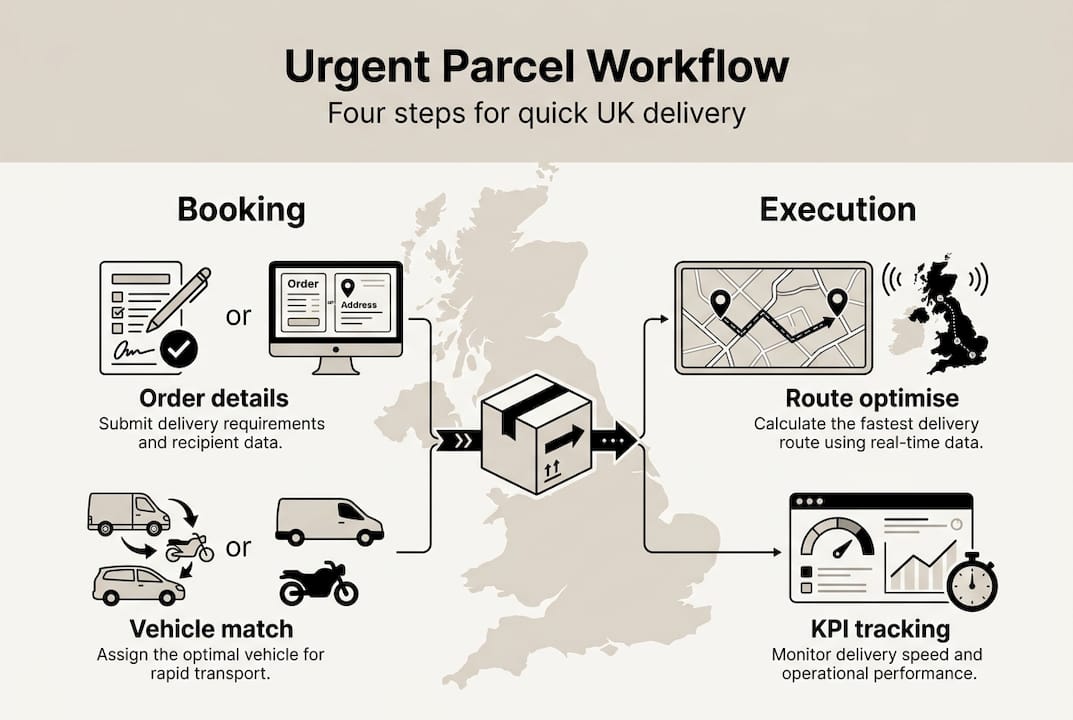
The workflow comprises four core stages: order placement with accurate parcel details and delivery requirements, vehicle and driver assignment based on shipment size and urgency, real-time tracking providing continuous visibility throughout transit, and delivery confirmation with photographic proof or signature capture. Each stage includes verification checkpoints to ensure on-time completion and customer satisfaction.
How can small businesses reduce costs when using same-day courier services?
Batch multiple orders heading to similar regions or requiring identical vehicle types to negotiate volume discounts of approximately 15%. Establish business accounts with preferred courier providers to access preferential rates and priority service. Provide accurate parcel dimensions and weights to prevent vehicle mismatches that trigger surcharges, and reserve premium same-day services exclusively for genuinely urgent shipments whilst routing less critical parcels through more economical next-day options.
What are common challenges in urgent pallet deliveries and how to mitigate them?
Urban congestion and environmental zone fees in cities like London add unexpected costs and delays, whilst narrow streets and inadequate loading facilities complicate access at delivery sites. Mitigate these challenges by implementing AI-powered routing systems that avoid congestion hotspots, pre-verifying site access including loading bay availability and parking permits before dispatch, and using GPS tracking to provide real-time updates when delays occur. Always confirm pallet dimensions match vehicle and site capabilities to prevent on-site complications.
Why should UK SMEs consider a hybrid delivery model?
Hybrid models balance cost efficiency with service responsiveness by categorising shipments based on genuine urgency rather than treating all deliveries identically. This approach reserves premium same-day services for truly time-sensitive shipments where delays cause significant business impact, whilst routing less urgent parcels through standard next-day services costing 40-60% less. The result improves overall delivery efficiency, reduces logistics expenses, and maintains customer satisfaction by matching service levels to actual requirements rather than applying one-size-fits-all solutions.
Recommended


Comments