
Parcel transportation tips for urgent UK business deliveries
Updated: May 14

TL;DR:
UK businesses face significant challenges in selecting reliable transportation for urgent parcels under tight deadlines, risking delays and damaged relationships. Proper planning, choosing dedicated couriers, effective packaging, and real-time tracking are essential to ensure successful, time-critical deliveries. Building flexibility into logistics processes enables businesses to handle urgent shipments confidently and consistently.
Selecting the right transportation method for business-critical parcels under tight deadlines is one of the most pressing logistical challenges UK businesses face. A delayed shipment can stall production, frustrate clients, and damage hard-earned business relationships. Whether you are managing a one-off urgent consignment or handling daily time-sensitive freight, getting the process right from start to finish matters enormously. This article covers practical, straightforward steps to help you plan, package, and track urgent parcel deliveries more effectively across the UK.
Table of Contents
Key Takeaways
Point | Details |
Know your requirements | Clearly define urgency, parcel details, and logistics needs before selecting transport options. |
Select best courier | Choosing a dedicated courier service boosts reliability and speed for urgent shipments. |
Package securely | Proper packaging prevents damage, speeds handling, and improves successful delivery rates. |
Leverage tracking | Using real-time tracking and communication keeps you informed and minimises potential delays. |
Understand your urgent delivery requirements
Before booking any courier, it is essential to assess what your parcel delivery actually requires. Not every urgent shipment is the same. A document needing delivery across town by midday is very different from a batch of fragile components required at a manufacturing site 200 miles away by close of business.
Start by evaluating the basics:
Size and weight of the parcel, as these determine vehicle type and cost
Delivery window, including the latest acceptable arrival time
Distance and route, which affects transit time and courier availability
Value of goods in transit, since higher value items need appropriate insurance cover
Fragility or special handling requirements, such as temperature control or upright positioning
Regulatory compliance, particularly for hazardous materials or restricted goods
Budget also plays a role. Sameday dedicated services cost more than standard next-day options, but when a missed deadline costs more than the delivery itself, the investment is justified. Understanding logistics tips for faster shipments can help you align spend with genuine operational priorities.
Businesses that plan their delivery criteria in advance consistently avoid last-minute errors. Knowing your requirements precisely before making a booking means less back-and-forth, fewer delays, and a courier who is properly briefed from the outset.
Pro Tip: Keep a simple internal checklist for each urgent shipment, covering weight, dimensions, destination, deadline, and declared value. This speeds up bookings and reduces errors when time is short.
The parcel delivery tips for 2026 that logistics and transportation companies rely on all share one common thread: preparation before despatch is non-negotiable for reliable outcomes.
Choose the right delivery method for speed and reliability
With your delivery needs mapped out, it is time to compare the most effective transport methods and services. Not all courier options are built for urgency, and choosing the wrong one is a costly mistake.
Delivery method | Speed | Reliability | Best for |
Sameday dedicated courier | Same day, hours | Very high | Critical, time-sensitive items |
Next-day courier service | Overnight | High | Non-critical but priority freight |
Standard postal service | 2 to 5 days | Moderate | Low-value, non-urgent items |
Express parcel network | 1 to 2 days | High | Regular business volumes |
Sameday dedicated van couriers are the strongest option for genuine urgency. Because the vehicle is exclusive to your consignment, there are no intermediate stops, no sorting depots, and no shared-load risks. Goods travel directly from collection point to destination. This model significantly reduces handling, which in turn reduces the risk of damage or loss.
When assessing any courier for urgent deliveries, consider:
Real-time GPS tracking with status updates throughout transit
Proof of delivery upon arrival, including signature or photographic confirmation
24/7 availability, including weekends and bank holidays
Nationwide coverage with a reliable driver network
Adequate goods-in-transit insurance for the value of your consignment
Knowing how dedicated couriers cut delays helps clarify why exclusive vehicle allocation matters for time-critical freight. For a structured breakdown of service options, the factors to consider when choosing a reliable courier are worth reviewing before committing.
Pro Tip: Always confirm that the courier holds hire and reward insurance before booking. Standard vehicle insurance does not cover goods transported commercially, and without it, any claim for damages may be void.
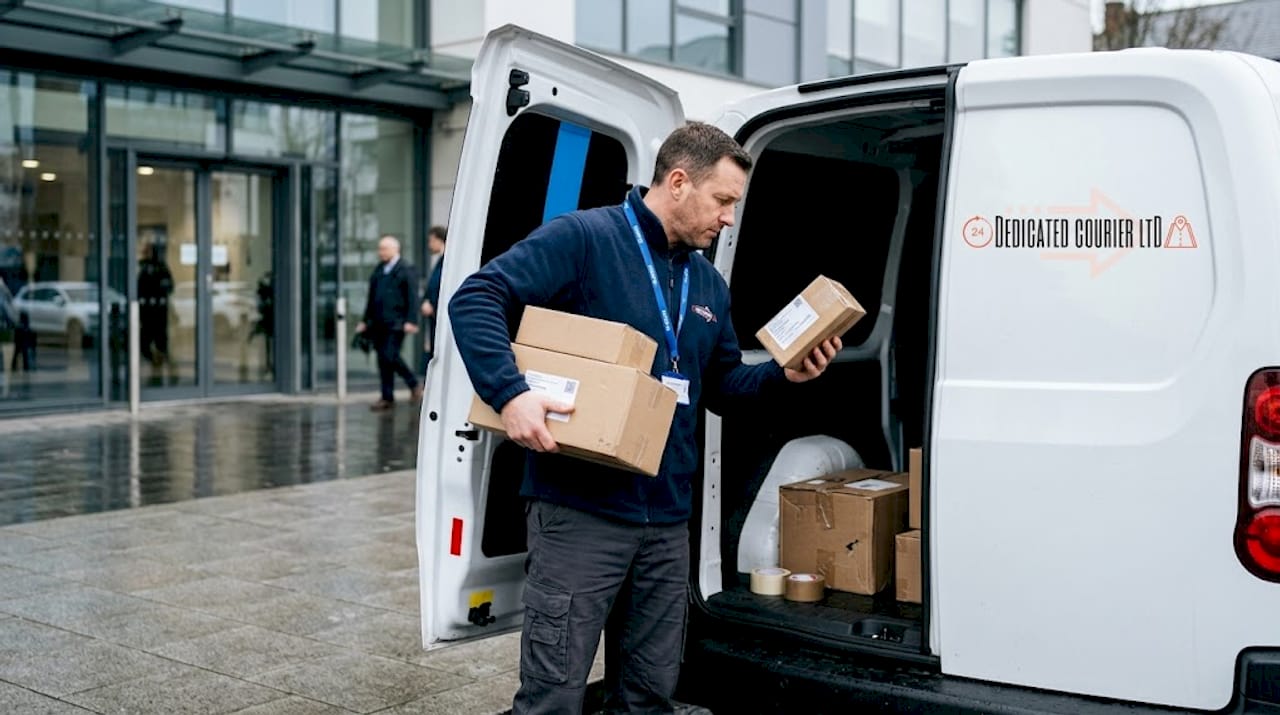
The courier versus postal service comparison for urgent UK deliveries demonstrates clearly that for anything business-critical, a dedicated courier consistently outperforms postal alternatives on speed, reliability, and accountability.
Package parcels effectively for urgent transit
Selecting a delivery method is only part of the equation; the way you package your parcels is equally crucial. Poor packaging causes damage, delays, and in some cases voids insurance cover entirely.
Follow this sequence for every urgent shipment:
Choose a rigid outer box appropriate to the size and weight of the contents. Oversized boxes invite movement; undersized ones risk crushing.
Wrap items individually using bubble wrap, foam, or kraft paper to protect against impact during transit.
Fill internal voids with packing peanuts, air cushions, or crumpled paper to prevent contents shifting.
Place items centrally within the box, away from walls, to cushion against drops.
Seal all seams with strong packing tape, applied in an H-pattern across the top and bottom of the box.
Label clearly on the largest face of the parcel, including full recipient name, address, postcode, and a return address.
Remove or cover old labels from reused packaging to avoid misrouting.
Common packaging errors to avoid:
Using damaged or previously weakened boxes
Under-taping corners and seams
Wrapping items loosely inside an oversized container
Writing addresses by hand in ink that smears
Forgetting to include a secondary label inside the parcel in case the outer label is lost
Packaging material | Suitable for | Not suitable for |
Double-walled cardboard | Heavy or fragile items | Very light documents |
Bubble wrap | Electronics, glassware | Sharp-edged items without additional cover |
Foam inserts | Precision instruments | General household goods |
Jiffy bags | Documents, soft goods | Rigid or breakable items |
The guidance on how to prepare parcels for courier transit is clear: proper packaging is a contractual requirement with most couriers, not simply best practice. Understanding the courier process step by step also helps businesses prepare efficiently so the driver can collect and proceed without delay.
Optimise your shipment tracking and communication
Once parcels are prepared, optimising tracking and communication ensures your urgent shipments stay on course. Real-time visibility is not a luxury for urgent deliveries; it is a necessity.
Key actions to take once a shipment is booked:
Activate real-time tracking as soon as the courier confirms collection. Most dedicated services provide a tracking link or reference number.
Set up automated alerts for key milestones: collection confirmed, en route, out for delivery, and delivered.
Share tracking details with the recipient immediately so they can prepare for arrival and are available to receive the parcel.
Designate a point of contact on your end who can respond quickly if the courier needs to reach you about route changes, access issues, or signature requirements.
Document delivery confirmation including time-stamped proof, particularly for high-value or contractually governed shipments.
Proactive communication between sender, courier, and recipient is the single most effective way to prevent a last-minute delivery failure. When all parties have visibility, problems are resolved in minutes rather than hours.
Pro Tip: If you regularly send urgent parcels to the same recipients, save their contact details and access instructions in a delivery profile. This cuts booking time significantly and reduces the risk of address errors.
The strategies for optimising courier logistics for faster UK deliveries confirm that businesses using real-time tracking see fewer failed delivery attempts and higher customer satisfaction scores. Keeping up to date with how to optimise urgent shipments ensures your processes remain effective as technology and service standards evolve.
Why flexibility is the secret to faster, stress-free deliveries
After covering practical steps, it is worth reflecting on why some deliveries go wrong while others succeed consistently. In our experience, the businesses that struggle most with urgent parcel transport are those operating with overly rigid processes.
Rigid booking systems, fixed courier contracts that do not accommodate same-day requests, and inflexible packaging workflows all create bottlenecks when something urgent arises. The business that has only one courier account and no alternative arrangement will always be vulnerable when that provider cannot accommodate a last-minute job.
The businesses that perform best under pressure have built adaptability into their logistics. They maintain accounts with dedicated same-day services alongside standard next-day providers. They have internal packaging stations ready to go. They have a clear escalation path so the right person makes the booking decision quickly. Reviewing a reliable parcel delivery workflow gives businesses a practical framework to work from rather than improvising under pressure.
The counterintuitive reality is that planning for flexibility actually reduces panic. When the right processes, contacts, and materials are in place, urgent deliveries stop being crises and start being routine. The businesses that treat same-day courier services as a standing operational tool rather than an emergency measure consistently outperform those that treat it as a last resort. Keeping a regular review of optimising parcel delivery processes ensures your approach remains practical and effective throughout the year.
Seamless parcel transportation with dedicated sameday courier solutions
Businesses needing reliable, urgent parcel transportation across the UK can benefit from a dedicated courier approach that removes the uncertainty from time-critical deliveries.
[
DedicatedSameDayCourier.co.uk provides a sameday courier service built specifically for urgent business needs, with exclusive vehicle allocation meaning your goods travel directly without shared-load delays. A range of courier vehicles is available to match your parcel size, from small vans for documents and parcels through to larger vehicles for heavier freight. The service operates 24 hours a day, seven days a week, covering the whole of the UK. To find out costs and availability for your next urgent shipment, request a delivery quote online or by phone.
Frequently asked questions
What is the quickest way to send an urgent parcel within the UK?
Sameday couriers offer the fastest delivery for urgent parcels, allowing pickup and drop-off within hours. Dedicated vehicle allocation means there are no intermediate stops or depot delays, as confirmed by parcel delivery guidance for 2026.
How can I make sure my parcel arrives undamaged?
Use sturdy, appropriately sized packaging and protect fragile items with internal cushioning such as bubble wrap or foam. Clearly label the parcel on all sides to avoid handling mistakes, following step-by-step preparation guidance for courier-ready parcels.
Can I track my parcel in real time?
Most sameday and dedicated courier services provide real-time tracking so you can monitor your parcel’s progress throughout transit. Reviewing optimised courier logistics practices shows that real-time visibility reduces failed deliveries significantly.
What should I consider when choosing a courier?
Assess reliability, nationwide coverage, delivery speed, service guarantees, goods-in-transit insurance, and real-time tracking options before making a decision. The courier versus postal service comparison for urgent UK deliveries provides a clear breakdown of key selection factors.
Recommended


Comments