
Secure parcel transportation explained for UK businesses
TL;DR:
Cyber-enabled cargo theft has surged globally, causing daily losses averaging $18 million through impersonation and shipment hijacking before dispatch. Implementing layered security measures, verified handoffs, and proper documentation significantly reduces risks for small businesses and e-commerce operators. Choosing dedicated courier services with real-time tracking, insurance, and strict protocols enhances parcel security during transit.
Cargo theft is not what it used to be. Criminals are no longer just intercepting lorries on motorways. Today, cyber-enabled cargo theft is causing estimated losses of $18 million per day globally, with fraudsters impersonating freight companies and hijacking shipments before they even leave the warehouse. For small businesses and e-commerce managers in the UK, this means secure parcel transportation explained clearly and practically is no longer optional reading. It is the difference between a package arriving safely and a costly dispute with no clear resolution.
Table of Contents
Key takeaways
Point | Details |
Understand the threat landscape | Cyber fraud, doorstep theft, and misdelivery are the most common risks affecting UK parcels today. |
Layer your security controls | Combining robust packaging, tracking, and verified handoff reduces risk more than any single measure alone. |
Use signature-on-delivery | Formal handoff records are the simplest way to prevent theft and support claims for high-value goods. |
Choose dedicated over standard | Exclusive vehicle courier services offer stronger security controls than shared-load parcel carriers. |
Document everything | Photos, receipts, and tracking history are your evidence if a claim or dispute arises. |
What secure parcel transportation actually means
Secure parcel transportation is the practice of moving goods from collection point to recipient using a combination of physical protection, verified handoff procedures, and real-time monitoring. It is not simply choosing a fast courier. It covers every point in the chain where a parcel could be lost, stolen, or damaged.
For small businesses and e-commerce managers, understanding the common risks is the starting point. The threats are more varied than most people expect:
Cyber cargo theft and spoofing. Fraudsters impersonate legitimate courier companies to redirect shipments. This is now one of the fastest-growing forms of cargo crime.
Doorstep and “safe place” theft. Parcels left unattended at residential addresses are increasingly targeted, particularly for high-value goods.
Misdelivery. Incorrect or damaged labels cause parcels to be sent to the wrong address, often resulting in multi-day delays or permanent loss.
Internal tampering. Parcels passing through multiple handling points face a greater risk of tampering or substitution.
Transit damage. Poor packaging combined with rough handling causes product losses that businesses frequently underestimate.
The weak points are usually at the handoff stages. The moment a parcel changes hands is when accountability gaps open up. Understanding this is the foundation of good parcel security.
Best practices for parcel packaging and handoff
Practical parcel security starts long before a van arrives at your door. The packaging and labelling decisions you make at despatch have a direct impact on whether a shipment arrives intact and on time.
Packaging done properly. For fragile or high-value items, double-boxing reduces breakage from 18% to under 4% in controlled testing. The inner box holds the product with sufficient cushioning material on all sides, while the outer box absorbs external impacts. Tamper-evident seals add a visible deterrent and provide evidence if interference has occurred in transit.
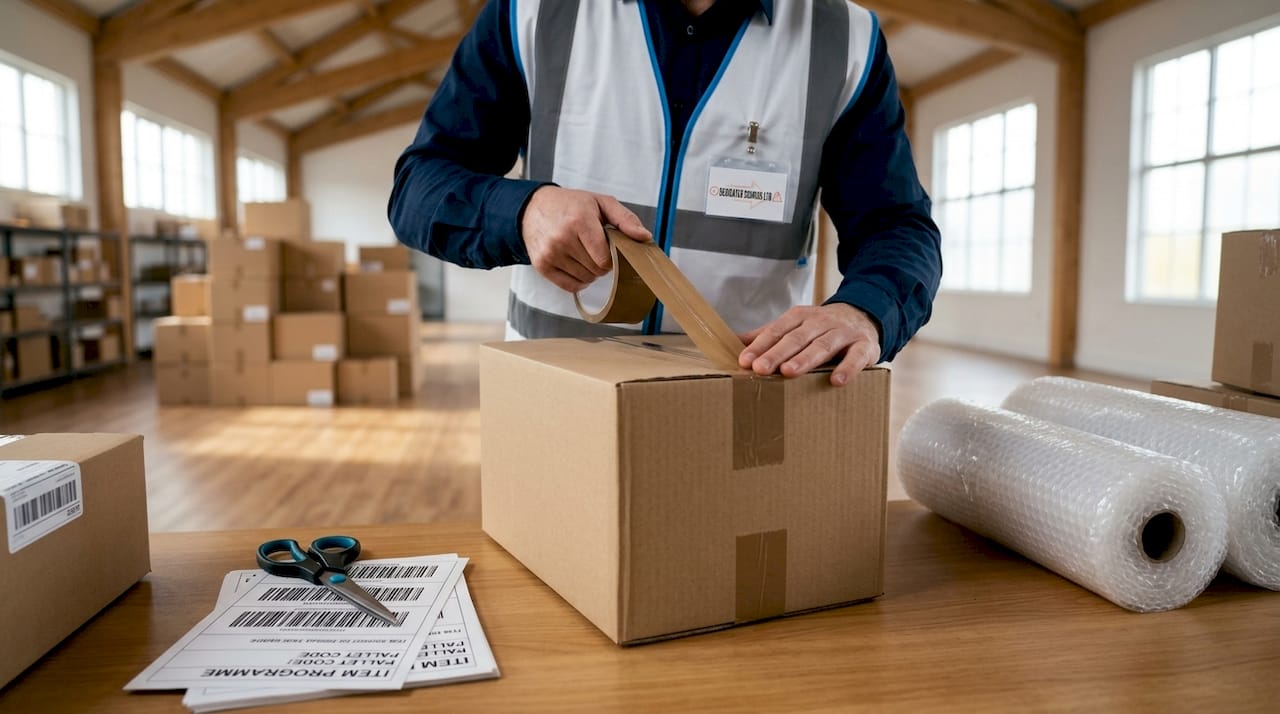
Labelling that cannot fail. Redundant labelling on multiple faces of a parcel significantly reduces the risk of scanning errors causing multi-day delays. Place a second label inside the outer packaging as a failsafe. Include order reference numbers, not just barcodes, so staff can trace a parcel manually if the barcode is damaged.
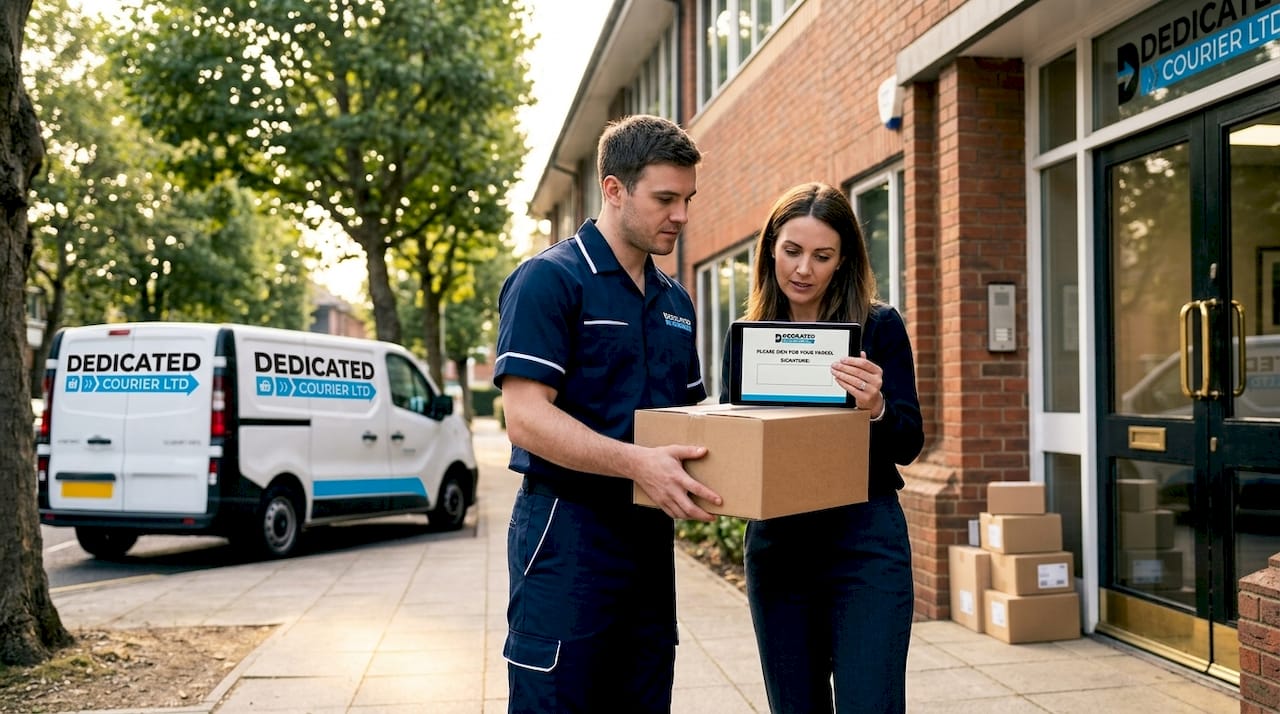
Verified handoff procedures. Signature-on-delivery is the simplest and most effective control for high-value shipments. It creates a formal record of handoff, reduces doorstep theft, and provides direct evidence in any loss or damage claim.
Pro Tip: Take a dated photograph of the packaged parcel before despatch. If a claim arises, photographic evidence of packaging condition at the point of collection removes any ambiguity about where damage occurred.
When selecting a courier, verify that they carry hire and reward insurance and that their drivers follow documented collection and delivery protocols. A reputable insured courier service is not just about speed. It is about accountability at every point in the chain.
Technology and logistics strategies that improve security
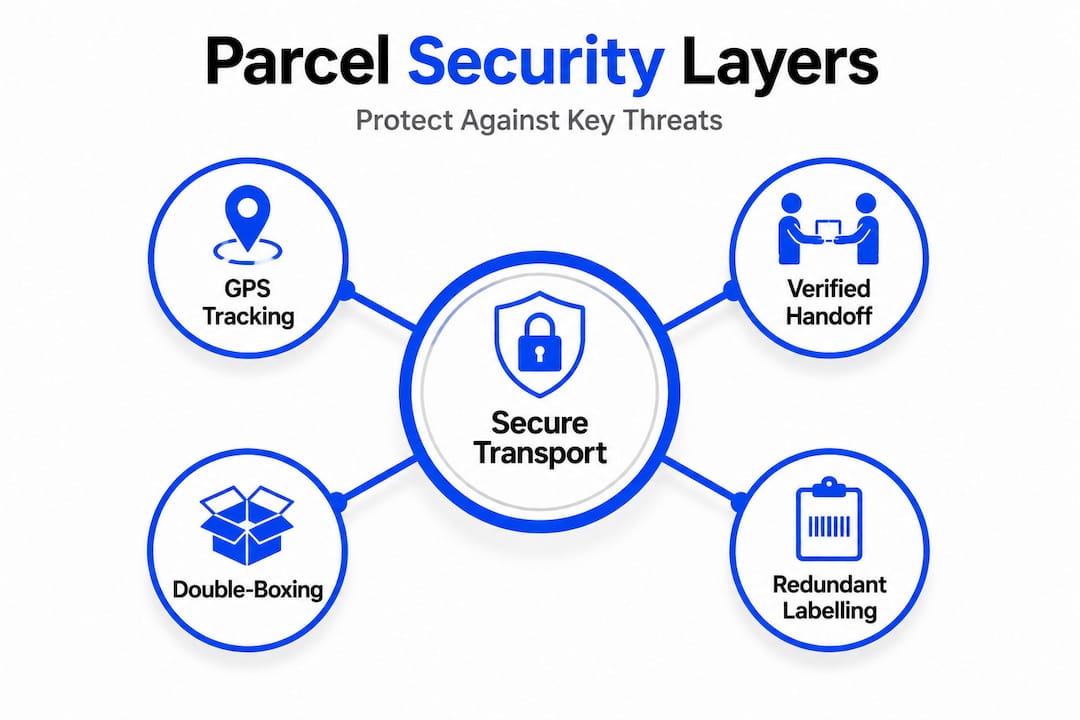
The importance of secure shipping is most visible when technology and physical controls work together. No single measure is sufficient on its own. Combining multiple security layers — robust containers, structured vehicle loading, and active security technologies — produces the best outcomes.
Here is how each layer contributes:
GPS and scan-based tracking. Multi-point tracking lets you monitor a parcel’s location throughout its journey. Tracking history with frequent scans enables proactive problem resolution and supports a smooth claims process if something goes wrong.
Structured vehicle loading. Organised loading inside courier vehicles prevents cargo from shifting during transit, reducing the risk of accidental damage to parcels in the same load.
Tamper-evident packaging. Seals that show visible evidence of interference act as a deterrent and provide clear evidence if a parcel has been opened in transit.
Secure drop-off locations. Monitored drop-off points with CCTV show lower loss rates than unattended home deliveries. Where possible, arrange delivery to a staffed reception or a designated secure parcel locker.
Security layer | What it protects against | When to use it |
GPS tracking | Misrouting, delay, theft in transit | All shipments |
Tamper-evident seals | Internal tampering, interference | High-value and sensitive goods |
Signature-on-delivery | Doorstep theft, disputed handoff | High-value, time-sensitive deliveries |
Secure drop-off point | Unattended delivery theft | Residential and unmanned premises |
Structured vehicle loading | Transit damage | Fragile or multi-item shipments |
Pro Tip: If tracking goes silent for more than two hours on a same-day shipment, contact the courier immediately. Early escalation is far more effective than waiting until an estimated delivery time passes.
Comparing service options for time-sensitive shipments
Not all courier services offer the same level of parcel security. The comparison between dedicated courier services and standard parcel carriers is important for businesses with high-value or urgent shipments.
Service type | Speed | Security controls | Approximate cost |
Standard parcel carrier | 1 to 3 days | Basic tracking, limited signature | Low |
Overnight courier | Next morning | Tiered delivery windows, signature available | £28 to £150+ |
Dedicated same-day courier | Same day | Exclusive vehicle, direct delivery, full tracking | Higher, variable |
Shared-load same-day | Same day | Multiple handoffs, shared vehicle | Moderate |
Overnight shipping costs vary significantly depending on the carrier and the delivery window required, ranging from around £28 for basic services to well over £150 for premium early-morning guaranteed options. For genuinely urgent or high-value shipments, a dedicated courier service where the vehicle carries only your goods removes the risks that come with shared-load handling.
When evaluating services, look specifically at signature requirements, goods-in-transit insurance coverage, and whether the service offers real-time tracking rather than estimated scan updates. For secure delivery methods matched to your risk level, the detail in the service specification matters more than the headline price.
Legal and procedural considerations for UK businesses
Documentation is not a formality. For UK businesses shipping high-value or time-sensitive goods, proper records are what make a claim actionable if things go wrong.
Keep proof of every handoff. Signed collection receipts and delivery confirmation records are your primary evidence in any dispute.
Photograph packaging before and after despatch. This removes ambiguity about the condition of goods at the point of collection.
Retain tracking history. A clear chain of scan events helps identify where in transit a loss or delay occurred.
Understand carrier liability limits. Most standard parcel carriers cap liability at amounts well below the value of commercial shipments. Top-up insurance is worth considering for high-value goods.
Check carrier policies on sensitive goods. Items such as electronics, perishables, and documents may have specific handling requirements that affect your liability position.
Understanding how courier security documentation works helps you make informed decisions about service selection and risk management before a problem arises.
My perspective on what businesses get wrong
I’ve seen too many businesses treat parcel security as a packaging question when it is really a process question. The box matters. But what matters more is whether you have a verified handoff, a tracking trail, and a courier who answers the phone when something goes wrong.
The risk most people underestimate is cyber-enabled freight fraud. It sounds like something that only affects large logistics operators. It does not. Small businesses are targeted precisely because they tend to have less rigorous verification processes when a courier company calls to confirm a collection or redirect a delivery.
What I’ve found actually works is combining simple physical controls, clear delivery instructions, and a courier service with documented security protocols. Relying on shipping insurance as a prevention strategy is a common mistake. Insurance reimburses loss. It does not stop it. The businesses that have the fewest problems are the ones that have removed the opportunities for loss in the first place.
Dedicatedsamedaycourier provides dedicated same-day, overnight, and next-day courier services across the UK, with each customer’s goods transported on exclusive vehicles to remove the risks that come with shared-load handling. Every shipment benefits from full goods-in-transit insurance coverage, real-time tracking, and direct delivery without unnecessary intermediate handling stages.
For businesses and individuals with time-sensitive or high-value parcels, you can choose from a range of secure courier vehicles suited to your parcel size, and request a bespoke quote by phone, email, or online form at any time of day. The sameday courier service operates nationwide with 24/7 availability, giving you a reliable option when the delivery cannot wait and security cannot be compromised. Contact Dedicatedsamedaycourier today to discuss your requirements.
FAQ
What does secure parcel transportation involve?
Secure parcel transportation covers the combination of robust packaging, verified handoff procedures, real-time tracking, and appropriate insurance to protect goods from collection through to final delivery. It addresses physical, procedural, and technological risks at every stage of the parcel’s journey.
Why is signature-on-delivery important for high-value parcels?
Signature-on-delivery creates a formal record of handoff, which reduces doorstep theft and provides direct evidence in the event of a loss or damage claim. It is one of the simplest and most effective controls available for high-value shipments.
How does double-boxing protect fragile items?
Double-boxing fragile items, particularly those weighing over 10 lbs, reduces breakage rates from 18% to under 4%. The inner box protects the product with cushioning, while the outer box absorbs external impacts during transit and handling.
When should a business use a dedicated courier rather than a standard carrier?
A dedicated courier service is worth using when shipments are high-value, time-sensitive, or require controlled handoff with verified delivery. Dedicated vehicles carry only your goods, which removes the risks associated with shared-load handling and multiple intermediate handoff points.
What documentation should I keep after a parcel is despatched?
Keep signed collection receipts, delivery confirmation records, dated photographs of packaging, and a full tracking history. These records support any claim or dispute and help identify where in transit a loss or delay occurred.
Recommended


Comments