
Step by step pallet shipping: your 2026 guide

TL;DR:
Step-by-step pallet shipping involves preparing, documenting, and dispatching freight to ensure safe and efficient delivery. Proper material use, precise measurements, and accurate documentation reduce delays, costs, and potential refusals. Careful build and verification at each stage help businesses avoid costly reclassification fees and freight disputes.
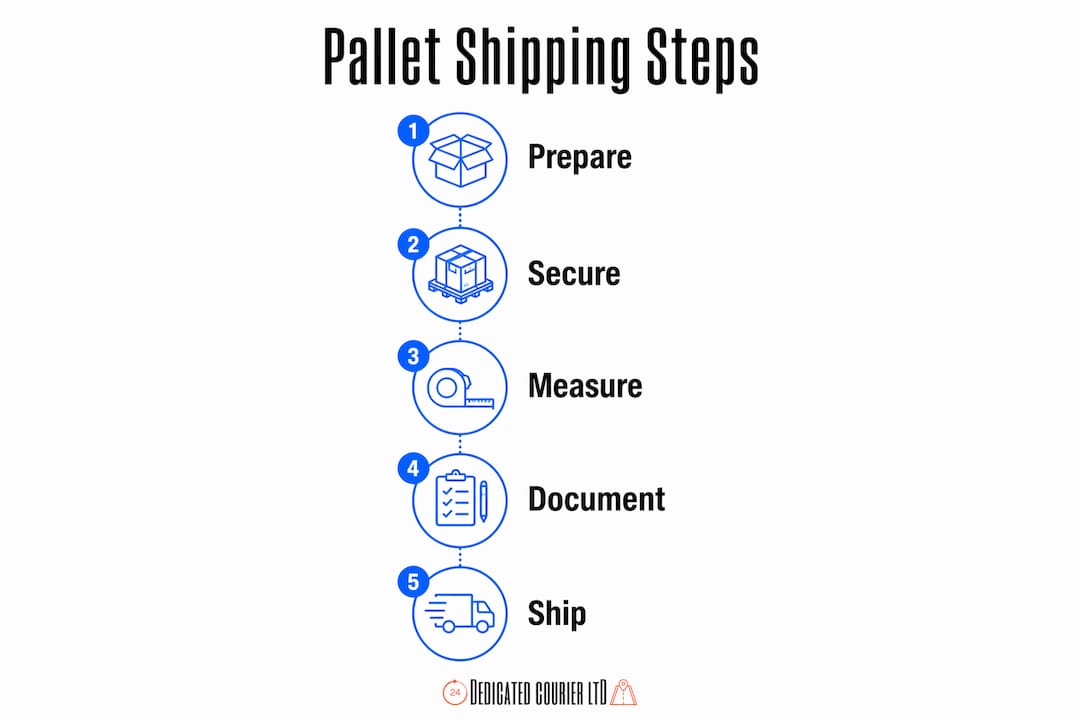
Step by step pallet shipping is the methodical process of preparing, documenting, and dispatching palletised freight to ensure safe and efficient delivery. The industry term for this process is palletised freight shipping, and it follows a 7-step process: palletising, measuring, weighing, photographing, verifying freight class, creating the bill of lading, and confirming accessorial services. Each step protects your goods in transit, keeps costs predictable, and prevents carrier refusal. For small business owners and e-commerce managers, getting this right is the difference between a smooth delivery and an expensive reclassification fee.
What materials do you need before shipping pallets?
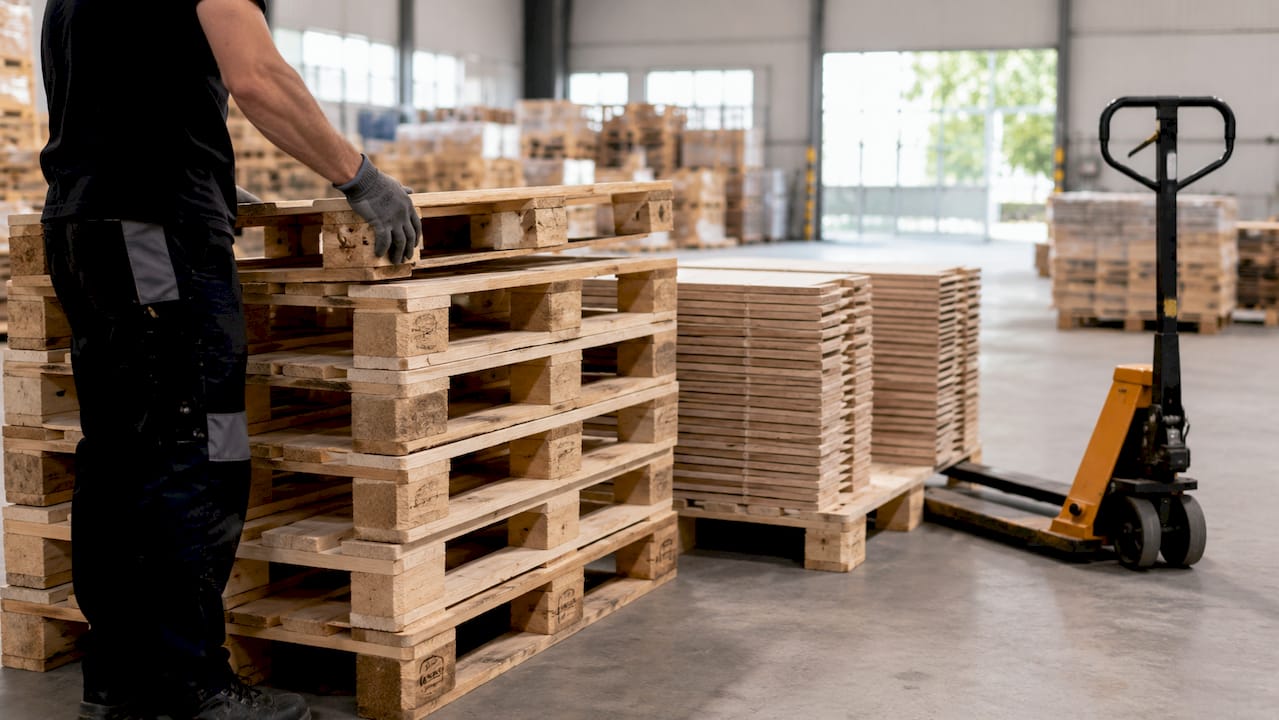
Preparation before you build a single layer of freight saves time and money. Arriving at the packing stage without the right materials is one of the most common causes of delays and carrier rejections.
Essential materials:
Standard EUR/EPAL pallets (800x1,200 mm) or equivalent undamaged wooden pallets
Stretch film (at least 23-micron gauge for heavier loads)
Corner boards for all four vertical edges
Horizontal and vertical strapping bands with a tensioning tool
Cushioning materials such as foam sheets or bubble wrap for void filling
Waterproof, self-adhesive shipping labels
Essential tools:
Calibrated industrial scale (never estimate weight)
Measuring tape or laser measure for precise dimensions
Smartphone or camera for timestamped photographs
Using undamaged, certified pallets matters for carrier acceptance. A cracked board or protruding nail gives a carrier grounds to refuse collection on the spot. The pallet transportation checklist from Dedicatedsamedaycourier covers these requirements in detail.
Item | Purpose |
EUR/EPAL pallet | Standardised base accepted by most carriers |
Corner boards | Protect edges and reinforce stretch film tension |
Calibrated scale | Prevents reweigh fees and reclassification |
Timestamped photos | Legal evidence for damage claims |
Pro Tip: Buy corner boards in bulk. They cost very little per shipment but dramatically reduce the chance of edge damage during forklift handling.
How to build and secure your pallet correctly
Poor pallet preparation is the most common cause of damage or carrier refusal. Getting the build right protects your goods and keeps your carrier relationship intact.
Follow these steps in order:
Inspect the pallet. Check for broken boards, protruding nails, and structural weakness. Reject any damaged pallet before loading a single item.
Place the heaviest items at the base. This lowers the centre of gravity and prevents tipping during transit.
Stack within the pallet perimeter. No overhang. Items that extend beyond the pallet edge are vulnerable to forklift damage and may be refused.
Use an interlocking stacking pattern. Alternate the orientation of boxes with each layer, the same way bricks are laid. This binds the layers together and resists lateral movement.
Fill all voids. Gaps between boxes allow shifting. Use foam sheets or bubble wrap to fill empty spaces before adding the next layer.
Apply corner boards on all four edges. Corner boards distribute strap tension evenly and prevent the strapping from cutting into packaging.
Wrap with stretch film. Anchor the film at the base with at least 3 full rotations, then stretch it to 200–250% tension as you work upward. Cover the top surface completely.
Apply horizontal and vertical strapping. Strapping over the stretch film adds a second layer of restraint and prevents load sliding during forklift handling.
Standard pallets carry between 3,700 and 4,600 pounds depending on material and type. Staying within rated capacity is not optional. Overloaded pallets fail under forklift tines and create liability issues.
Pro Tip: Wrap the pallet base to the deck boards with two passes of stretch film before stacking. This bonds the load to the pallet and prevents the entire stack from sliding off during transit.
How to measure, weigh, and document your shipment
Precise documentation is the best protection against unexpected surcharges. Errors in weight, dimensions, or freight class trigger reclassification fees that can significantly increase your final invoice.
Measuring and weighing:
Measure height, width, and length of the fully packed and wrapped pallet. Include the pallet deck in your height measurement.
Confirm there is no overhang beyond the pallet perimeter.
Weigh the complete pallet on a calibrated industrial scale. Small weight variances of even 25–100 lbs can trigger automatic reweigh and reclassification fees. Never reuse a previous weight estimate.
Freight classification:
The NMFTA shifted to a density-first freight class system on 19 July 2025. This is now the standard for rating shipments. Calculate your shipment density (weight divided by cubic feet) and verify the corresponding NMFC commodity code. Getting this wrong is expensive.
Bill of lading (BOL):
The BOL is a legal contract between shipper and carrier. It must include shipper and receiver information, verified weight, dimensions, freight class, and any special handling instructions. Errors on the BOL directly affect liability and final costs. Complete it from your verified measurements, not from memory or estimates.
Photography:
Take timestamped photographs of the fully packed, wrapped, and labelled pallet before the carrier arrives. A few photos take under a minute and provide critical legal evidence for insurance claims and freight disputes.
Documentation item | Why it matters |
Verified weight | Prevents reweigh fees and reclassification |
NMFC freight class | Determines correct shipping rate |
Bill of lading | Legal contract; errors affect liability |
Timestamped photos | Evidence for damage or loss claims |
Pro Tip: Confirm all accessorial requirements when booking. Liftgate service, residential delivery, and inside delivery all carry additional charges if added after booking. Declaring them upfront avoids surprise fees.
What happens during carrier pick-up, transit, and delivery?
Understanding what happens after collection helps you prepare properly and set realistic expectations with your customers.
LTL vs FTL:
LTL (less than truckload) is typically used for 1–6 pallets. Your freight shares space with other shipments and passes through multiple carrier terminals.
FTL (full truckload) is recommended for 20 or more pallets, or for time-sensitive shipments where direct transit is required.
LTL freight moves through a hub and spoke terminal model. Your pallet is loaded, unloaded, and reloaded at each terminal. This is why proper pallet construction matters so much. A poorly wrapped load that survives one handling may not survive three.
At collection:
Confirm your pickup window with the carrier in advance.
Have the signed BOL ready before the driver arrives.
Carriers use forklifts for loading. The pallet must be structurally sound enough to be lifted from any side.
At delivery:
The consignee is responsible for inspecting the shipment before signing the proof of delivery.
Any visible damage must be noted on the delivery receipt at the time of signing. Signing without noting damage limits your ability to make a claim later.
Retain your timestamped photographs and BOL copy until the claim period has passed.
For guidance on pallet transport in the UK, Dedicatedsamedaycourier publishes updated best practices for 2026 conditions. Small businesses shipping internationally should also review common shipping mistakes to avoid documentation errors that cause cross-border delays.
Key takeaways
Successful pallet shipping requires accurate preparation, verified documentation, and proper load security at every stage of the process.
Point | Details |
Build the pallet correctly | Stack heaviest items at the base, fill voids, and wrap with at least 3 base rotations of stretch film. |
Weigh with a calibrated scale | Even small weight variances trigger reweigh fees; never reuse old weight estimates. |
Complete the BOL accurately | The bill of lading is a legal contract; errors affect liability and final costs. |
Photograph before collection | Timestamped photos are your primary evidence for damage claims and freight disputes. |
Confirm accessorials at booking | Liftgate, residential, and inside delivery charges must be declared upfront to avoid surprise fees. |
What I’ve learnt from watching small businesses get pallet shipping wrong
The mistakes I see most often are not about wrapping technique or pallet quality. They are about documentation. A business will spend twenty minutes carefully wrapping a pallet and then spend thirty seconds filling in the BOL from memory. That is where the expensive errors happen.
Weight is the biggest culprit. Businesses that ship regularly start to assume they know what their pallets weigh. They stop using the scale. Then a carrier reweigh comes back 80 lbs heavier than declared, and the reclassification fee wipes out the margin on the order. Weigh every single shipment. No exceptions.
The other thing I would stress is photographs. I have seen businesses lose damage claims because they could not prove the pallet left their facility in good condition. A timestamped photo takes forty seconds. It has saved businesses hundreds of pounds in disputed claims.
My practical advice: build a one-page checklist that covers materials, measurements, BOL fields, and accessorial requirements. Run through it before every shipment. The businesses that do this consistently have fewer rejections, fewer fees, and fewer disputes. It is not complicated. It just requires discipline.
— andrew
Pallet deliveries handled by Dedicatedsamedaycourier
When your pallet shipment is time-sensitive, the carrier you choose matters as much as how you pack the load.
[
Dedicatedsamedaycourier provides dedicated vehicle options suited to pallet shipments of all sizes, with 24/7 availability and nationwide UK coverage. Each shipment travels on an exclusive vehicle, which means no shared terminals, no multiple handlings, and no waiting at hubs. For urgent collections, Dedicatedsamedaycourier operates through a courier exchange network that places a driver at your location quickly. You can request a quote by phone, email, or online form. For businesses that need a reliable same-day pallet delivery service without the risks of LTL terminal handling, this is a direct and practical solution.
FAQ
What is pallet shipping?
Pallet shipping is the process of securing goods to a pallet and transporting them via freight carrier. It follows a structured process covering palletising, measuring, weighing, documentation, and carrier handover.
How do I calculate freight class for my pallet?
Calculate your shipment density by dividing the total weight in pounds by the total cubic feet. The NMFTA density-first system, effective from 19 July 2025, uses this figure to assign the correct freight class.
What should the bill of lading include?
The BOL must include shipper and receiver details, verified weight, dimensions, freight class, and any special handling instructions. Errors on the BOL affect liability and can increase final costs.
Why do I need to photograph my pallet before collection?
Timestamped photographs of the fully wrapped and labelled pallet provide legal evidence for insurance claims and freight disputes. They confirm the condition of the shipment at the point of handover.
When should I use FTL instead of LTL?
FTL is recommended for 20 or more pallets, or for time-sensitive shipments that cannot tolerate the multiple handlings involved in LTL terminal networks.
Recommended


Comments