
What is parcel transportation? A practical guide
TL;DR:
Parcel transportation involves moving individual packages under 150 pounds through carrier networks to recipients’ addresses, emphasizing efficiency and reliability. Differentiating from freight shipping, it relies on automated sorting and hub systems, with costs influenced by weight, size, and delivery zones. Using multi-carrier strategies and managing full workflows enhance logistics performance, especially for time-sensitive or high-volume shipments.
Parcel transportation is defined as the movement of individually packaged shipments, typically under 150 pounds, through a carrier network to a recipient’s address. The industry term most commonly used is parcel shipping or parcel logistics, and it covers everything from a single box sent by a private individual to thousands of daily consignments dispatched by an e-commerce retailer. Carriers such as Parcelforce, UPS, and FedEx operate the sorting hubs, transit vehicles, and last-mile networks that make this possible. Understanding how the system works helps both individuals and businesses make better decisions about cost, speed, and reliability.
How does parcel transportation differ from freight shipping?
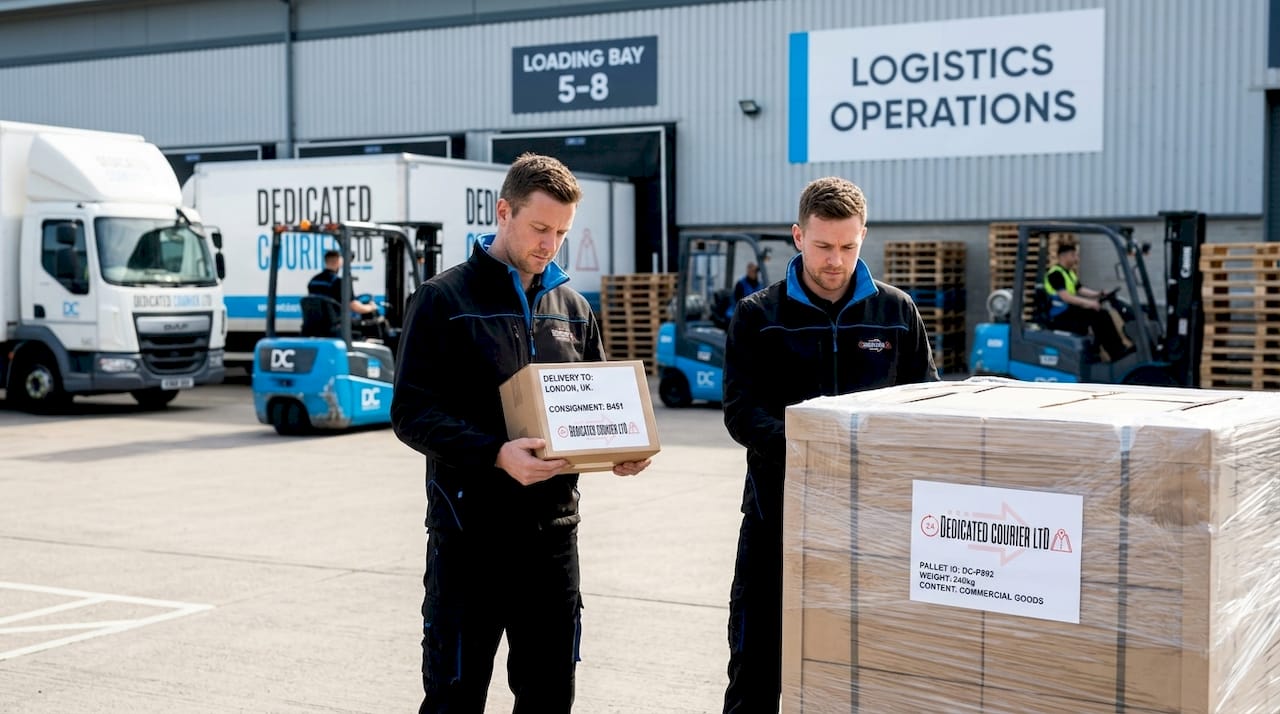
The distinction between parcel and freight shipping is straightforward and worth knowing before you book anything. Parcel shipping moves individual boxes one or a few at a time via ground or air carrier networks, while freight handles consolidated goods in bulk by pallet or container. The two systems use entirely different handling processes, pricing models, and logistics infrastructure.
Factor | Parcel shipping | Freight shipping |
Typical weight | Under 150 lb per package | Over 150 lb, often palletised |
Handling | Automated sorting, conveyor belts | Manual or forklift loading |
Pricing basis | Per package, dimensional weight | Per pallet, lane, or truckload |
Transit network | Hub-and-spoke carrier network | LTL, FTL, or intermodal routes |
Best suited for | Small consumer goods, documents | Bulk stock, industrial equipment |
The practical implication is clear. If you are sending a box of clothing to a customer, parcel shipping is the right choice. If you are restocking a warehouse with 40 pallets of goods, freight is the correct route. Mixing the two up leads to unnecessary cost or logistical delays.
Key differences that affect day-to-day shipping decisions include:
Parcel carriers use automated sorting facilities, so packages must meet strict labelling and packaging standards
Freight shipments are typically quoted on a lane-by-lane basis and require advance booking
Parcel networks offer faster transit times for small consignments because of their hub-and-spoke design
Freight pricing is negotiated per shipment, whereas parcel rates are often pre-agreed on account contracts
What factors influence parcel transportation pricing?
Parcel carriers price shipments based on actual weight and dimensional weight, charging whichever figure is greater. This policy exists because a large, lightweight box consumes as much vehicle or aircraft space as a heavy one.
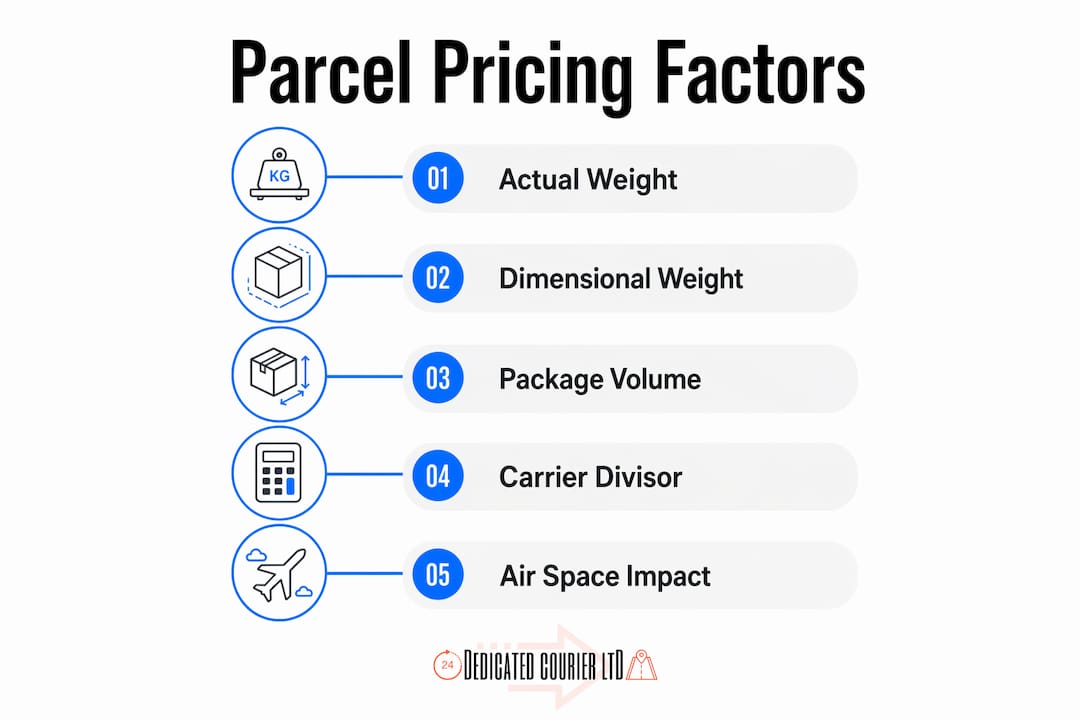
Dimensional weight, often called DIM weight, is calculated by dividing the package volume by a carrier-specific divisor. UPS and FedEx use a divisor of 139, while USPS uses 166. A box measuring 40 cm x 30 cm x 20 cm has a volume of 24,000 cubic centimetres. Divide that by 139 and the DIM weight is approximately 173 units. If the actual weight of the contents is only 2 kg, you will be charged on the DIM weight instead. This catches many shippers off guard.
Pricing factor | How it works | Impact on cost |
Actual weight | Physical weight on a scale | Direct cost driver |
Dimensional weight | Volume ÷ carrier divisor | Penalises oversized packaging |
Delivery zone | Distance between origin and destination | Increases with distance |
Service level | Standard, express, or same-day | Premium for faster transit |
Surcharges | Fuel, residential, remote area | Added to base rate |
Pro Tip: Reduce the air space inside your packaging. Choosing a box that fits your product closely is one of the most effective ways to cut DIM weight charges. Packaging optimisation can deliver greater savings than negotiating carrier rates alone.
What logistics strategies improve parcel transportation efficiency?
Multi-carrier strategies are now the standard approach for businesses that ship regularly. Relying on a single carrier creates vulnerability to service disruptions, capacity constraints, and pricing pressure. Blended carrier networks provide resilience and performance advantages that a single-carrier model cannot match.
Effective parcel management goes well beyond printing a label and handing a box to a driver. It involves packing accuracy, careful carrier and service selection, real-time tracking, exception flagging, and data analysis to improve future outcomes. Businesses that treat these as separate tasks rather than a connected workflow tend to experience higher return rates and more customer complaints.
Practical steps that improve parcel logistics outcomes:
Use a parcel management system or platform to centralise carrier selection and tracking data
Set up automated exception alerts so delays or failed deliveries are flagged immediately
Review delivery performance data monthly to identify recurring problem routes or carriers
Communicate key tracking milestones to customers rather than every scan event, which reduces notification overload
Maintain at least two active carrier accounts to switch quickly when one network experiences disruption
For businesses managing urgent UK business deliveries, having a dedicated courier option alongside standard parcel carriers adds a critical layer of flexibility.
How does parcel transportation work from sender to recipient?
The parcel delivery journey follows a consistent sequence of steps, regardless of which carrier handles the shipment. Understanding each stage helps you set accurate expectations and respond quickly when something goes wrong.
Packaging and labelling. The sender packs the item securely, selects the correct box size, and applies a carrier-compliant label with a barcode. The label must include the recipient’s full address, postcode, and contact details.
Carrier collection or drop-off. The parcel is either collected by the carrier at a scheduled time or dropped off at a depot or parcel shop. This triggers the first scan in the tracking system.
Sorting hub processing. The parcel travels to a regional sorting hub where automated conveyor systems read the barcode and route it to the correct outbound vehicle or flight.
Transit network. The parcel moves through one or more intermediate hubs depending on the destination zone. International shipments pass through customs at this stage.
Last-mile delivery. The parcel reaches a local depot and is loaded onto a delivery vehicle. The driver attempts delivery at the recipient’s address, a nominated safe place, or a collection point such as a parcel locker.
Tracking updates. Tracking shows milestones such as collected, in transit, out for delivery, and delivered. Updates appear only at scan checkpoints, not continuously, so a gap in updates does not mean the shipment is lost.
For a detailed breakdown of how this process works in practice, the step-by-step courier process guide covers each stage from dispatch to arrival.
Key takeaways
Parcel transportation success depends on understanding dimensional weight pricing, using multi-carrier logistics, and managing the full delivery workflow from packaging through to exception handling.
Point | Details |
Core definition | Parcel transportation moves individual packages under 150 lb via carrier networks to a recipient. |
Parcel vs. freight | Parcel suits small consignments; freight handles bulk palletised goods with different pricing and handling. |
Dimensional weight | Carriers charge the greater of actual or DIM weight, so tight packaging directly reduces costs. |
Multi-carrier strategy | Using more than one carrier improves resilience, cost control, and delivery performance. |
Tracking milestones | Tracking updates at scan points only; gaps between scans are normal and do not indicate failure. |
Why parcel logistics is more than just picking a carrier
I have seen businesses spend considerable time negotiating carrier rates and then lose all those savings through poor packaging choices. A client shipping consumer electronics was using boxes three sizes too large for their products. The DIM weight charges were adding roughly 30% to their shipping costs every month. Switching to fitted packaging solved the problem faster than any rate negotiation could have.
The other misconception I encounter regularly is that parcel management ends once the label is printed. It does not. Parcel management workflows that include exception handling and delivery data review consistently outperform basic ship-and-hope approaches. Small businesses in particular tend to underestimate how much a single recurring delivery failure on a specific route costs them in returns, customer service time, and lost repeat orders.
Tracking is also widely misunderstood. Customers often contact support when tracking has not updated for 12 hours, assuming the parcel is lost. Tracking is a timeline of scan checkpoints, not a live feed. Setting that expectation upfront, in your order confirmation email, eliminates a significant proportion of unnecessary support contacts.
— andrew
How Dedicatedsamedaycourier supports your parcel transportation needs
When standard parcel networks cannot meet your deadline, a dedicated courier service is the practical alternative. Dedicatedsamedaycourier operates 24/7 across the UK, providing same-day, next-day, and overnight delivery on exclusive vehicles. Your parcel travels directly from collection to destination without passing through a shared sorting hub, which means faster transit and no risk of misrouting.
[
Whether you need a same-day courier service for an urgent business consignment or a dedicated van courier for larger parcels that require secure, direct transport, Dedicatedsamedaycourier provides tailored solutions with real-time updates throughout. Get a quote today and find out how quickly your parcel can be collected and delivered.
FAQ
What is parcel transportation in simple terms?
Parcel transportation is the process of moving individually packaged items from a sender to a recipient via a carrier network. Parcels are typically under 150 pounds and travel through sorting hubs before last-mile delivery.
How is parcel shipping different from freight?
Parcel shipping handles small individual packages via automated carrier networks, while freight moves bulk goods by pallet or container. The two differ in handling, pricing, and the logistics infrastructure used.
What is dimensional weight and why does it matter?
Dimensional weight is calculated by dividing a package’s volume by a carrier divisor, typically 139 for UPS and FedEx. Carriers charge the greater of actual or dimensional weight, so oversized packaging increases costs even for light items.
How does parcel tracking work?
Parcel tracking records milestones at scan checkpoints such as collection, sorting hub arrival, and out for delivery. Updates do not appear continuously, so a gap in tracking activity does not mean the shipment has been lost or delayed.
When should a business use a dedicated courier instead of a parcel carrier?
A dedicated courier is the right choice when speed, security, or timing cannot be left to a shared network. Same-day and time-critical deliveries benefit from direct, exclusive vehicle transport rather than hub-and-spoke parcel services.
Recommended


Comments