
Why choose direct collection for urgent UK deliveries
Updated: Aug 30
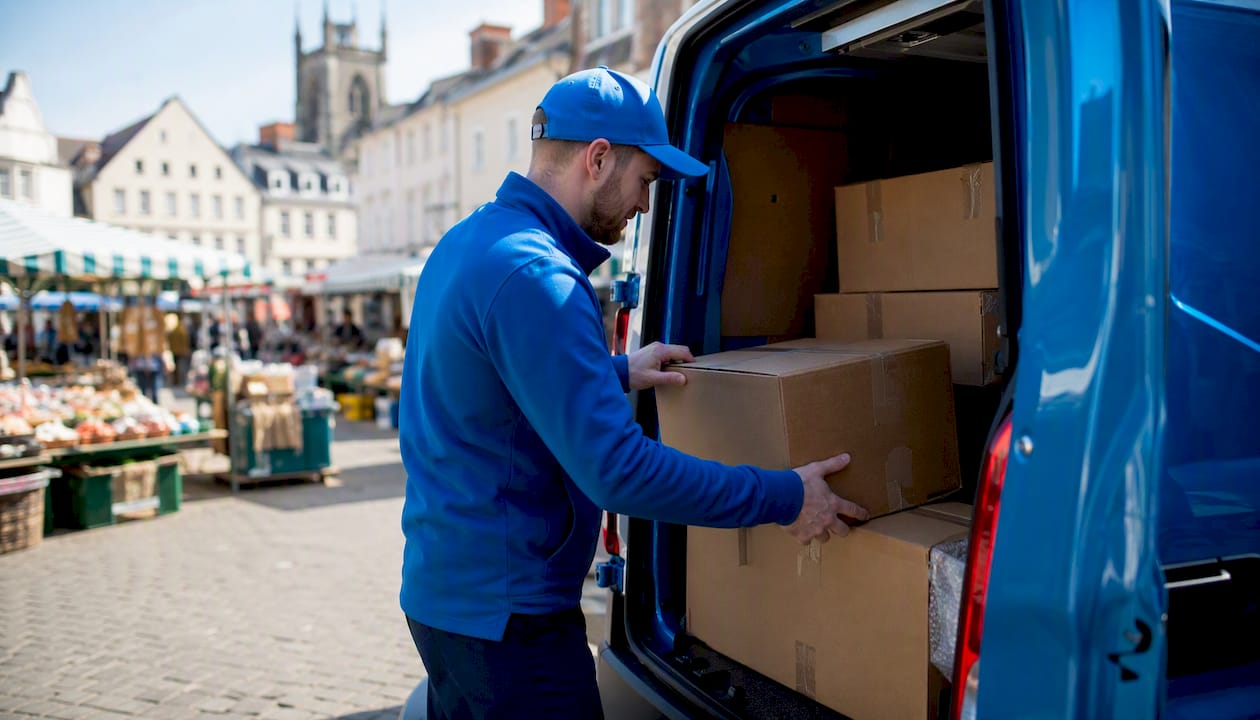
Choose direct collection when the cost of a failed or late delivery outweighs the premium for a dedicated vehicle. For urgent UK logistics, that calculation favours direct collection in the majority of time-critical situations.
Speed: a dedicated vehicle typically collects within 60–90 minutes of booking and travels direct to the destination with no intermediate stops
Control: one vehicle, one job, named driver, full chain of custody and proof of delivery (POD) at every stage
Security: no co-loading means no handling by third parties and a clear audit trail throughout
When an alternative is acceptable: if the shipment is non-urgent, standard-weight and can tolerate a multi-stop shared route, a scheduled parcel service will cost less. For everything else, direct collection is the right call.
Key takeaways
Direct collection is the right choice for urgent UK deliveries when the cost of delay or failure exceeds the premium for a dedicated, no-co-loading vehicle with a guaranteed SLA.
Point | Details |
When to choose direct collection | Use it when speed, control and chain of custody matter more than the lowest per-parcel price. |
Collection window | Reputable providers mobilise within 60–90 minutes for urgent jobs; confirm this SLA in writing before booking. |
Cost justification | Compare the courier fee against the cost of failure: production downtime, contractual penalties or lost revenue. |
Provider checks | Confirm dedicated vehicles, live GPS tracking, POD, goods-in-transit insurance and a named account contact before committing. |
Dedicatedsamedaycourier | Offers nationwide 24/7 direct collection with dedicated vehicles, real-time tracking and instant quotes for urgent UK jobs. |
Table of Contents
What does direct collection (point-to-point delivery) actually mean?
Direct collection, also called direct point-to-point delivery, means a single dedicated vehicle collects from one address and delivers to one destination without stopping elsewhere. There is no co-loading, no depot sort, and no shared route with other customers’ freight.
That is a meaningful operational difference from shared-route couriers, which consolidate multiple consignments on one vehicle to reduce cost per parcel, and from scheduled parcel networks, which move freight through hub-and-spoke sorting facilities on fixed timetables. Both of those models introduce dwell time, handling touchpoints and dependency on other customers’ jobs.
Typical direct collection jobs include a hospital pathology specimen that must reach a laboratory within a defined window, a critical spare part needed to restart a production line, or signed legal documents that must arrive before a court deadline. In each case, the consequence of delay is measurable and significant.
Why the benefits of direct collection matter for time-critical jobs
Speed is the most obvious advantage, but determinism matters more. A dedicated vehicle follows a single route, so arrival time is predictable rather than approximate. Direct Debit-style predictability in cashflow is the financial equivalent: card payment failure rates run at 3–5% versus under 1% for Direct Debit, and the same logic applies to logistics. Shared-route services introduce variability; direct collection removes it.
Control and chain of custody are equally important for regulated industries. A named driver, a single vehicle and a signed POD create an unbroken record from collection to delivery. That record matters for pharmaceutical cold-chain compliance, legal document integrity and high-value goods in transit.
Reliability: no dependency on other consignments, depot schedules or third-party handling
Security: reduced handling touchpoints lower the risk of damage or loss; secure delivery of sensitive shipments requires exactly this kind of controlled environment
Customer experience: a named contact and live tracking give the recipient confidence and reduce inbound queries to your operations team
Cost justification: the per-job cost is higher than a parcel service, but one hour of lost production time or a missed legal deadline will typically exceed the delivery premium many times over
Pro Tip: Before approving a direct collection job, calculate the cost of failure: lost production time, contractual penalties or reputational damage. If that figure exceeds the courier fee, the premium is already justified.
Direct Debit collection similarly supports predictable revenue and improved cashflow forecasting, and organisations that adopt automated, reliable collection models consistently report lower administrative overhead.
Which sectors and jobs justify direct collection?
Healthcare is the clearest case. Pathology specimens, blood products and pharmaceutical deliveries operate under strict time and temperature constraints. Healthcare finance direct collections demonstrate how sector-specific models can achieve collection rates exceeding 95% when the process is tightly controlled. The same discipline applies to physical specimen logistics.
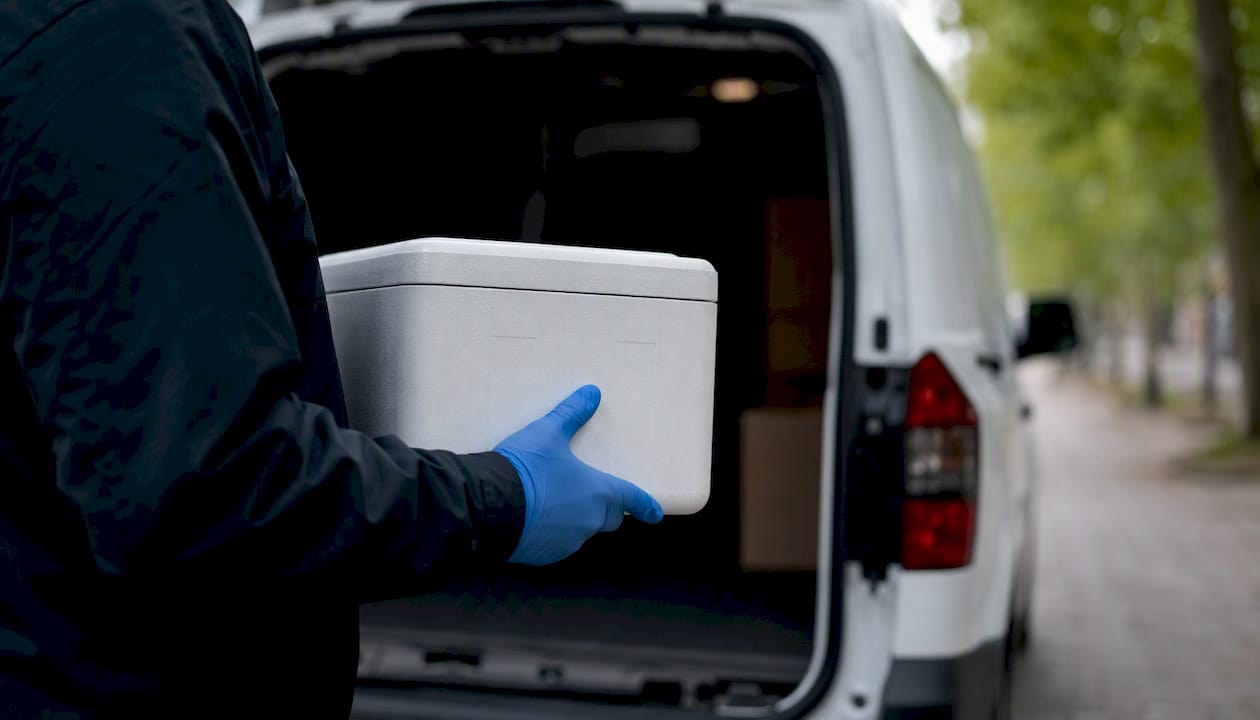
Manufacturing and engineering are equally dependent on speed. A single missing component can halt an entire production line; the cost of downtime per hour in most manufacturing environments dwarfs the cost of a dedicated courier. Urgent spare parts, tooling and sub-assemblies are therefore natural candidates for direct collection.
Legal and financial services handle documents where timing is a matter of contract or court procedure. Signed agreements, original deeds and court bundles cannot be reconstructed if lost, and a missed filing deadline can have serious consequences for a client.
Retail and e-commerce use direct collection for high-value SKU restocks where a stockout in a flagship store carries a direct revenue cost, and for returns of expensive or fragile items that cannot safely travel through a parcel network.
Direct collection gives organisations full control and personalised handling compared with third-party options, but it requires the internal capacity to manage the process. For logistics, that means having a clear booking process and a reliable provider on call.
How does direct collection work in practice?
Quote and booking: contact the provider by phone, email or online form with pickup address, delivery address, dimensions, weight, declared value and preferred collection window
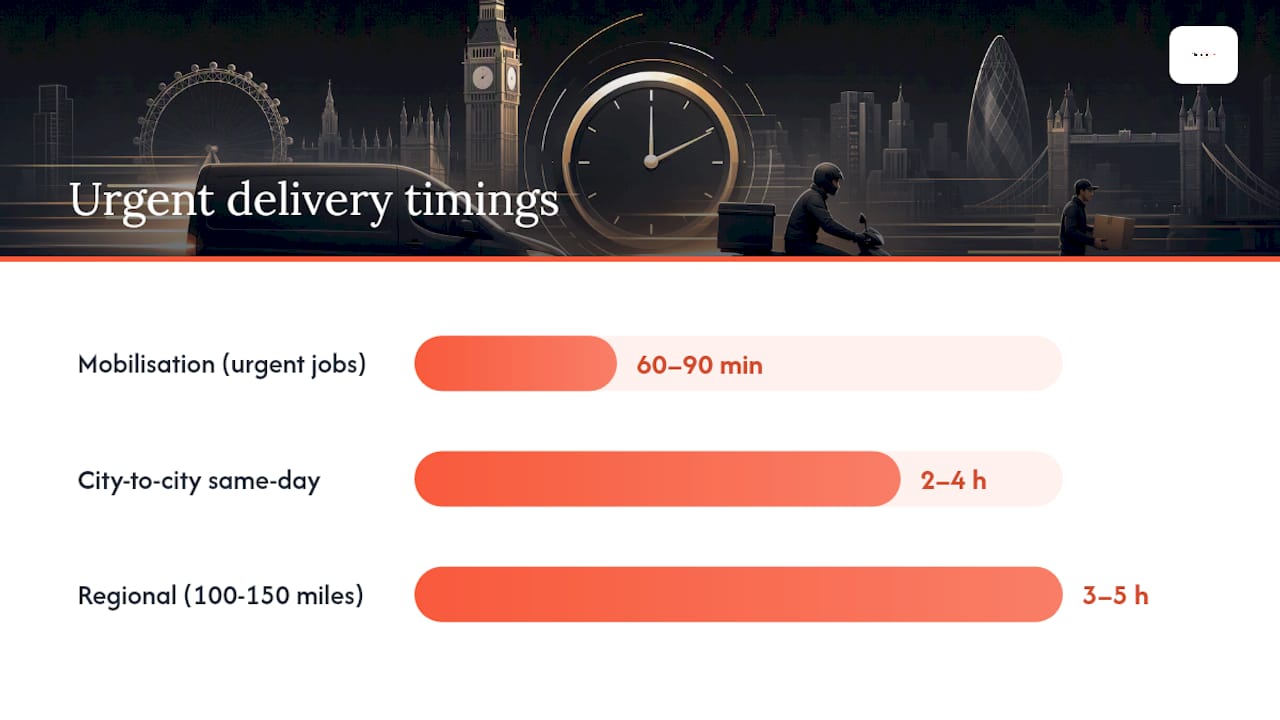
Mobilisation: a dedicated vehicle is dispatched; for urgent jobs, collection typically occurs within 60–90 minutes of confirmation
Dedicated pickup: the driver collects exclusively your consignment; no other freight is loaded
In-transit tracking: real-time GPS updates allow you or your recipient to monitor progress; most providers offer a live tracking link
Delivery and POD: the driver delivers direct to the named recipient; a signed POD (electronic or paper) is returned to you as confirmation
For city-to-city same-day jobs, the full cycle from booking to delivery commonly runs 2–4 hours. Regional trips of 100–150 miles typically complete within 3–5 hours. Cross-country jobs (e.g. London to Manchester or Birmingham to Edinburgh) are achievable same-day when booked before mid-morning.
Confirm these SLA elements with any provider before committing: guaranteed response time, maximum collection window, delivery window, tracking cadence and POD format.
Pro Tip: Have the following ready before you call: exact pickup and delivery postcodes, a contact name and mobile number at each end, package dimensions and weight, declared value for insurance purposes, and any access restrictions at either address. This halves the time between first call and vehicle dispatch.
The same-day delivery workflow for dedicated jobs follows this sequence consistently across reputable UK providers.
What drives the cost of a direct collection?
Direct collection pricing reflects several variables, none of which are hidden in a well-run provider’s quote.
Distance: mileage is the primary driver; most providers quote on a per-mile or banded-distance basis
Urgency: immediate dispatch carries a premium over a pre-booked same-day slot
Vehicle type: a motorcycle or small van costs less than a Luton or curtainsider; match the vehicle to the load
Out-of-hours: evening, weekend and bank holiday collections attract surcharges
Declared value: higher goods-in-transit insurance cover increases the fee
Waiting time: time spent on-site beyond the agreed window is usually charged per 15 or 30 minutes
Dimension | Direct collection | Shared-route same-day | Standard parcel |
Speed | Fastest; no intermediate stops | Moderate; depends on route load | Slowest; hub-and-spoke |
Control | Full; dedicated vehicle, named driver | Partial; shared vehicle | Low; multiple handlers |
Cost | Highest per job | Mid-range | Lowest per parcel |
Reliability | Highest; single-job SLA | Variable | Variable; network-dependent |
Security | Highest; no co-loading | Moderate | Lower; multiple touchpoints |
Coverage | Nationwide, on demand | Route-dependent | Nationwide, fixed schedules |
When reading a quote, check for: fixed base fee, per-mile rate, waiting-time charge, return-trip cost if the recipient is unavailable, and cancellation terms. A transparent provider states all of these upfront.
Organisations that control collection date and amount gain reconciliation speed and reduced administration. The same principle holds in logistics: a provider with clear, fixed pricing reduces the internal cost of approving and reconciling courier spend.
How do you choose a direct collection provider?
Ask for average response time and the guaranteed maximum collection window for urgent jobs
Confirm dedicated vehicles and no co-loading as a contractual commitment, not a preference
Request SLA definitions in writing: what constitutes an on-time collection and delivery, and what remedy applies if the SLA is missed
Check tracking and POD: live GPS tracking and electronic POD should be standard, not optional extras
Verify insurance: confirm goods-in-transit cover limits and the process for declaring higher values; ask for a certificate
Identify your named contact: an account manager or dedicated operations contact reduces resolution time when something goes wrong
Test 24/7 capability: call outside office hours before you need an urgent job; the response tells you more than any brochure
Red flags to avoid: vague SLAs with no defined remedy, no live tracking, insurance limits below your typical declared values, a different contact every time you call, and an unclear escalation process for delays or damage.
There is no single right model between in-house and outsourced collections; the same is true in logistics. Some organisations manage a mix of direct collection for urgent jobs and scheduled services for routine freight. That hybrid approach balances control and cost effectively.
Operational tips that reduce delays and delivery failures
Good preparation before a job is booked prevents most failures.
Confirm the recipient’s name, direct mobile number and any access codes before dispatch; a driver who cannot reach the recipient loses time that cannot be recovered
Package the consignment for the vehicle type, not the parcel network; direct collection vehicles do not use conveyor belts, but loads still shift in transit
State the declared value accurately; under-declaring to reduce the insurance premium creates a shortfall in the event of a claim
Provide special instructions in writing at booking, not verbally at collection; written instructions travel with the job record
At handover, meet the driver at the agreed point, confirm the paperwork matches the consignment and provide a contingency contact in case the primary recipient is unavailable.
Pro Tip: Nominate an authorised second recipient and include their contact details in the booking. If the primary contact is unreachable, the driver has a clear next step rather than a failed delivery.
Delivery optimisation for logistics managers consistently identifies recipient contact accuracy as the single most preventable cause of first-attempt failures.
Common risks and how reputable providers mitigate them
Delayed collection: mitigated by a guaranteed response window and a real-time dispatch system; ask for the provider’s average mobilisation time
Traffic and route disruption: GPS route optimisation and driver experience reduce impact; a good provider proactively updates you on delays
Miscontacted recipients: mitigated by confirming recipient details at booking and providing a live tracking link directly to the recipient
Damage or loss: reduced by no co-loading and careful handling; covered by goods-in-transit insurance up to the declared value
Inadequate insurance: verify cover limits before booking; hire and reward insurance is a legal minimum, but declared value cover is separate and must be confirmed
First-party collections preserve customer relationships and are best managed with clear escalation thresholds. In logistics, the equivalent is a named account manager with authority to resolve issues in real time rather than routing complaints through a generic helpdesk.
A layered approach that keeps relationship-sensitive jobs in-house while escalating complex or high-value consignments to a specialist provider lowers total cost and protects operational continuity.
To verify a provider’s mitigation: ask for recent SLA performance data, request an insurance certificate and ask for references or case studies from your sector.
Why Dedicatedsamedaycourier is a practical option for urgent direct collections
Dedicatedsamedaycourier operates nationwide dedicated courier services across the UK, 24 hours a day, seven days a week. Vehicles are dispatched exclusively for each job, with no co-loading. Typical mobilisation for urgent collections is within 60–90 minutes of booking confirmation.
The service covers documents, parcels, pallets and industry-specific consignments including medical, legal, engineering and retail freight. Real-time GPS tracking and electronic POD are standard. Goods-in-transit insurance and declared value cover are available; confirm limits at the time of booking.
To book, have ready: pickup and delivery postcodes, contact names and mobile numbers at both ends, dimensions and weight, declared value and your preferred collection window. Quotes are available by phone, email or online form, with account options for regular users.
An editorial view on direct collection for urgent UK logistics
The procurement mistake most logistics managers make is treating direct collection as a last resort rather than a planned tool. By the time a job is urgent enough to justify a dedicated vehicle, the window for preparation has already closed. The managers who get the best outcomes are those who pre-qualify a provider, agree account terms and test the service on a non-critical job before they need it for something that cannot fail.
The other underestimated factor is the cost of the alternative. Shared-route and parcel services are priced to look cheaper, and they are, on a per-parcel basis. But that comparison only holds when the consignment can tolerate variability. When it cannot, the relevant comparison is not courier fee versus courier fee. It is courier fee versus the cost of a production stoppage, a missed court deadline or a lost client.
Direct collection is not the right choice for every job. But for the jobs where it is right, using anything else is a false economy.
Get an instant quote from Dedicatedsamedaycourier
When speed and certainty matter, Dedicatedsamedaycourier gives you a dedicated vehicle on the road within 60–90 minutes, with no co-loading and a clear chain of custody from collection to POD.
[
To get started, request an instant same-day courier quote or call with your job details. Have your pickup and delivery addresses, contact numbers, package dimensions, declared value and preferred collection window ready. For regular freight, ask about account terms and bespoke SLA arrangements. View vehicle options to match the right vehicle to your load and get your job moving today.
Sources
Recommended


Comments