
Courier Insurance Explained: Protecting Urgent UK Deliveries

Updated: May 15

Every urgent delivery can turn into chaos if unexpected mishaps strike while parcels are on the move. Small business owners and logistics managers across the United Kingdom face real consequences when operating without proper cover, including vehicle seizure and the risk of licence penalty points. Understanding the different courier insurance options gives you clarity, helping protect your time-sensitive shipments and ensuring your deliveries stay on track when every minute matters.
Table of Contents
Key Takeaways
Point | Details |
Importance of Courier Insurance | Courier insurance is essential for legal compliance and financial protection in delivery operations. |
Types of Coverage Available | Various types of courier insurance exist, including Hire and Reward Vehicle Insurance and Goods in Transit Insurance. |
Legal Requirements | Complying with legal mandates like Employers’ Liability Insurance is critical for operational legitimacy. |
Risks of Inadequate Insurance | Insufficient coverage can lead to severe financial losses, legal penalties, and potential business closure. |
What Courier Insurance Means for UK Deliveries
Courier insurance represents a critical legal requirement for businesses and individuals delivering goods across the United Kingdom. Unlike standard vehicle insurance, courier insurance is a specialised form of cover designed specifically for commercial delivery activities.
At its core, courier insurance protects delivery professionals from unique risks associated with transporting goods for payment. Hire and reward vehicle insurance covers scenarios that typical personal vehicle policies explicitly exclude, ensuring legal compliance and financial protection.
Key aspects of courier insurance include:
Protection for goods being transported
Liability coverage for potential damages
Legal compliance for commercial delivery activities
Financial safeguarding against potential accidents
Coverage for vehicle damage during delivery routes
The legal implications of operating without proper courier insurance are significant. Drivers caught delivering goods without appropriate cover risk:
Vehicle seizure
Potential licence penalty points
Substantial financial penalties
Invalidation of existing insurance policies
Potential legal prosecution
Professional courier services must treat insurance as a fundamental operational requirement. Commercial delivery insurance ensures that businesses can operate securely, protecting both their assets and their professional reputation.
Pro tip: Always verify your insurance policy details specifically covers commercial delivery activities before commencing any paid transportation services.
Types of Courier Insurance and Their Coverage
Courier insurance encompasses several critical types of coverage designed to protect businesses and individual delivery professionals operating in the United Kingdom. Comprehensive courier insurance goes beyond standard vehicle policies, addressing the unique risks inherent in commercial delivery activities.
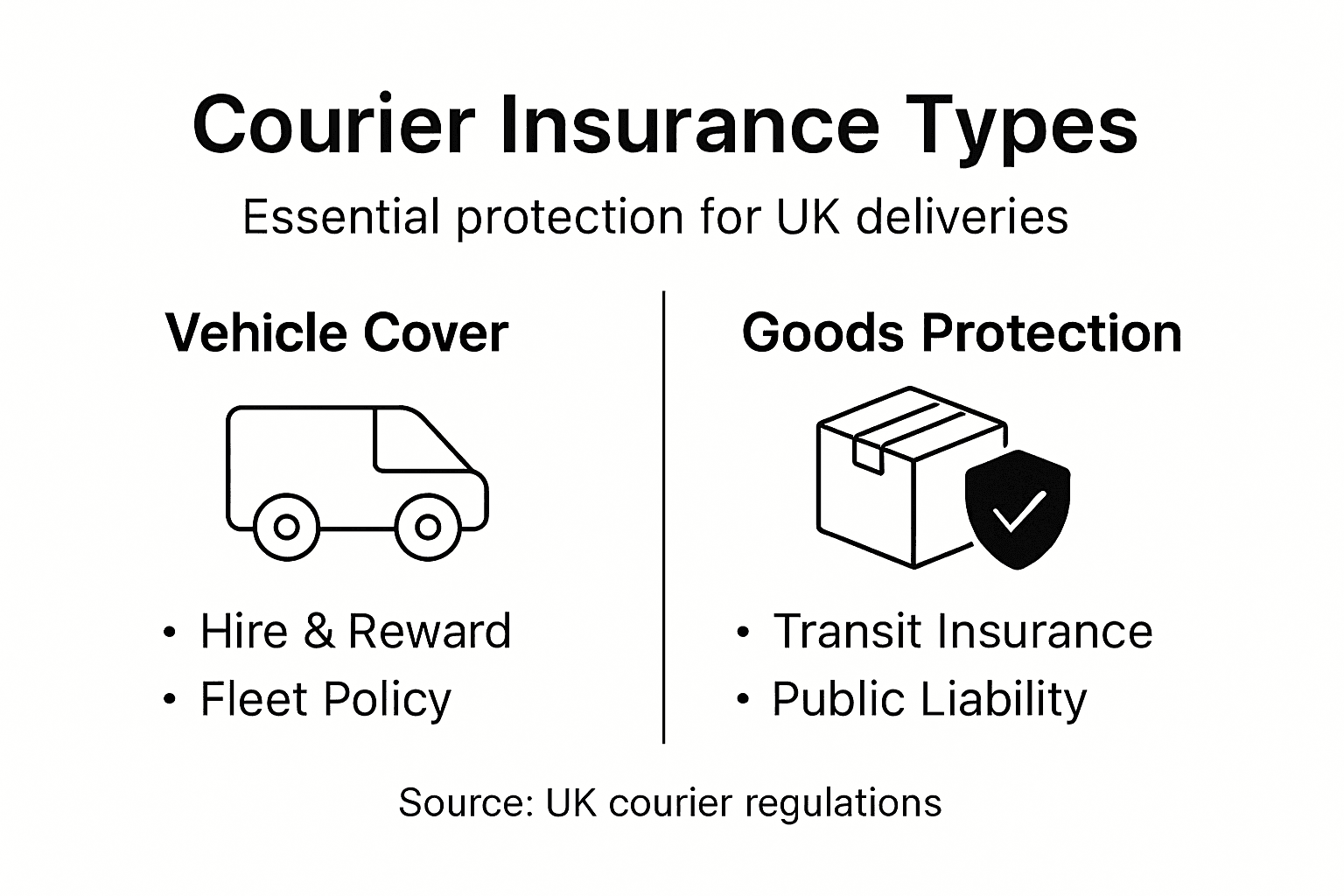
The primary types of courier insurance include:
Hire and Reward Vehicle Insurance: The fundamental policy required for payment-based delivery activities
Goods in Transit Insurance: Protects parcels or pallets against loss or damage during transportation
Public Liability Insurance: Covers potential injury or property damage claims related to delivery operations
Third-Party Only (TPO) Cover: The minimum legal requirement for commercial vehicle use
Comprehensive Vehicle Cover: Provides extensive protection for the delivery vehicle itself
Professional courier services must carefully consider their specific operational needs when selecting insurance coverage. Courier insurance types vary depending on the scale and nature of delivery activities, with different policies addressing distinct potential risks.

Here is a summary of the primary courier insurance types and their specific business benefits:
Insurance Type | Key Protection Highlight | Typical Business Benefit |
Hire and Reward Vehicle | Covers commercial deliveries | Enables legal operation |
Goods in Transit | Safeguards goods in transit | Reduces parcel loss exposure |
Public Liability | Covers third-party claims | Protects against legal actions |
Third-Party Only (TPO) | Minimum legal vehicle cover | Avoids fines or prosecution |
Comprehensive Vehicle Cover | Full vehicle accident protection | Minimises repair costs |
Additional optional insurance covers that businesses might consider include:
Employers’ liability insurance (if employing staff)
Legal expenses protection
Personal accident insurance
Breakdown assistance coverage
Equipment and cargo protection
The right insurance combination can mean the difference between financial security and potential business catastrophe.
Each type of insurance serves a specific purpose in protecting courier operations, from safeguarding valuable goods to mitigating potential legal and financial risks associated with commercial delivery activities.
Pro tip: Consult with an insurance specialist who understands the unique requirements of courier services to design a tailored insurance package that comprehensively protects your specific delivery operations.
Legal Requirements for Courier Insurance in the UK
Understanding the legal landscape of courier insurance is crucial for businesses operating delivery services in the United Kingdom. Legal requirements for couriers are strictly enforced under the Road Traffic Act 1988, with specific mandates that go beyond standard vehicle insurance policies.
Key legal insurance requirements for courier businesses include:
Hire and Reward Vehicle Insurance: Mandatory for all commercial delivery activities
Employers’ Liability Insurance: Legally required if employing staff
Third-Party Vehicle Coverage: Minimum legal standard for commercial vehicle use
Vehicle Registration Documentation: Proof of commercial use
Driver Licensing Verification: Appropriate commercial driving credentials
Professional courier operations must navigate complex legal obligations to remain compliant. Courier insurance regulations involve multiple layers of legal protection designed to safeguard businesses and their employees.
The potential consequences of non-compliance are significant and can include:
Substantial financial penalties
Potential vehicle seizure
Accumulation of penalty licence points
Invalidation of existing insurance policies
Potential legal prosecution for operating without proper cover
Compliance is not optional - it is a fundamental requirement for legitimate courier operations.
While some insurance types like public liability are recommended but not compulsory, they provide critical financial protection against potential third-party claims arising from delivery activities.
Pro tip: Conduct an annual comprehensive insurance review to ensure your courier business remains fully compliant with current legal requirements and adequately protected against potential risks.
Risks, Liabilities, and Financial Implications
Courier delivery operations involve inherent risks that can have substantial financial and legal consequences. Courier delivery risks encompass a wide range of potential challenges that can significantly impact business sustainability and operational continuity.
The primary risks faced by courier businesses include:
Traffic Accidents: Potential vehicle damage and personal injury liability
Cargo Theft: Financial losses from stolen or missing parcels
Property Damage: Third-party claims for accidental damages during delivery
Parcel Loss or Damage: Compensation requirements for compromised shipments
Personal Injury Claims: Potential workplace or delivery-related injury settlements
Professional courier services must understand the financial ramifications of these risks. Business insurance protection provides critical safeguards against potentially devastating financial exposures that could otherwise threaten business survival.
The potential financial implications of inadequate insurance coverage are severe and can include:
Substantial legal defense costs
Full compensation for damaged goods
Medical expense settlements
Vehicle repair or replacement expenses
Potential business income loss
One uninsured incident can potentially wipe out years of business profits.
Without comprehensive insurance, courier businesses risk personal financial liability that could lead to business bankruptcy, legal prosecution, and permanent operational shutdown.
This table contrasts the impact of adequate versus inadequate courier insurance on a business:
Scenario | Outcome with Adequate Cover | Outcome with Inadequate Cover |
Vehicle accident | Insurer pays for repairs | Business covers costs directly |
Parcel stolen or lost | Claim processed for value | Financial loss to business |
Public injury claim | Legal fees and damages covered | Potential bankruptcy risk |
Compliance check | Business continues operating | Fines and licence penalties |
Pro tip: Conduct a quarterly risk assessment to identify potential vulnerabilities and ensure your insurance coverage evolves alongside your business’s changing operational landscape.
Common Mistakes and What to Avoid
Navigating courier insurance requires careful attention to detail and a comprehensive understanding of potential pitfalls. Common courier insurance mistakes can expose businesses to significant financial and legal risks that could easily be avoided with proper planning and understanding.
Most frequent errors courier businesses make include:
Inappropriate Insurance Selection: Using personal or standard commercial policies
Coverage Gaps: Failing to update insurance when business operations change
Underinsurance: Not obtaining sufficient coverage for actual business needs
Legal Non-Compliance: Overlooking specific delivery work insurance requirements
Employer Liability Neglect: Ignoring insurance needs for employed staff
Professional courier services must be vigilant about potential insurance vulnerabilities. Courier insurance pitfalls often stem from misunderstandings about the specific nature of delivery work insurance.
The most critical areas where couriers frequently make mistakes include:
Misinterpreting policy coverage limits
Assuming personal vehicle insurance covers commercial activities
Neglecting goods in transit protection
Failing to disclose complete business operations to insurers
Ignoring the need for regular policy reviews
One misunderstood clause can invalidate your entire insurance protection.
Properly understanding and addressing these common mistakes can mean the difference between comprehensive protection and potentially devastating financial exposure for courier businesses.
Pro tip: Schedule a comprehensive insurance review with a specialist who understands the unique nuances of courier business insurance at least once annually.
Secure Your Urgent Deliveries with Trusted Insurance Protection and Dedicated Service
Understanding the critical importance of courier insurance for UK deliveries highlights the challenges businesses face in protecting their assets and legal standing. When operating in high-stakes environments with rapid, same-day deliveries, you need more than just insurance coverage — you need a reliable partner who ensures your urgent parcels, documents or pallets arrive safely and on time. Avoid the risks of uninsured transit damages, freight theft, or compliance failures by choosing a service that prioritises accountability and security.
At DedicatedSameDayCourier, we combine the security of understanding courier insurance nuances with the efficiency of dedicated drivers who handle your collection and delivery personally. With 24/7 availability and point-to-point direct deliveries without detours, we provide the peace of mind that your consignment is protected throughout the journey. Whether you need next-day or instant pickups within 60 minutes, our service complements your insurance strategy by guaranteeing the kind of professional courier handling that reduces risk and liability.
Take control of your urgent UK deliveries today with trusted logistics that align perfectly with the legal and financial safeguards discussed in Courier Insurance Explained. Explore seamless, insured courier solutions now at Dedicated SameDay Courier and experience true delivery reliability backed by expertise.
Frequently Asked Questions
What is courier insurance and why is it important?
Courier insurance is a specialised insurance designed for those delivering goods for payment, protecting against unique risks such as vehicle damage, liability for damages, and loss of goods. It ensures legal compliance and financial security for businesses operating in the delivery sector.
What types of coverage does courier insurance provide?
Courier insurance typically includes Hire and Reward Vehicle Insurance, Goods in Transit Insurance, Public Liability Insurance, Third-Party Only Cover, and Comprehensive Vehicle Cover. Each type offers protection against specific risks associated with commercial delivery activities.
What are the legal requirements for courier insurance?
Legal requirements include having Hire and Reward Vehicle Insurance for commercial deliveries, Employers’ Liability Insurance if employing staff, and Third-Party Vehicle Coverage as a minimum standard. Additionally, proper vehicle registration and driver licensing verification are necessary.
What are common mistakes to avoid when obtaining courier insurance?
Common mistakes include selecting inappropriate insurance types, having coverage gaps when operations change, being underinsured, overlooking legal compliance, and neglecting the insurance needs of employed staff. Regular policy reviews with a specialist can help prevent these issues.
Recommended


Comments