
E-commerce shipping best practices for SMEs: practical steps
- Andrew Buttrick
- 4 days ago
- 19 min read

The highest-impact e-commerce shipping best practices for 2026 come down to six moves: rate-shopping across multiple carriers, showing live rates and specific delivery dates at checkout, right-sizing packaging to dodge dimensional weight charges, automating returns, and blending your fulfilment mix rather than betting on one carrier. Get these right and shipping stops being a cost centre you tolerate and becomes a lever you control.
Most small and medium merchants overpay on shipping not because rates are high, but because they never compare them. Platforms like Shopify and BigCommerce both bake multi-carrier rate comparison into their fulfilment tools now, and the merchants using that feature properly are the ones quietly protecting margin while competitors absorb rising surcharges. Meanwhile, the industry data on delivery-date clarity is blunt: showing “Arrives by Thursday” instead of a vague window at checkout converts better and generates fewer support tickets, according to ShipperHQ’s shipping strategy research.
Here’s what to action in the next 7 to 30 days:
Audit your last three months of shipping invoices and flag any dimensional weight surcharges you didn’t expect.
Turn on live carrier rates at checkout for at least one product category as a test.
Set a free-shipping threshold based on your actual average order value, not a round number.
Add a self-service returns portal or prepaid label workflow if you don’t already have one.
Identify one regional or specialist carrier to run alongside your primary carrier for a month.
Keep a same-day courier option like Dedicatedsamedaycourier on file for the orders that simply cannot wait.
Pro Tip: Don’t test everything at once. Pick your worst-performing shipping metric this quarter, whether that’s cost per order or return rate, and fix that one thing before touching the rest.
Key Takeaways
E-commerce shipping best practices work when merchants combine multi-carrier rate shopping, precise checkout delivery dates, right-sized packaging, and automated returns into one connected system rather than treating each as a separate fix.
Point | Details |
Rate-shop by carrier and zone | No single carrier wins on cost and speed everywhere; compare per lane and shift volume accordingly. |
Show specific delivery dates | “Arrives by Thursday” beats a vague window for both conversion and reduced support tickets. |
Fix packaging before pricing | Right-sizing cuts dimensional weight charges and damage claims simultaneously. |
Automate returns early | Return rates of 20 to 30% make manual reverse logistics unsustainable at any real volume. |
Reserve premium speed for true emergencies | Use Dedicatedsamedaycourier for urgent B2B parts, missed-promise recovery, or time-critical items, not routine orders. |
Table of Contents
How do you design a returns process that doesn’t bleed margin?
Does hybrid shipping actually cut costs, or is that just theory?
How do zone skipping and regional carriers cut costs beyond pricing tweaks?
How do you handle peak season without your operation buckling?
What shipping details actually shape the customer’s experience?
Running a same-day courier taught me where speed actually pays off
When does a dedicated same-day courier belong in your shipping mix?
Which types of shipping methods should your store offer?
Standard shipping (3 to 7 days) still covers most non-urgent orders and remains your cheapest option per parcel. Expedited or 2-day shipping earns its keep on higher-margin items where speed drives the purchase decision. Overnight and same-day services cost more per parcel but solve a different problem entirely: they rescue orders that would otherwise be lost to a missed promise or an urgent business need.
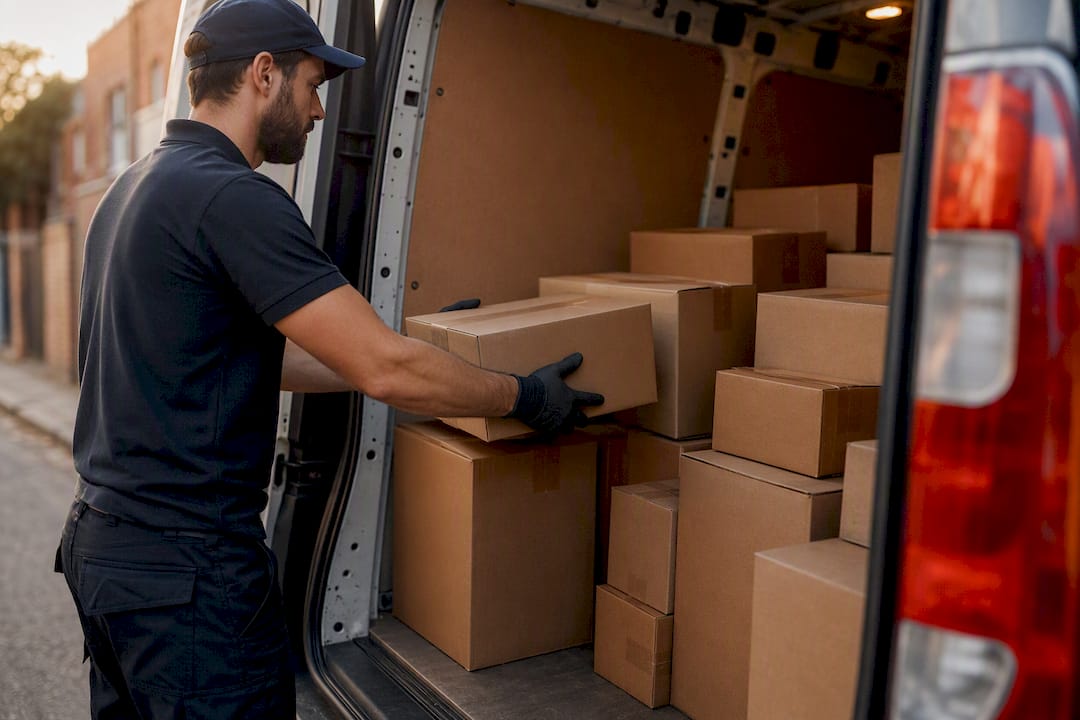
Local or hyperlocal delivery works well if you have concentrated customer density in one city or region, often beating national carriers on both speed and cost for that zone. Flat-rate and table-rate pricing give customers predictability, while real-time carrier rates protect your margin on heavier or oddly-shaped items. Most merchants who scale successfully end up running a hybrid model rather than picking one approach.
Match the method to the product:
Lightweight, small items: standard post or a flat-rate tier works fine.
Fragile or high-value goods: expedited with signature and insurance.
Subscription boxes: standard, scheduled shipping with predictable table rates.
Bulky or heavy items: real-time carrier rates to avoid subsidising oversized parcels.
Genuinely urgent orders: same-day or overnight, reserved for when it actually matters.
Pro Tip: Rate-shop behind the scenes but never show customers more than three delivery options at checkout. Decision fatigue kills conversions faster than a slightly higher shipping fee.
How should you price shipping without losing margin?
The approach that works best for most SMEs blends live carrier rates for irregular or heavy orders with a free-shipping threshold set just above your average order value. This protects margin on the awkward orders while still using free shipping as a genuine conversion lever, a combination Shopify’s fulfilment guide treats as a baseline best practice rather than an advanced tactic.
Work out your threshold with three numbers:
Calculate your current average order value (AOV). Say it’s £45.
Work out your average shipping cost per order. If that’s £6, you know your baseline cost to absorb.
Set your free-shipping threshold roughly 15 to 25% above AOV. In this example, £55 pushes customers to add one more item while keeping your absorbed shipping cost manageable.
Flat-rate pricing is simplest to communicate but risks losing money on heavy items and over-charging on light ones. Table-rate pricing (banding by weight or destination) narrows that gap. Live carrier rates remove the guesswork entirely but can create checkout friction if the number looks high on a small item, an inconsistency WooCommerce’s shipping methods guide flags as the main trade-off between the three models.
Whichever model you choose, don’t ignore dimensional weight. Carriers charge based on whichever is greater: actual weight or volumetric weight calculated from the parcel’s dimensions. A large, light box (think a lampshade or a cushion) can cost more to ship than a small, dense one. Fold DIM weight into your table rates by banding on volume as well as weight, and revisit carrier contracts annually. Most carriers will negotiate discounts once you’re shipping consistent volume, and it’s worth asking about seasonal surcharge caps before peak periods hit.
Pro Tip: Run a DIM weight check on your five best-selling products today. If any of them are triggering volumetric charges you didn’t budget for, that’s free money you’re leaving on the table every month.
What packaging choices actually save you money?
Right-sizing your packaging and using appropriate protective materials cuts two costs at once: dimensional weight charges and damage claims. Oversized boxes with excessive void fill don’t just look wasteful, they actively inflate your shipping bill and increase the odds of items shifting and arriving damaged.
Before you box anything, check these:
Does the box match the product’s actual dimensions, or is there more than 2 to 3cm of unnecessary space?
Is the fill protective for the specific product (bubble wrap for glass, corner protectors for framed items, padded mailers for soft goods)?
Are labels and barcodes placed where scanners can read them without a courier hunting for the code?
Is the packaging weight itself contributing to your DIM weight calculation?
Branded packaging builds unboxing experience and repeat-purchase loyalty, but it costs more per unit and locks you into minimum order quantities with your box supplier. Plain boxes with a branded insert or tissue paper split the difference: lower cost, still a moment of brand recognition. Label placement matters more than most merchants realise; a barcode obscured by a fold or tape line causes manual scanning delays that add hours to transit time, a point covered well in PrintCafe USA’s guide to logistics labelling.
Pro Tip: Switch to modular, collapsible inserts that fit multiple product sizes rather than ordering a different box for every SKU. It cuts storage space and lets you negotiate better volume pricing with your packaging supplier.
How do you choose the right shipping carriers?
The best resilience and cost trade-off for most SMEs is multi-carrier rate shopping combined with a regional or local carrier for last-mile delivery, rather than relying on a single national contract. Multi-carrier rate shopping and shipping rules engines let you select the best carrier for each order automatically, according to NetSuite’s shipping strategy research, and that automatic selection is where the real savings sit.
Judge carriers against these criteria: price per zone, transit time reliability, tracking detail, claims process speed, insurance options, ease of platform integration, and whether they offer any genuine sustainability programme rather than a marketing badge.
Here’s how the household names typically fit into an SME’s mix:
Shopify and BigCommerce aren’t carriers, but both platforms integrate directly with major courier APIs, which is usually where your rate-shopping actually happens.
DHL tends to suit international and cross-border shipments where customs handling experience matters.
UPS and FedEx cover reliable domestic and international coverage with strong tracking granularity, often at a premium.
Royal Mail remains competitive for lightweight, low-value domestic parcels where speed isn’t critical.
DPD and Evri (Hermes) typically undercut on cost for standard domestic parcels, useful for high-volume, lower-margin categories.
None of these covers genuinely urgent, high-value, or time-critical consignments well; that’s a different job entirely, and one where a dedicated same-day courier service fills the gap network carriers weren’t built for.
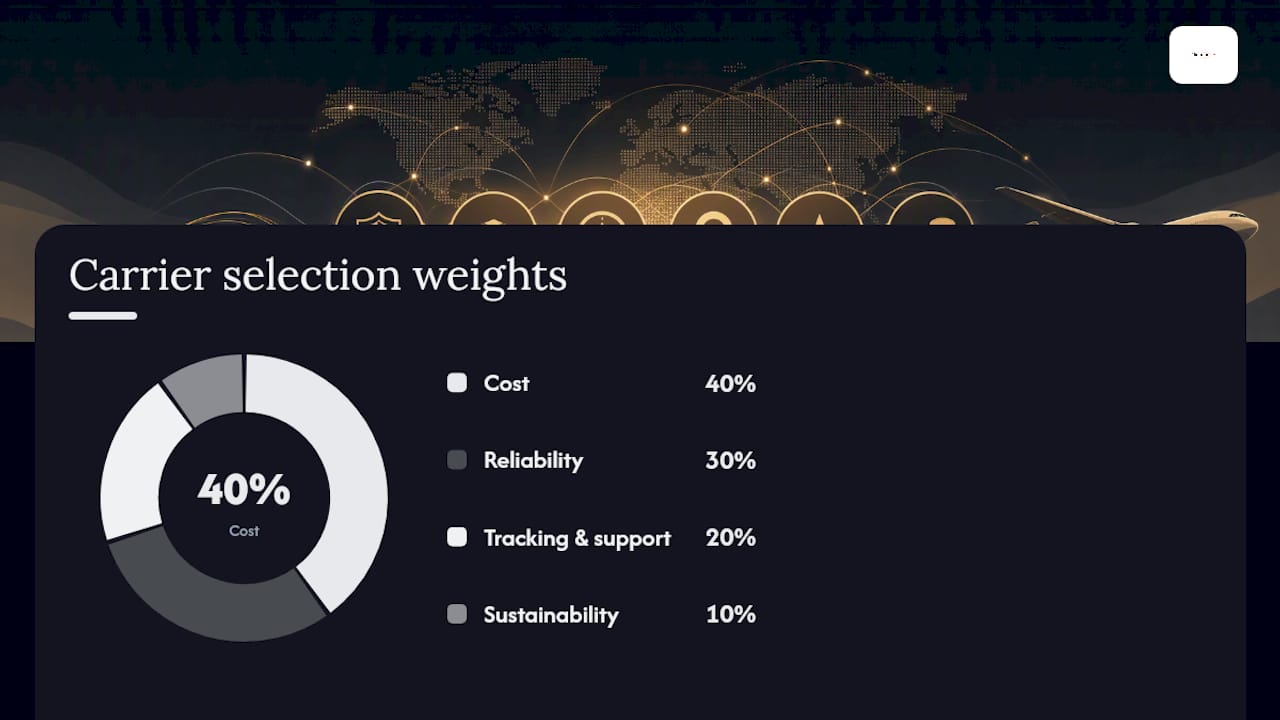
Build a simple scorecard weighting cost at 40%, reliability at 30%, tracking and support at 20%, and sustainability at 10%, then review it every six months. Before peak season, ask every carrier directly what their surcharge structure looks like and whether volume commitments unlock a discount.
How do you build efficient fulfilment operations?
Map your pick-pack-ship process first, automate the repetitive steps, and only then decide whether a third-party logistics (3PL) partner or in-house operation makes sense for your volume. Getting the sequence wrong, automating before you’ve mapped the process, tends to just make an inefficient workflow faster at being inefficient.
A basic workflow looks like this:
Order capture: orders sync automatically from your storefront into your order management system.
Pick: staff or automated systems retrieve items, ideally with SKU locations optimised for the fastest-moving products nearest to packing stations.
Pack: right-sized boxes, protective fill, barcode-ready labelling.
Label: automated label printing pulling live carrier rates rather than a fixed default.
Dispatch: handed to carrier with tracking data pushed back to the customer immediately.
Automation and integration between order capture, label generation, and inventory sync reduce fulfilment cycle times and manual errors, and this kind of automation is now accessible to mid-market brands through platform apps rather than expensive custom builds, according to Shopify’s fulfilment automation research. Shopify specifically points to tools like Shopify Flow for eliminating repetitive manual tasks across the fulfilment chain.
If you’re weighing a 3PL against running fulfilment in-house, check these before signing anything:
How easily does their system integrate with your storefront and inventory data?
What service level agreements (SLAs) do they guarantee for pick-to-ship time?
Do you get real-time inventory visibility, or a daily batch update?
How do they handle returns and who absorbs the cost of a botched pack job?
Pro Tip: Reorganise your warehouse or storage area so your top 20% of SKUs, which usually account for 80% of order volume, sit closest to the packing bench. That single change often cuts picking time more than any software purchase.
How do you design a returns process that doesn’t bleed margin?
Returns are expensive by default, and the only way to control that cost is to automate and simplify the process rather than handle each one manually. E-commerce return rates are considerably higher than those typical in traditional retail, which makes reverse logistics a genuine operational priority rather than an afterthought, according to BigCommerce’s ecommerce logistics guide.
The reverse logistics flow that works:
Customer initiates return through a self-service portal, no phone call needed.
System generates a label automatically (prepaid for defective items, customer-paid for change-of-mind returns, though some merchants absorb this to protect loyalty).
Item arrives back at your warehouse and gets inspected against your condition criteria.
Decision made: refund, refurbish and restock, or write off.
Refund or exchange processed within a stated timeframe.
Your return policy should state clearly, in plain language on both the product page and at checkout:
The timeframe customers have to return an item (30 days is common).
What condition the item must be in.
Who pays for return shipping and under what circumstances.
Inspect and restock quickly. A returned item sitting in a corner for two weeks before anyone decides its fate is dead capital. Set a same-day or next-day inspection standard for high-value returns specifically, since those are the ones where a slow decision costs you the most.
What do you need to get right on international shipping?
Show the full landed cost, product plus shipping plus duties, at checkout, or offer Delivered Duty Paid (DDP) terms so customers never hit a surprise customs bill on delivery. Nothing damages trust in a cross-border transaction faster than a customer paying twice: once at checkout and again at the door.
Before you ship internationally, get these right:
Assign correct HS (Harmonised System) codes to every product; incorrect codes cause customs delays and potential penalties.
Write accurate, specific product descriptions on commercial invoices rather than vague catch-alls.
Decide your duty terms upfront: DDP means you collect and remit duties, giving customers price certainty; Delivered At Place (DAP) leaves the customer to pay on arrival, which is cheaper for you but riskier for conversion.
Follow official guidance when shipping goods from abroad to avoid documentation errors that hold parcels at customs, as set out in Gov.
Add insurance for higher-value international shipments; claims processes vary significantly by carrier and destination.
At checkout, be specific rather than vague: “Duties and taxes included, arrives in 5 to 7 business days” beats “international shipping available” every time. For genuinely complex international volumes, a specialist international fulfilment partner often handles customs paperwork more reliably than a general carrier account ever will.
How should you handle tracking and delivery notifications?
Specific delivery dates and proactive status updates reduce both cart abandonment and support ticket volume, more reliably than any other single customer-facing shipping improvement. The data on this is consistent: showing “Arrives by Thursday” rather than a generic 3 to 5 day window improves both conversion and post-purchase satisfaction, per ShipperHQ’s research.
A notification sequence that works without overwhelming customers:
Order confirmed, with an estimated delivery date immediately.
Dispatched, with a live tracking link.
In-transit update if there’s any delay or change to the estimate.
Delivery day reminder, ideally the morning of.
Delivery confirmation, with a prompt for a review or feedback.
Email suits the confirmation and dispatch stages; SMS earns its cost for time-sensitive updates, particularly delivery-day reminders and any disruption alert, where open rates dramatically outperform email. Branded tracking pages, rather than sending customers to a generic carrier site, keep them inside your ecosystem and reduce the temptation to contact support out of anxiety rather than genuine need.
Which shipping KPIs should you actually track?
Three metrics drive most of the decisions worth making: shipping cost per order, on-time delivery rate, and return rate. Track these consistently and set a trigger threshold for each, rather than reviewing them only when something’s gone visibly wrong.
KPI | How to calculate it | Suggested alert threshold |
Shipping cost per order | Total shipping spend ÷ number of orders shipped | Review carriers if it rises more than 10% month on month |
On-time delivery rate | Orders delivered by promised date ÷ total orders shipped | Investigate if it drops below 90% |
Return rate | Returned orders ÷ total orders shipped | Flag for review above 25% for standard retail categories |
Segment each of these by product line, sales channel, and delivery region. A national average can hide a specific problem, like one region consistently missing delivery windows because of a single underperforming regional carrier partnership. Reviewing delivery optimisation tactics for logistics managers is a useful next step once you’ve identified where the weak point actually sits.
Review shipping cost per order monthly against your carrier contracts.
Check on-time delivery weekly during peak season, monthly otherwise.
Break return rate down by product category to spot systemic sizing or quality issues.
What technology should your shipping stack include?
Prioritise multi-carrier rate shopping, automated label printing, and order management system (OMS) or warehouse management system (WMS) synchronisation before spending on anything more elaborate. Expensive hardware or a full warehouse automation build rarely pays back for an SME before these foundational integrations are in place.
The logical flow looks like this: your storefront platform feeds into your OMS or WMS, which connects to a multi-carrier aggregator, which talks to individual carrier APIs, which finally feeds a tracking and returns portal back to the customer. Miss a link in that chain and you end up manually re-entering data somewhere, which is exactly where errors creep in.
Tool categories worth prioritising, in rough order of impact:
Carrier rate aggregators that compare live pricing across your chosen carriers automatically.
Shipping rules engines that apply your pricing logic (thresholds, table rates, DIM checks) without manual intervention.
Self-service returns portals that generate labels and log inspection outcomes.
WMS software if you’re picking more than a few hundred orders a day and location-based picking would save real time.
Run any new integration as a small pilot on one product category or region before rolling it out store-wide. It surfaces integration bugs on a scale that doesn’t sink your whole operation if something breaks.
Pro Tip: Score each potential integration on impact versus effort before committing budget. A rate aggregator often scores high impact, low effort; a full WMS build is usually high impact but high effort, so sequence accordingly.
What sustainability moves are worth making now?
Right-sizing packaging and offering a carbon-aware delivery option at checkout deliver the most impact for the least cost. You don’t need an electric vehicle fleet to make a credible sustainability claim; you need to stop shipping air in oversized boxes.
Quick wins worth testing:
Switch to recycled or recyclable packaging materials where the cost difference is marginal.
Consolidate fulfilment locally where possible to cut transit distance.
Offer a carbon offset as an optional checkout add-on rather than baking the cost into every order.
Right-size every box before anything else; it’s the single change with the clearest cost and emissions payoff, a point FreightAmigo’s logistics guide treats as the practical starting point for SMEs.
Test demand with an opt-in offset before committing to a costlier green carrier contract; some customer segments will pay a small premium, others won’t notice or care, and it’s worth knowing which one you’re serving before you restructure your carrier relationships around it.
Does hybrid shipping actually cut costs, or is that just theory?
Hybrid and multi-carrier shipping strategies genuinely reduce total shipping expense by optimising route and carrier selection order by order, rather than locking every parcel into one fixed contract regardless of fit, according to NetSuite’s shipping strategy research.
Here’s what that looks like in practice for a small merchant: use standard postal service for lightweight domestic parcels where cost matters most, switch to a regional courier for dense metropolitan zones where they consistently beat national carriers on speed and price, and reserve a specialist same-day provider purely for the orders where a missed delivery would cost you the customer entirely.
Pilot this cheaply:
Pick your top three shipping lanes by volume and rate-shop each one across at least two carriers for a month.
Track cost per shipment and on-time rate for each lane separately.
Shift volume toward whichever carrier wins each lane, rather than assuming one carrier wins everywhere.
The savings range varies by product mix and geography, but the direction is consistent: merchants who rate-shop by lane spend less than those who don’t, because no single carrier is genuinely the cheapest and fastest option for every zone and parcel type simultaneously.
What happens when shipping delays or disruptions hit?
Disruption is now a recurring cost of doing business, not a rare event. Weather, carrier capacity crunches during peak periods, and the kind of systemic delays seen during COVID-related disruptions all share the same fix: proactive communication and a backup carrier relationship you’ve already tested, not one you’re setting up in a panic.

Build a simple disruption playbook before you need it. Identify which carrier delays trigger a customer notification automatically, rather than waiting for a complaint. Keep at least one alternative carrier account active, even if it rarely gets volume, so you can shift orders quickly if your primary carrier suffers a regional outage or a capacity cap during a peak surge.
For genuinely time-critical items caught in a network delay, a same-day courier becomes a recovery tool rather than a routine shipping method: rescuing the one order that absolutely cannot slip. This is a fundamentally different use case from your everyday fulfilment mix, reserved for the moments when a missed delivery would cost more than the premium for a dedicated vehicle.
Communicate delays before customers ask. A short, honest message (“Your order is delayed due to a regional weather disruption, new estimate attached”) consistently outperforms silence, even when the news itself is disappointing. Customers forgive delays far more readily than they forgive being left in the dark.
How do zone skipping and regional carriers cut costs beyond pricing tweaks?
Zone skipping, consolidating multiple parcels bound for a distant region and trucking them in bulk closer to the destination before handing them to a local carrier for final delivery, avoids the cumulative per-zone charges a national carrier would otherwise apply to each parcel individually. It’s a technique larger shippers have used for years, and it’s increasingly accessible to SMEs through 3PL partners who pool volume across multiple merchants.
Regional carriers offer a related advantage: because they operate in a smaller geographic footprint, they often beat national carriers on both cost and transit time within their zone, precisely because they’re not subsidising a nationwide network through your parcel.
Two additional levers worth exploring beyond a simple rate discussion:
Negotiate based on genuine data, not guesswork. Bring your actual shipment volume, weight distribution, and zone breakdown to any carrier negotiation; vague requests for “a better rate” rarely move the number.
Consider distributed inventory. If you hold stock in more than one location, even a small forward-deployed inventory pool in your highest-volume region can shift a significant share of orders into a cheaper, faster local zone.
Neither of these requires a large capital outlay. Both require you to actually know your shipment data well enough to make the case, which is precisely why the KPI tracking covered earlier in this guide matters as much as the carrier relationship itself.
How do you handle peak season without your operation buckling?
Peak periods punish merchants who haven’t planned capacity ahead of time. Carrier surcharges spike, transit times stretch, and the same fulfilment process that works fine in a quiet month suddenly can’t keep pace.
Start capacity planning at least 8 to 10 weeks before your peak period begins. Confirm with every carrier what their surcharge structure looks like for the specific weeks you expect the highest volume, and ask directly whether committed volume unlocks any cap or discount. Carriers plan their own peak capacity around merchant commitments, so a late enquiry often means you’re negotiating from a weaker position.
Build in buffer stock at your fulfilment location for your top-selling SKUs specifically; a stockout during peak costs you both the sale and the marketing spend that drove the customer there. Extend your promised delivery windows slightly during the busiest week or two rather than promising a standard-season timeline you can’t consistently hit; an honest, slightly longer estimate beats a broken promise every time.
Staff your pack stations for the actual volume, not your average month. If you’re running a lean in-house team, this is often the moment a 3PL partnership or temporary overflow arrangement earns its cost. And keep a same-day or express option visible for the customers placing last-minute orders close to a gifting deadline; it’s a small percentage of volume but often your highest-value, most vocal customer segment if you get it right.
What shipping details actually shape the customer’s experience?
Customers judge your shipping performance against their own expectations, not against some universal standard, which means setting the right expectation matters as much as hitting a fast delivery time. A store that promises 5 to 7 days and delivers in 4 creates delight; a store that promises 2 days and delivers in 4 creates a complaint, even though the actual delivery time was identical.
Set delivery date expectations conservatively and beat them, rather than promising aggressively and hoping carriers cooperate. The specific date framing covered earlier in this guide, “Arrives by Thursday” rather than a vague range, does double duty here: it sets the expectation and gives you a clear benchmark to beat or miss.
Unboxing experience matters more for certain categories than others. A £15 phone case doesn’t need branded tissue paper and a thank-you card; a £150 skincare set or a bespoke gift item often does, because the physical unwrapping moment is part of what the customer is paying for. Match your packaging investment to the category, not a blanket brand standard applied everywhere.
Post-delivery, a short, genuine request for feedback (not a hard sell) closes the loop and gives you real data on where the experience is actually landing versus where you assume it is. Combine that with the tracking cadence and notification timeline covered earlier, and most of the customer’s anxiety about “where’s my order” disappears before it ever reaches your support inbox.
What legal and compliance rules apply to shipping?
Certain product categories carry specific shipping restrictions that vary by carrier, destination, and item type, and getting this wrong risks fines, seized shipments, or a suspended carrier account. Hazardous materials, anything with lithium batteries, aerosols, certain cosmetics, and flammable liquids, require specific declaration, packaging, and labelling under carrier and transport regulations before you ship them at all.
Check every new product category against your carrier’s restricted and prohibited items list before you list it for sale, not after your first order gets rejected at a depot. Rules differ meaningfully between domestic and international shipments, and a product that ships fine within the UK may need entirely different documentation for cross-border delivery.
International shipments carry additional compliance weight: accurate HS codes, correct customs declarations, and adherence to the destination country’s import restrictions all sit on you as the shipper, not the carrier, when something’s declared incorrectly. Following official guidance on goods sent from and to the UK is the baseline starting point before you expand into a new international market.
Keep a written record of your compliance checks for restricted categories. If a shipment is ever queried by a carrier or customs authority, having documented evidence of due diligence is the difference between a delay and a genuine penalty.
Running a same-day courier taught me where speed actually pays off
Most orders don’t need to move at premium speed, and pretending otherwise wastes money you could spend elsewhere. The orders that genuinely warrant a dedicated same-day courier tend to share a pattern: a B2B customer waiting on a critical spare part that’s stopped their production line, a legal or medical document with a hard deadline, or a high-value, bespoke item where a standard network’s handling risk isn’t acceptable.
Everything else belongs in your standard rate-shopped mix. The mistake I see most often isn’t under-investing in speed, it’s over-using premium fulfilment for orders where the customer never asked for it and wouldn’t have noticed a two-day wait. Match the delivery speed to what the order actually demands, not to what feels reassuring to offer.
When does a dedicated same-day courier belong in your shipping mix?
Your standard carrier mix, covered throughout this guide, handles the vast majority of orders well. But every SME eventually hits the order that a network carrier simply can’t save: a customer waiting on a critical part, a promise already broken by a delayed parcel that now needs urgent recovery, or a same-day event delivery where “next available slot” isn’t good enough.
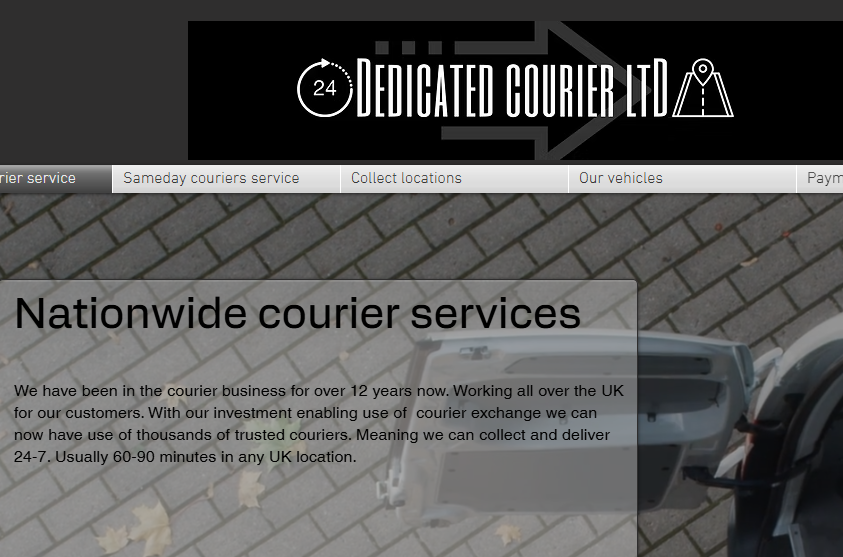
This is precisely the gap Dedicatedsamedaycourier fills. Rapid collection, usually within 60 to 90 minutes of booking, point-to-point transport with no co-loading or depot sorting, and 24/7 availability mean an order goes from your warehouse to the customer’s door on a dedicated vehicle, not shared with dozens of other parcels working through a network’s hub-and-spoke schedule.
[
Typical scenarios where this earns its cost: a B2B customer needs an urgent spare part to avoid a production stoppage, a standard carrier has already missed a delivery promise and you need to recover the situation same-day, or you’re supporting a time-critical event where the item simply has to arrive by a fixed hour. Vehicle options range from small vans for urgent parcels through to larger vehicles for pallets and bulkier consignments, so the service scales to what’s actually moving.
If you’ve never used a dedicated courier before, the simplest way in is a single test run on your next genuinely urgent order. Request a quote through Dedicatedsamedaycourier’s delivery company page and see how it performs against your current fallback option.
Frequently asked questions
What are the most important e-commerce shipping best practices for a small store? Rate-shop across multiple carriers, show specific delivery dates at checkout, right-size your packaging, and automate your returns process. These four moves address most of the cost and conversion problems SMEs face with shipping.
How do I reduce shipping costs without raising prices? Focus on dimensional weight management, negotiate carrier discounts based on your actual volume data, and test regional or specialist carriers against your national default on specific high-volume lanes.
Should I offer free shipping? Most merchants benefit from a free-shipping threshold set roughly 15 to 25% above their average order value, rather than free shipping on everything, which protects margin while still encouraging larger baskets.
What’s the difference between DDP and DAP for international orders? DDP (Delivered Duty Paid) means you collect and remit duties upfront, giving customers price certainty. DAP (Delivered At Place) leaves the customer to pay duties on arrival, which is cheaper for you but risks a surprise charge that damages trust.
When should I use a same-day courier instead of my standard carrier? Reserve same-day services for genuinely urgent orders, such as critical B2B spare parts, time-sensitive legal or medical documents, or recovering a delivery your standard carrier has already missed. Everyday orders don’t need this level of speed.
Sources
Recommended


Comments