
How to manage express logistics: tools and tactics
- Andrew Buttrick
- 11 minutes ago
- 18 min read
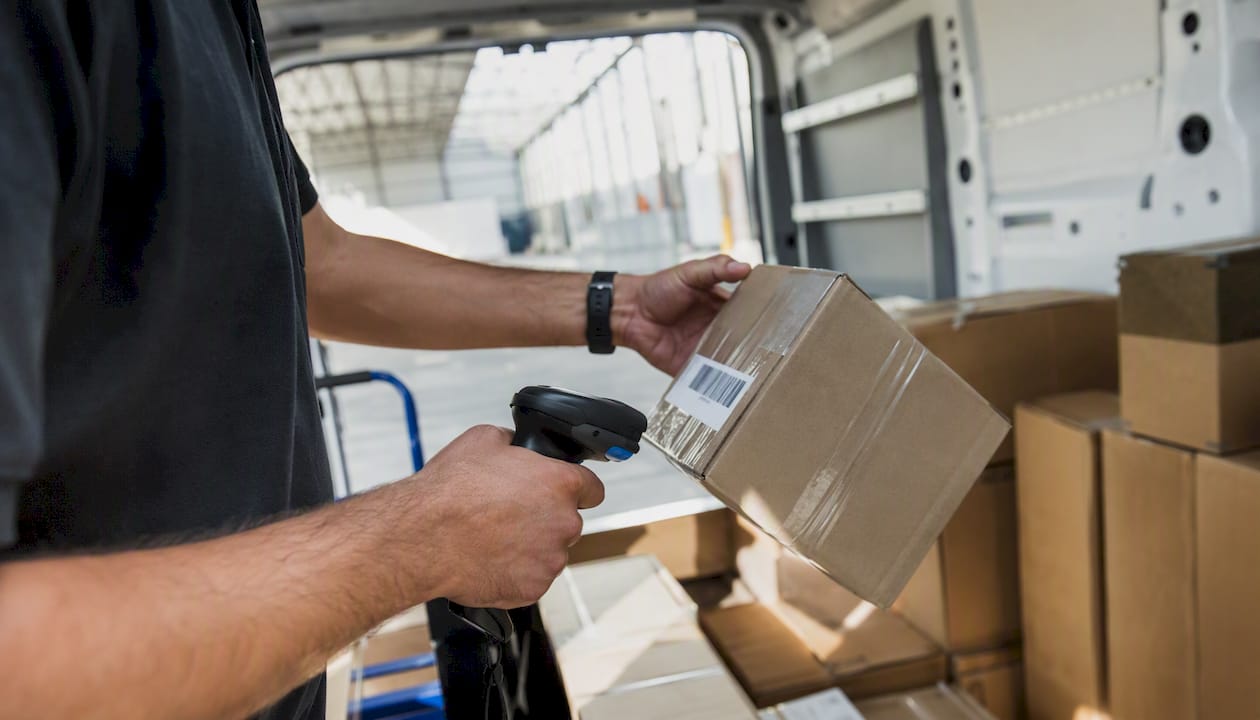
Consistent on-time express delivery comes down to five levers: route density, real-time visibility, disciplined SLA design, automated order flow, and pre-agreed contingency capacity. Get those five right and everything else, from carrier contracts to peak season planning, becomes a lot easier to manage. On time delivery rate is the single KPI that tells you whether the whole system is working, and it’s worth checking daily, not monthly. Dedicatedsamedaycourier runs on exactly this model, using dedicated vehicles and direct point-to-point routing rather than shared loads, which removes one of the biggest causes of delay before it starts.
Before going into the detail, here’s the checklist to act on this week:
Set clear service tiers (same day, next day, timed, standard) so pricing and urgency match.
Enforce address validation at the point of order to stop failed first attempts.
Automate order flow between your sales channel and dispatch system rather than re keying details manually.
Optimise packing and loading order so vehicles are loaded in reverse delivery sequence.
Use route planning software with live traffic data rather than static routes.
Monitor a KPI dashboard daily, with on time delivery rate as the headline number.
Define carrier fallbacks in advance, before you need them under pressure.
Predefine surge plans for known peaks (Black Friday, exam results day, month end B2B runs) rather than improvising.
Key Takeaways
Consistent on time express delivery depends on route density, real time visibility, disciplined SLA design, and pre-agreed contingency capacity working together as one system.
Point | Details |
Density beats distance | Route density, not raw mileage, is the strongest predictor of cost per delivery and on time performance. |
Loading sequence is free | Reverse delivery sequence loading can save several minutes per stop with no new technology required. |
Track KPIs daily | On time delivery rate, first attempt success, and cost per stop should be reviewed daily, not monthly. |
Plan fallbacks before peaks | Multi-carrier orchestration and pre-contracted surge capacity must be arranged before demand spikes, not during them. |
Choose the right model | Dedicatedsamedaycourier’s dedicated vehicle approach removes consolidation delay for genuinely urgent, high-value, or sensitive consignments. |
Table of Contents
What is express logistics and how does it differ from freight?
Which systems and integrations actually make automation reliable?
What KPIs and costing models actually predict profitability?
When should you use a dedicated courier versus a pooled express service?
How do you build a workforce that can handle express delivery pressure?
What compliance and regulatory issues apply specifically to express logistics?
Can express delivery be fast and environmentally responsible?
What is express logistics and how does it differ from freight?
Express logistics is the movement of goods where delivery speed is the primary service promise, not a secondary feature bolted onto standard freight. Where general freight optimises for cost per tonne over days or weeks, express logistics optimises for guaranteed arrival within hours, which changes almost every operational decision, from vehicle choice to network design.
That distinction shows up in three places: lead time sensitivity, network density, and cost structure. A pallet moving through a standard freight network might sit in a consolidation hub for 24 hours without anyone noticing. An urgent medical sample or a legal document with a court deadline cannot afford that wait, so express operators build networks around direct point to point movement instead of hub and spoke consolidation.
Typical express use cases include same day e-commerce fulfilment, urgent engineering parts that stop a production line if they’re late, legal documents with hard court deadlines, and medical courier work where a delayed sample can mean a delayed diagnosis. Academic case studies of successful express logistics firms show that speed gets engineered into hub placement and routing density from day one, rather than treated as an optional upgrade on top of a slower network, according to research on express logistics companies.
Shifting from general freight thinking to express thinking has consequences you need to plan for:
Unit costs rise, because you’re paying for dedicated capacity and speed rather than shared efficiency.
Route density becomes essential; a dedicated vehicle running half empty on a sparse route destroys your margin fast.
SLAs tighten from “within the week” to “within the hour,” which raises the operational and financial cost of any failure.
Express logistics isn’t freight with a faster label stuck on it. It’s a different network design, built around density and speed from the ground up, not layered on top of a system designed for something slower.
Core principles that should guide every express operation
Every operational decision in express logistics, from which vehicle to dispatch to how you price a job, should trace back to a small set of guiding principles. Managers who skip this step tend to make good individual decisions that contradict each other at the system level.
Prioritise density over distance. A route with ten stops in five square miles will always beat a route with ten stops across fifty miles, even if the total mileage looks similar on paper.
Match service tiers to real urgency. Not every order needs same day speed, and offering it without enough density behind it quietly erodes profitability rather than building loyalty.
Measure unit economics by stop, not by job. Cost per stop, revenue per stop, and contribution margin by zone tell you far more than a blended average ever will, a point echoed in analysis of express delivery business operations.
Build redundancy into every critical path. A single point of failure, whether that’s one carrier, one depot, or one dispatcher, will eventually fail at the worst possible moment.
Automate routine decisions and reserve human judgement for exceptions. Address validation, route assignment, and status updates should run without a person touching them.
Own the customer communication end to end. If a customer has to chase you for an update, you’ve already lost some of the trust that justified charging a premium for speed.
Treat route adherence as sacred. A planned route that gets reshuffled on the fly by a driver “who knows a shortcut” usually costs more time than it saves.
Pro Tip: Align your pricing tiers with actual delivery density, not just distance or weight. A same day service priced the same in a dense city centre and a rural postcode will always lose money on the rural jobs, because the driver’s time per delivery is what actually costs you, not the miles on the clock.
What operational levers actually move the needle?
Three domains do most of the work in express logistics: how orders come in, how the warehouse processes them, and how transport gets them out the door. Each has its own quick wins.
Order intake and validation
Your order management system (OMS) is the front door to everything else, and mistakes here cascade downstream fast.
Validate addresses automatically at the point of booking, not after a driver has already failed a delivery attempt.
Capture special handling requirements (fragile, temperature sensitive, restricted item) as structured data, not free text a picker might miss.
Push confirmed orders straight into your warehouse system without manual re-entry.
Flag urgency tier automatically based on the customer’s selected service level.
Set a hard cutoff time for same day bookings and enforce it consistently.
Warehouse execution
A warehouse management system (WMS) and disciplined pick and pack process determine how fast an order moves from shelf to van.
Batch pick by route or zone rather than by order, to cut walking time.
Pack in reverse delivery sequence so the first stop’s parcel comes out of the van last, not first.
Use barcode or RFID scanning at each handoff point to catch errors before they leave the building.
Set a maximum dwell time target between order receipt and dispatch, and alert when it’s breached.
Transport and dispatch
Your transport management system (TMS) and route optimisation tools decide who goes where, and in what order.
Use a route optimiser with live traffic data rather than a fixed route planned the night before.
Assign vehicles by capacity and route density, not just by driver availability.
Feed proof of delivery data back into the TMS automatically for real time status updates.
Enable dynamic re-optimisation mid route when a new urgent job comes in.
Between these three domains, the tool taxonomy is straightforward: an OMS handles the order, a WMS handles the physical warehouse flow, a TMS and route optimiser handle the vehicle and driver, and a driver app ties the physical world back to the digital record. Understanding which category a gap sits in makes vendor selection far less confusing, and our guide to delivery optimisation tips for logistics managers walks through this in more operational detail.
How can you improve last mile delivery speed and cost?
Last mile delivery is where most of your cost and most of your customer perception get decided, often in the final thirty minutes of a journey that might have taken hours to plan. Four techniques consistently move the numbers: delivery density, micro-hubs, time-window management, and loading in delivery sequence.

Delivery density means clustering deliveries geographically rather than accepting jobs scattered across a wide area with no regard for route logic. Micro-hubs, small satellite depots positioned close to demand clusters, cut the “last mile” down to genuinely the last mile rather than the last ten. Time-window management, giving customers a tight arrival slot rather than a vague “some time today,” reduces missed first attempts because someone is actually home. And loading in delivery sequence, so the first stop’s parcel is the last one loaded, can save several minutes at every stop across the day, according to research on delivery speed improvements.
Here’s a worked scenario. A regional courier operation running 25 stops per route with jobs loaded in arbitrary order was averaging 4.2 minutes per stop, much of it spent searching the van for the right parcel. Switching to reverse delivery sequence loading, combined with route optimisation software rather than manually drawn routes, cut that to under 3 minutes per stop. Across a typical route, that can save a substantial amount of time per route per day, enough to fit in two or three extra jobs without adding a vehicle.
Low effort, high impact tactics you can start this week:
Clean your address database and flag known problem addresses before they cause a failed delivery.
Send automated ETA notifications with a tightening time window as the driver gets closer.
Enable dynamic dispatch so a new urgent job can be slotted into an existing route rather than triggering a separate trip.
Capture proof of delivery digitally, with a photo and timestamp, rather than relying on a paper signature that gets lost.
Pro Tip: If you only make one change this month, switch to reverse delivery sequence loading. It costs nothing to implement, needs no new software, and the productivity gain compounds across every stop, every route, every day.
How should you manage carriers and set up fallback plans?
Your own fleet will never cover every job, every zone, every day, which means carrier orchestration is not optional. What matters is negotiating the right SLA terms up front and having a fallback plan ready before you need it, not after a driver calls in sick during your busiest week.
When negotiating with any carrier, whether that’s a local courier, a regional express network, or a pooled logistics platform, put these terms on the table explicitly:
On time delivery window, defined precisely, not as a vague “same day” promise.
Notification cadence for delays, so you’re not finding out from an angry customer first.
Liability terms for lost, damaged, or delayed goods, including hire and reward insurance cover.
Capacity guarantees during named peak periods, not just “best efforts.”
Agreed KPIs and service credits if those KPIs are missed consistently.
A simple scorecard, reviewed monthly, keeps carrier performance honest without needing complex analytics:
Fallback capacity should never be an afterthought. Multi-carrier orchestration, where jobs automatically route to a backup provider if your primary option is at capacity, protects your SLA when volume spikes unexpectedly. Dynamic reassignment lets you shift a job mid-journey if a driver breaks down or a vehicle is delayed. And pre-contracted surge capacity, agreed and priced in advance with a trusted partner, means you’re not negotiating rates under pressure during your worst week of the year. Our piece on dedicated couriers cutting delays for urgent delivery covers how a dedicated vehicle model reduces reliance on this kind of fallback in the first place.
Which systems and integrations actually make automation reliable?
Technology only helps if the systems talk to each other. A brilliant route optimiser feeding off a spreadsheet updated twice a day is worse than a mediocre one connected to live order data, because the automation is only as good as the data underneath it.
The core stack for express logistics management covers seven components, each solving a distinct problem:
Order management system (OMS): the single source of truth for what’s been promised to the customer.
Warehouse management system (WMS): governs picking, packing, and dispatch sequencing.
Transport management system (TMS): assigns vehicles, drivers, and manages route execution.
Route optimisation engine: calculates the most efficient sequence using live traffic and time-window data.
Driver app: connects the physical delivery to the digital record in real time.
Tracking and notification tools: keep customers informed without needing to call support.
Analytics layer: turns raw delivery data into KPIs you can actually act on.
Before rolling any of this out, run through an integration checklist:
Automate order flow from booking to dispatch, removing manual re-entry at every handoff.
Establish a single source of truth for order status, so warehouse, transport, and customer service are never looking at conflicting data.
Feed real time vehicle location into your TMS rather than relying on periodic check-ins.
Automate ETA updates so customers get a tightening window as the driver approaches, not a static promise made at booking.
Capture proof of delivery digitally at the point of handover, syncing instantly back to the OMS.
Shared visibility between logistics partners has become standard practice; one industry source found that 63% of companies now share visibility data with partners specifically to improve responsiveness. That kind of transparency between you and your carrier network turns a reactive fire-fighting operation into a proactive one. And on the AI side, McKinsey’s analysis of AI in supply chains makes the point that these tools only deliver value when the underlying platform strategy prioritises data quality and scalability, not just the algorithm itself.
Pro Tip: Centralise your route optimisation logic, but federate the dynamic dispatch decisions. Let one system calculate the best base routes across your whole network, but let local depots or dispatchers make the real time call when a driver hits an unplanned delay. Central planning without local flexibility is just as brittle as no planning at all.
What KPIs and costing models actually predict profitability?
Five metrics tell you almost everything you need to know about how an express operation is performing, and if you’re only tracking one right now, it’s probably the wrong one.
KPI | Definition | Why it matters |
On time delivery rate | Percentage of deliveries arriving within the promised window | Directly measures whether your service promise is being kept |
First attempt success rate | Percentage of deliveries completed on the first visit | Failed attempts double your cost on that job instantly |
Cost per delivery | Total operating cost divided by completed deliveries | The clearest single measure of route and network efficiency |
Minutes per stop | Average time spent at each delivery point | Reveals whether packing, loading, or address issues are slowing drivers down |
Miles per stop | Total route mileage divided by number of stops | A direct proxy for route density and network design quality |
Here’s a simple worked example of how density changes unit cost. A driver running 15 stops across a 60 mile route is covering 4 miles per stop. Densify that same driver’s workload to 20 stops across 50 miles, and miles per stop drops to 2.5, cutting fuel and time cost per delivery by roughly a third even though the driver is doing more work in the same shift. Now add a 10% failed delivery rate into that mix; those failed jobs need reattempting, which means the same van, driver, and fuel cost gets spent twice on a fraction of your volume; that single variable can undo most of the density gain you just achieved.
Turning these numbers into operational change means building a routine, not just a dashboard nobody looks at:
Set automated alerts when on time rate drops below your threshold for two consecutive days.
Run root-cause analysis on every failed first attempt, categorising it as address error, customer unavailable, or operational delay.
Hold a weekly drilldown meeting reviewing cost per delivery by zone, not just as a company-wide average.
How do you plan for peaks without breaking your network?
Every express operation eventually meets a day when demand outstrips planned capacity, whether that’s a retail peak, a weather event, or a client’s product launch gone viral. What separates operations that cope from operations that collapse is preparation done weeks in advance, not decisions made on the day.
A peak readiness checklist should cover:
Forecasting demand using historical patterns and known upcoming events, not just gut feel.
Pre-hiring or pre-contracting additional drivers ahead of the peak, not during it.
Setting up temporary micro-hubs in high-density zones for the peak period only.
Defining buffer inventory or capacity policies for items where a stockout would be commercially painful.
A useful stress test simulates three common failure modes at once: a delayed inbound shipment, two drivers calling in sick, and a batch of failed address validations, all on the same day. Running that scenario on paper, or in a planning tool, before it happens for real exposes weak points in your fallback plan while the stakes are still zero. Balancing “just in time” stock, which minimises holding cost, against “just in case” buffers, which protect against stockouts, is a judgement call that should be revisited each peak season rather than set once and forgotten. As J.P. Morgan’s supply chain guidance puts it, resilience through stress-testing and selective buffers is what preserves service when disruption hits, not just raw speed. That matters because the cost of getting this wrong is real: one survey of US and European business leaders estimated that supply chain disruptions may have evaporated as much as $4 trillion in revenue across affected businesses, a figure that puts the cost of under-preparing into sharp relief.
Forecast demand for the next known peak using at least two years of historical data where available.
Confirm surge capacity contracts with backup carriers before the peak window opens.
Test your escalation path end to end, including who makes the call to activate a fallback carrier.
When should you use a dedicated courier versus a pooled express service?
Choosing between a dedicated same day courier and a pooled express network comes down to five criteria: urgency, value, security, geographic spread, and how predictable your volume is.
A dedicated vehicle, carrying only your consignment with no co-loading, makes sense when the job is genuinely time-critical, the goods are high value or sensitive, or the destination sits outside a dense pooled network’s efficient coverage area. A pooled express service can make more sense for predictable, lower urgency volume where cost per unit matters more than guaranteed exclusivity.
Criteria | Favours dedicated courier | Favours pooled express network |
Urgency | Hard deadline, hours not days | Flexible within a day or two |
Value/security | High value, sensitive, or regulated goods | Lower value, standard goods |
Geographic spread | Remote or unusual destination | Dense, well-served corridor |
Volume predictability | One-off or irregular urgent job | Regular, forecastable volume |
Two scenarios illustrate this well. An e-commerce retailer handling an urgent customer return that needs collecting and processed same day, to avoid a refund dispute escalating, benefits from a dedicated courier’s speed and direct routing, since a pooled network’s consolidation delay could push the collection past the promised window. A hospital or lab needing an urgent sample transferred between sites for time-sensitive testing has an even clearer case: security and guaranteed handling matter as much as speed, and a dedicated vehicle with no intermediate stops removes the risk of a sample sitting in a depot.
Onboarding checklist for setting up a dedicated same day courier relationship:
Confirm contract terms covering minimum charges, collection windows (typically 60 to 90 minutes), and liability cover.
Select vehicle size against your typical consignment, whether that’s a small van for parcels or a larger vehicle for pallets.
Set up SLA monitoring so on time performance is tracked from the first job, not just after a problem occurs.
Agree an escalation path for exceptions, naming who gets contacted and how fast.
For businesses weighing this decision in more depth, our guide on choosing a reliable courier for urgent deliveries covers the practical evaluation criteria step by step, and same driver delivery for urgent logistics explains why continuity of driver matters for sensitive consignments specifically.
How do you build a workforce that can handle express delivery pressure?
Express logistics puts more pressure on staff than standard freight, because the margin for error on timing is measured in minutes rather than days, and that changes what training needs to cover. Drivers need to understand not just routes but the reasoning behind sequencing decisions, so they don’t override a system generated route with a “shortcut” that actually adds time.

Cross-training matters more here than in slower-moving logistics. A dispatcher who understands warehouse constraints, and a warehouse picker who understands what causes a route to run late, catch problems the other role would miss. Building this kind of shared understanding usually takes structured onboarding rather than assuming experienced staff will pick it up informally.
Workforce planning for express operations also means designing shift patterns around demand peaks rather than fixed hours that ignore when your volume actually arrives. Building flexibility into rostering, including a pool of drivers who can be called in at short notice for surge periods, addresses this directly rather than relying on existing staff working unsustainable overtime.
Retention matters too, arguably more than in slower logistics roles, because a driver who knows a route and its quirks is measurably faster than a new hire covering the same ground. Losing that experience during a peak period compounds an already difficult situation.
What compliance and regulatory issues apply specifically to express logistics?
Restricted goods handling sits at the top of the list, because express operations move a wider variety of urgent items than standard freight, and the rules differ by category. Medical samples, for instance, fall under specific packaging and handling regulations precisely because delay or mishandling carries real consequences, and legal or financial documents often carry confidentiality obligations that affect who can handle them and how proof of delivery is captured.
Transport regulations covering driver hours, vehicle weight limits, and insurance cover apply just as strictly to express operations as to any other road transport, and the pressure to move fast should never translate into cutting corners on driver hours compliance or vehicle roadworthiness checks. Hire and reward insurance, covering goods being transported for payment, is a baseline requirement for any operator carrying third party goods commercially, and it’s worth confirming this cover explicitly with any courier or carrier before contracting them.
Data protection also matters more than it might first appear. Proof of delivery capture, customer contact details, and delivery addresses all count as personal data under UK data protection law, and how that information is stored and shared between your systems and any carrier partner needs to be handled with the same rigour as any other customer data process.
None of this replaces proper legal advice specific to your goods and operating region, but building these checks into your onboarding process, rather than treating them as a one-off compliance exercise, keeps the business protected as volume and complexity grow.
Can express delivery be fast and environmentally responsible?
Speed and sustainability aren’t automatically opposed, though the tension is real: a rushed, low-density delivery burns more fuel per parcel than a well-planned one, regardless of how green the vehicle itself is.
Route density is actually the biggest sustainability lever available, and it’s the same lever that improves cost efficiency. A route optimised for fewer wasted miles, which can cut total mileage by 15 to 20% according to industry analysis, reduces fuel consumption and emissions by roughly the same margin, without requiring any change in vehicle type at all.
Beyond routing, a few practical levers make a measurable difference:
Consolidating multiple urgent jobs onto one vehicle route where timing windows genuinely allow it, rather than dispatching separate vehicles for each.
Choosing electric or hybrid vehicles for urban, high-frequency routes where charging infrastructure supports the range needed.
Reducing failed delivery attempts through better address validation and time-window communication, since every failed attempt means a wasted trip repeated.
Right-sizing vehicles to the job, so a small parcel isn’t moved in a vehicle built for pallets.
The honest reality for express logistics is that dedicated, direct routing will rarely match the per-parcel emissions efficiency of a fully consolidated, slower network, because you’re trading some efficiency for guaranteed speed. What responsible operators can control is minimising waste within that model: tighter routing, fewer failed attempts, and smarter vehicle allocation all reduce the environmental cost of speed without pretending the trade-off doesn’t exist.
What I’ve learned running express operations under pressure
The moment that changed how I think about last mile delivery wasn’t a new piece of software or a clever contract renegotiation. It was watching a driver spend nearly five minutes at a single stop, not because the address was hard to find, but because his afternoon parcels were loaded at the front of the van and his morning parcels were buried at the back. Multiply that across 25 stops and you’ve lost the equivalent of an entire extra delivery’s worth of time, every single day, for no reason other than loading order.
Switching to reverse delivery sequence loading during a particularly brutal peak season rescued on time performance almost immediately. It cost nothing. It needed no new technology. It just required treating loading as seriously as routing, which most operations don’t.
Three things I’d tell any logistics manager under pressure to fix this quarter:
Fix the boring, unglamorous operational details before you buy new software. Loading sequence and address validation deliver returns faster than most technology investments.
Don’t let “same day” become the default tier just because customers ask for it. If your density doesn’t support it profitably, a well-communicated next-day option often serves them better than a rushed, unreliable same day promise.
Build your fallback plan while things are calm. The worst time to negotiate surge capacity with a backup carrier is during the surge itself.
Where a dedicated same day courier fits into all of this
Everything covered above, density, route sequencing, fallback capacity, SLA discipline, points towards one operational truth: the fastest way to remove risk from a time-critical delivery is to stop sharing the vehicle. Dedicatedsamedaycourier runs on dedicated vehicles with no co-loading, meaning your consignment moves point to point without sitting in a consolidation hub waiting for other jobs to fill the van.
[
That model delivers concrete operational benefits for the exact problems this guide has walked through:
Rapid collection, typically within 60 to 90 minutes of booking, for genuinely urgent jobs.
Direct point to point transport, removing the delay risk that comes with hub consolidation.
Proof of delivery captured and available for your own tracking and customer communication needs.
24/7 availability and surge capacity for the peak periods this guide has covered in detail, plus flexible vehicle sizing from small vans through to larger vehicles for pallets.
If you’re weighing up whether a dedicated model fits your operation, our dedicated courier service overview sets out the full range of services and how the 24/7 operation works. For a specific job, whether that’s a single urgent document or a regular contracted arrangement, request a bespoke quote through the sameday courier service page and get onboarding support built around your actual volume and vehicle needs, not a generic template.
Sources
For deeper technical detail beyond this guide, these sources cover specific follow-up tasks worth exploring:
Recommended


Comments