
Security best practices for UK couriers: Stay safe
TL;DR:
Secure courier deliveries require strict screening protocols and staff vigilance to identify suspicious items.
Physical vehicle security and tamper-proof packaging are essential to prevent theft and ensure safe transit of sensitive consignments.
Digital security measures, including access controls and staff training, are critical to defend against cyber-enabled cargo theft and data breaches.
Secure, efficient delivery is not optional when you are moving urgent or sensitive items across the UK. NPSA guidance on courier deliveries makes it clear that staff handling deliveries must remain aware of suspicious indicators and that urgency should never be a reason to bypass established screening. From physical vehicle security to the growing risk of cyber-enabled cargo theft, the stakes for businesses and individuals relying on courier services have never been higher. This article covers the most important security practices, from frontline screening to digital data protection, so you can protect every consignment from booking to sign-off.
Table of Contents
Key Takeaways
Point | Details |
Screen all urgent items | Every delivery, including urgent parcels, must pass through screening to ensure safety and compliance. |
Use tracked delivery | Tracked postal services should be the first choice for secure shipment of sensitive documents in the UK. |
Secure vehicles and parcels | Courier drivers must lock vehicles, protect keys, and use robust packaging and security devices. |
Protect digital and personal information | Courier operations must implement cyber-security and GDPR protocols for handling sensitive customer and shipment data. |
Combine physical and procedural tactics | True courier security integrates physical, procedural, and cyber defence strategies for every delivery. |
Screening and staff vigilance for secure deliveries
Building on the urgency for secure delivery, let’s start with the frontline screening procedures that protect your parcels. Every incoming mail or courier delivery should pass through a controlled screening process before it reaches its destination. This is not just good practice, it is a specific recommendation from UK authorities.
NPSA guidance advises that staff who handle or open deliveries must be aware of the indicators of concern and know the appropriate action to take. Post rooms play a central role here, acting as the first point of contact and a controlled environment where suspicious items can be assessed before they enter a building.
Key indicators that should prompt immediate concern include:
Unexpected or anonymous senders
Unusual weight distribution within a parcel
Excessive tape, staples, or wrapping material
Leaking powder or liquid, or unusual smells
Stiff envelopes or those reinforced with cardboard
When a suspicious item is identified, staff should not attempt to open it. The correct process is to isolate the item, contact the appropriate authorities, and document the incident. Urgent deliveries must not be fast-tracked around these procedures. Rushing an item through because it is marked as time-sensitive is exactly the kind of shortcut that creates risk.
Our courier security guide goes into further detail on establishing a reliable screening process. You can also refer to our courier safety checklist for a step-by-step reference.
Pro Tip: Schedule brief, regular refresher training for post-room staff, even quarterly sessions of 20 to 30 minutes are enough to keep threat awareness current and consistent across the team.
Tracked delivery and compliance for high-security shipments
Once items are properly screened, choosing the right secure delivery method determines how reliably your urgent consignments reach their destination. Not all delivery options offer the same level of accountability, and for sensitive items, this distinction matters significantly.
GOV.UK guidance for moving passports and documents confirms that secure, tracked delivery is the expected standard. Couriers and express operators are considered appropriate only when tracked methods cannot meet the required deadline. This tells you something important: tracked post is the baseline, and courier use is reserved for situations where speed is genuinely critical.
Here is a straightforward comparison of the three main delivery options for business use:
Method | Tracking | Speed | Security level | Best for |
Tracked post | Full end-to-end | 1 to 3 days | High | Standard sensitive documents |
Dedicated courier | Full, real-time | Same day | Very high | Urgent, high-value, or fragile items |
Regular post | None | 2 to 5 days | Low | Non-sensitive, low-value items |
For business users sending legal documents, contracts, or identity records, the general steps to ensure a secure tracked delivery are:
Use a tracked service with confirmed proof of delivery
Seal the item using tamper-evident packaging
Retain a copy of the tracking reference in your records
Confirm receipt with the intended recipient directly
Store all delivery receipts for a minimum of 12 months
For further guidance, see our advice on document delivery best practices and our guide to building a secure delivery workflow. We also cover secure delivery methods in detail if you need to compare options for a specific shipment type.
Pro Tip: Always retain tracking receipts, even for low-value items. If a dispute arises weeks later, a clear delivery record protects you and your business quickly and without unnecessary back-and-forth.
Vehicle and parcel security: Locks, packaging, and handling
Securing the delivery method is just one part of the equation. Physical vehicle and packaging security is a frontline defence against theft and tampering during transit.
Courier van security guidance highlights that robust security practices for vehicle and cargo include using high-quality locks and Thatcham-approved security components. Thatcham-approved products meet the UK’s recognised vehicle security testing standards, giving you a reliable benchmark when choosing equipment.
Key vehicle security practices for courier drivers include:
Never leave the engine running when making a delivery, even for a brief stop
Always take the keys out of the ignition and lock the vehicle, even for 30 seconds
Use slam locks, which automatically secure the vehicle when the door is closed
Park in well-lit locations with visible CCTV coverage wherever possible
Avoid predictable parking routines that could be monitored by opportunistic thieves
Driver security habits around key-handling and vehicle routines are a primary factor in preventing theft opportunities. A vehicle left unsecured for even a short moment is a significant risk.
Packaging is equally important. Secure parcel packaging guidance recommends immobilising contents within the box using appropriate void fill, selecting box strength that matches the load and handling demands, and sealing all seams with the ‘H’ taping technique. This method involves running tape along all seams and across both joins at the top and bottom of a box, making it significantly more resistant to tampering and accidental opening.
Security feature | Recommended standard | Why it matters |
Van door locks | Slam locks or Thatcham-approved deadlocks | Prevents theft during deliveries |
Key handling | Driver carries keys at all times | Removes opportunity for vehicle theft |
Parking | Well-lit, CCTV-monitored locations | Deters opportunistic theft |
Box strength | Matched to load weight and stacking | Prevents structural failure in transit |
Sealing method | ‘H’ taping on all seams | Reduces tampering and accidental opening |
Void fill | Foam, paper, or air cushions | Immobilises contents, reduces damage |
For more practical advice on protecting goods in transit, our parcel delivery tips article covers additional measures relevant to urgent UK shipments in 2026.
Cyber-enabled cargo theft and information protection
While physical protocols are visible, digital security is often overlooked and increasingly targeted by sophisticated criminals. Cyber-enabled cargo theft is now a recognised and active threat model for the courier and logistics industry.
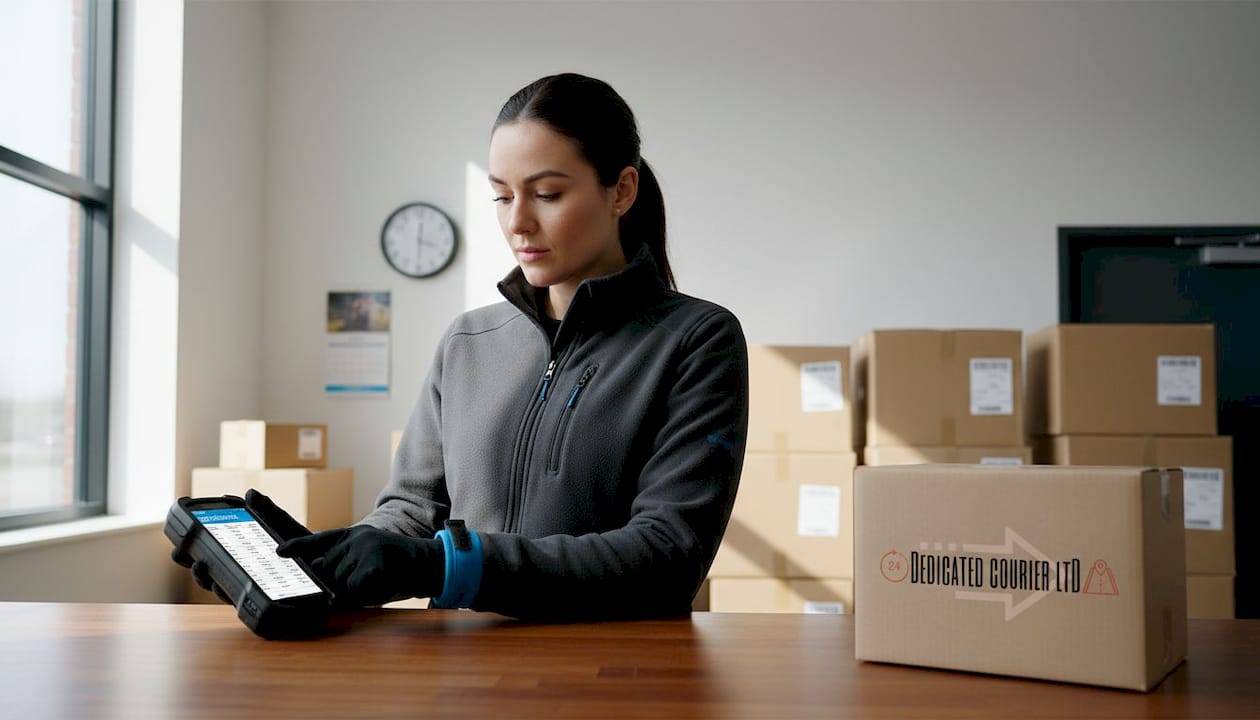
The FBI has warned of a surge in hacker-enabled cargo theft where attacks involve malicious links designed to compromise broker or carrier systems, followed by fake load postings and carrier identity theft. The result is that goods are effectively diverted without any physical break-in or confrontation. This threat is not limited to large freight operators, any business or courier using digital booking platforms is a potential target.
Steps to reduce digital risk include:
Use unique login credentials for every team member, never share passwords
Apply role-based access controls so staff only see data relevant to their job
Train staff to recognise phishing emails, particularly those containing unexpected links or urgent payment requests
Regularly audit system access logs to identify unusual activity
Ensure customer data is stored securely and processed in compliance with UK GDPR
Data protection responsibilities apply directly to courier operations that handle personal data, including names, addresses, and contact details associated with deliveries. Businesses must treat this data with the same care as any other sensitive information.
Pro Tip: Run a quarterly audit of who has access to your booking systems and delivery management software. Remove access for any former staff or external contractors who no longer require it. This single step closes a common and easily overlooked vulnerability.
A fresh perspective: Why courier security isn’t just about locks and tracking
Most discussions about courier security focus on physical measures, locks, packaging, and surveillance. These are necessary. But they represent only one dimension of the problem, and in 2026, treating physical security as the whole answer leaves significant gaps.
NPSA guidance specifically addresses the procedural side of security, noting that deliveries must flow through controlled sites and that staff must know indicators of suspicious items. This is about process and awareness, not just hardware. A business can install every lock and camera available and still experience a serious breach if staff bypass screening because a parcel is marked urgent.
The same logic applies to digital threats. The FBI’s findings on cyber-enabled cargo theft show that even couriers following strong physical practices can have their carrier identity stolen and loads diverted through compromised digital workflows. The breach happens in a system, not on a road.
What this means practically is that security needs to be built into every step of the delivery process, from the initial booking through to the final sign-off. A robust corporate courier workflow should incorporate screening checks, access controls, and clear escalation paths as standard features, not optional add-ons.
The businesses that handle this best are the ones that treat security as a process responsibility, not just a physical one. That shift in thinking is where real protection begins.
Secure your urgent courier deliveries with trusted UK experts
If you need a reliable partner for urgent, secure deliveries across the UK, the right provider makes all the difference.
[
At DedicatedSameDayCourier.co.uk, every delivery uses a dedicated vehicle for your consignment alone, meaning no shared loads and no unnecessary handling. Our sameday courier service operates 24/7 across the UK, with trained couriers and a range of van courier services to suit the size and sensitivity of your shipment. Whether you are sending urgent documents, fragile parcels, or high-value goods, we prioritise security and punctuality at every stage. Getting started is straightforward. Request a tailored courier delivery quote online, by phone, or by email, and we will match you with the right vehicle and service for your needs.
Frequently asked questions
What is the safest delivery method for sensitive documents in the UK?
HM Passport Office guidance recommends tracked Royal Mail services as the standard method for sensitive documents, with couriers reserved for situations where tracked services cannot meet the required deadline.
How can courier drivers prevent theft of their vehicle or parcels?
Drivers should lock their vehicle every time they leave it, keep keys on their person at all times, avoid leaving the engine running, and use high-quality security locks such as slam locks or Thatcham-approved deadlocks.
What packaging method best prevents tampering during transit?
Strong box construction, void fill to immobilise contents, and the ‘H’ taping technique on all seams provide the best combination of structural integrity and tamper resistance.
How do couriers protect personal data in line with UK GDPR?
Organisations must use secure storage, apply role-based access controls, and issue unique login credentials to every member of staff who handles delivery data.
What are the new risks posed by cyber-enabled cargo theft?
Hackers now target courier and broker systems using phishing links to steal carrier identities and post fake loads, diverting goods without any physical confrontation.
Recommended


Comments